
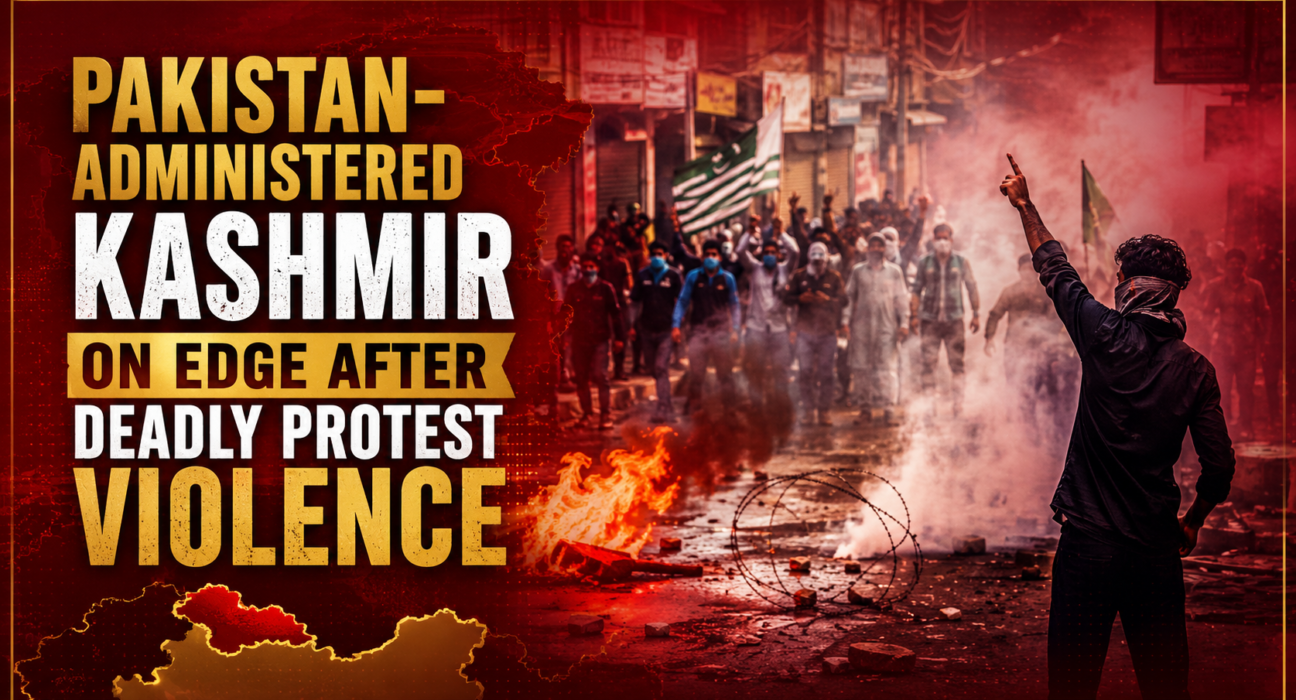
If you’ve been following the news out of South Asia this summer, you’ve probably noticed a troubling pattern repeating itself in Pakistan-administered Kashmir. Every few weeks, another round of protests turns violent, another death toll climbs, and another cycle of curfews and internet blackouts follows. As of this week, the region is once again on edge, and honestly, it’s hard to see this settling down anytime soon.
Let me walk you through what’s actually happening here, because the headlines alone don’t tell the full story.
How We Got Here
This isn’t a sudden eruption of anger. It’s been building for years. Back in 2023, people in Azad Kashmir started protesting over soaring electricity bills and shortages of subsidized wheat flour, along with allegations of flour being smuggled out of the region. Those grassroots frustrations eventually coalesced into a broader movement led by a coalition called the Jammu Kashmir Joint Awami Action Committee, or JAAC for short.
By 2024, things escalated further when demonstrators attempted a long march toward Muzaffarabad, the regional capital. That march ended in bloodshed, with several people losing their lives, including a police officer. The group later formalized dozens of demands into what’s now known as a 38-point charter, covering everything from economic relief to allegations of corruption among local officials.
The Flashpoint Over Reserved Seats
This year’s unrest has centered on something more specifically political: a set of 12 legislative seats reserved for Kashmiri refugees who live elsewhere in Pakistan but still get a say in Azad Kashmir’s assembly. JAAC argues this arrangement dilutes the voice of people who actually live in the territory, while supporters of the reserved seats say it preserves representation for displaced Kashmiri families.
When the region’s top court ruled in June that these seats are constitutionally protected, tensions boiled over almost immediately. Clashes in Rawalakot left multiple people dead within days, and authorities responded by banning JAAC outright under anti-terrorism legislation, deploying paramilitary forces and cutting off travel to the area.
A Pattern That Won’t Break
What’s striking is how this keeps repeating. Every time there’s a planned rally or march, violence flares beforehand or during it, casualty figures get disputed between officials and protest leaders, and misinformation spreads just as fast as verified facts. Just this past week, fact-checkers had to debunk a manipulated video circulating online that falsely appeared to show security forces firing on a crowd.
Here’s a quick snapshot of how the death toll has climbed across recent flashpoints:
| Date | Location | Reported Deaths | Trigger |
| May 2024 | Muzaffarabad long march | 5 | Long march clashes |
| June 7–8, 2026 | Rawalakot | 7–11 | Court ruling on reserved seats |
| July 13–14, 2026 | Poonch/Rawalakot | 5–9 | Planned march over electoral arrangements |
Key Players in the Standoff
| Party | Role |
| JAAC (banned group) | Leads protests, demands abolition of reserved seats |
| Regional government | Enforces bans, deploys security forces |
| Pakistan’s federal government | Monitoring situation, engaging politically |
| Amnesty International | Criticized the JAAC ban and use of force |
With regional elections approaching, there’s a real chance this tension doesn’t ease before votes are cast, it could intensify. Whether Islamabad steps in more directly, or whether local leaders find room for compromise, will likely shape how the next few weeks unfold. For now, residents of Azad Kashmir are left navigating curfews, blackouts, and uncertainty, hoping for calm before the next flashpoint arrives.