

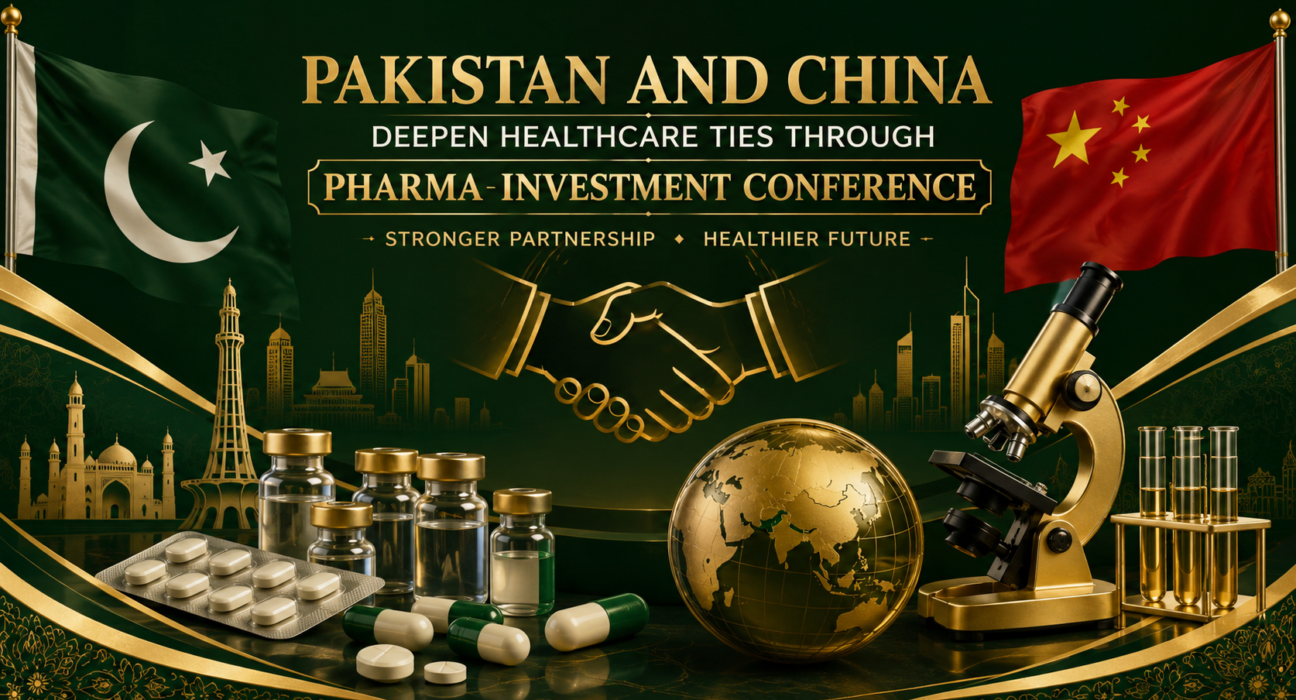
Pakistan and China have taken another significant step toward strengthening their long-standing strategic partnership by expanding cooperation in the healthcare and pharmaceutical sectors. A recent pharma investment conference brought together government officials, healthcare experts, pharmaceutical manufacturers, and business leaders from both countries to explore new opportunities for investment, technology transfer, and industrial collaboration. The event highlighted a shared commitment to improving healthcare services, increasing pharmaceutical production, and promoting sustainable economic growth.
As Pakistan continues to modernize its healthcare infrastructure, partnerships with China are expected to play an important role in enhancing medical innovation, reducing dependence on imported medicines, and creating new employment opportunities.
| Article Summary | Details |
| Title | Pakistan and China Deepen Healthcare Ties Through Pharma Investment Conference |
| Category | Healthcare & Business |
| Focus | Pharmaceutical investment, healthcare cooperation, technology transfer |
| Countries Involved | Pakistan and China |
| Expected Benefits | Investment, local manufacturing, innovation, job creation |
Pakistan and China Strengthen Healthcare Cooperation
The pharmaceutical investment conference served as an important platform for strengthening healthcare cooperation between Pakistan and China. Representatives from both countries discussed practical ways to expand bilateral investment, improve pharmaceutical manufacturing standards, and encourage innovation in medical research.
Officials emphasized that healthcare remains a priority sector for economic cooperation. By working together, Pakistan and China hope to improve access to quality medicines while building stronger healthcare systems capable of meeting future public health challenges.
Focus on Pharmaceutical Investment
One of the conference’s major objectives was attracting greater Chinese investment into Pakistan’s pharmaceutical industry. Chinese pharmaceutical companies possess extensive experience in medicine production, biotechnology, medical equipment, and healthcare technology.
Pakistan offers several advantages for investors, including a growing domestic market, a strategic geographic location, competitive manufacturing costs, and increasing government support for foreign direct investment.
New investments could help establish advanced pharmaceutical manufacturing facilities, increasing the production of essential medicines within Pakistan while reducing import costs.
Technology Transfer to Improve Local Manufacturing
Technology transfer emerged as another key topic during the conference. Experts noted that sharing modern pharmaceutical manufacturing techniques could significantly improve Pakistan’s production capabilities.
Chinese companies have developed advanced technologies in drug manufacturing, vaccine development, laboratory equipment, and quality control systems. Through strategic partnerships, Pakistani pharmaceutical firms can benefit from these innovations, improving both efficiency and product quality.
Modern production methods could also help local companies comply with international manufacturing standards, opening doors to export markets.
Business Partnerships Create New Opportunities
Business-to-business meetings held during the conference encouraged pharmaceutical companies from both countries to explore joint ventures and long-term partnerships.
These collaborations may include:
- Joint pharmaceutical manufacturing
- Research and development projects
- Medical equipment production
- Distribution partnerships
- Clinical research cooperation
Such partnerships have the potential to strengthen Pakistan’s pharmaceutical industry while providing Chinese companies with access to expanding regional markets.
| Potential Areas of Cooperation | Expected Impact |
| Pharmaceutical Manufacturing | Increased local medicine production |
| Technology Transfer | Better manufacturing standards |
| Research & Development | Innovation in healthcare |
| Medical Equipment | Improved healthcare infrastructure |
| Investment | Economic growth and employment |
Benefits for Pakistan’s Healthcare Sector
Greater cooperation with China could bring several long-term benefits for Pakistan’s healthcare system. Increased investment may lead to improved availability of affordable medicines, upgraded manufacturing facilities, and better access to advanced medical technologies.
Healthcare professionals may also benefit from specialized training programs, knowledge sharing, and collaborative research initiatives that improve clinical practices and pharmaceutical expertise.
Ultimately, patients stand to gain through better healthcare services and a more reliable supply of quality medicines.
Economic Growth Through Healthcare Investment
The pharmaceutical industry is becoming an increasingly important contributor to Pakistan’s economy. New investment projects can stimulate industrial growth while creating thousands of skilled and semi-skilled employment opportunities.
Expanded pharmaceutical production may also increase exports, strengthen foreign exchange earnings, and support Pakistan’s broader economic development goals.
Government officials expressed confidence that closer healthcare cooperation with China would encourage additional foreign investors to explore opportunities within Pakistan’s growing pharmaceutical sector.
Strengthening Regional Healthcare Collaboration
The conference also reflected the broader trend of regional cooperation in healthcare across Asia. Public health challenges require countries to work together by sharing expertise, scientific research, and innovative medical solutions.
Pakistan and China’s partnership demonstrates how international collaboration can improve healthcare resilience while supporting sustainable economic development.
Joint initiatives in vaccine production, biotechnology, and pharmaceutical research could help both countries prepare for future healthcare emergencies more effectively.
Looking Ahead
Both governments reaffirmed their commitment to expanding cooperation beyond traditional infrastructure projects into high-value sectors such as healthcare, biotechnology, and pharmaceuticals.
Future collaborations are expected to include additional investment forums, research partnerships, and industrial cooperation agreements designed to accelerate innovation and improve healthcare outcomes.
As Pakistan continues to develop its pharmaceutical industry, Chinese expertise and investment could play a vital role in transforming the country’s healthcare landscape.
Conclusion
The Pakistan–China Pharma Investment Conference marks another milestone in the growing relationship between the two nations. By promoting pharmaceutical investment, encouraging technology transfer, and supporting business partnerships, both countries are laying the foundation for stronger healthcare systems and greater economic cooperation.
If successfully implemented, these initiatives could improve medicine production, enhance healthcare services, generate employment, and position Pakistan as an emerging pharmaceutical manufacturing hub in the region. The conference represents not only a business opportunity but also a shared vision for healthier communities and sustainable development.