

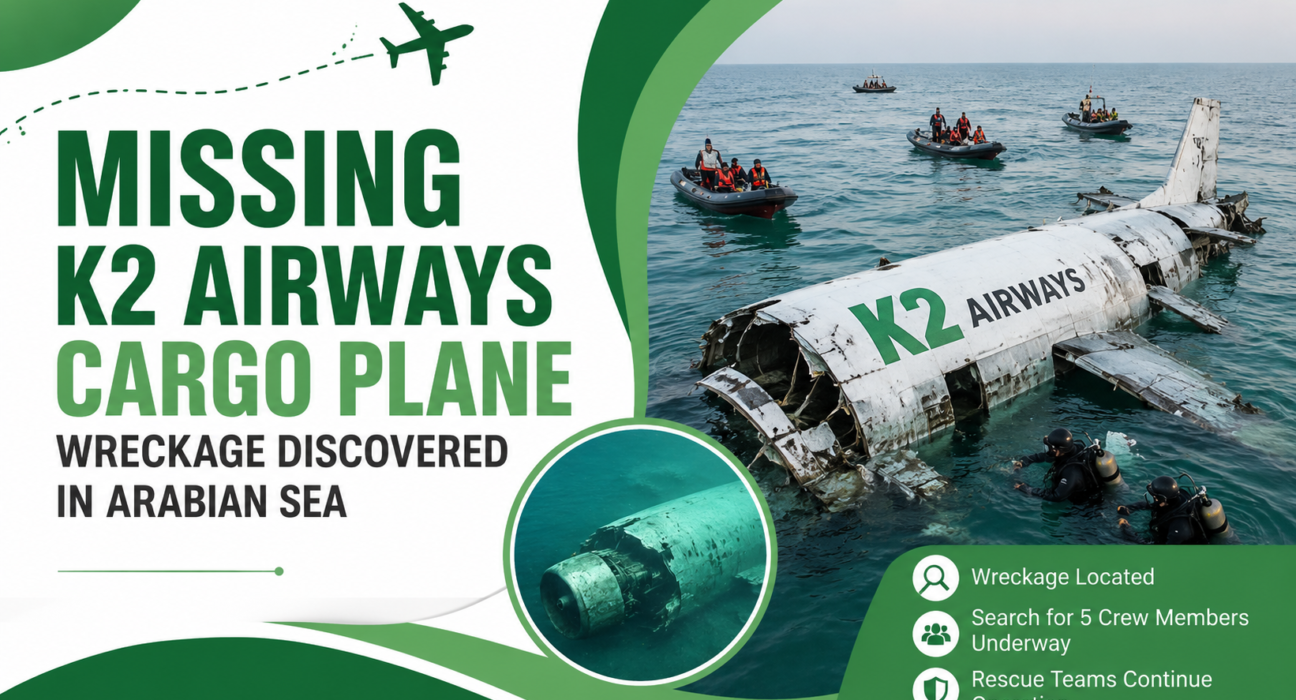
The discovery of the wreckage of the missing K2 Airways cargo plane in the Arabian Sea has brought a heartbreaking development to a case that had captured public attention. After days of search operations involving rescue teams, naval units, and aviation authorities, debris believed to be from the Boeing 737 cargo aircraft was located off the coast. While the discovery answers one major question about the aircraft’s location, many important questions about what caused the crash remain unanswered.
The cargo plane disappeared during a routine flight, losing contact with air traffic controllers shortly after takeoff. Aviation officials immediately launched a large-scale search and rescue operation after communication with the aircraft was lost. Search teams faced difficult weather conditions and vast areas of open sea, making the mission challenging. The discovery of the wreckage marks a significant step in the ongoing investigation.
Key Information at a Glance
| Detail | Information |
| Aircraft | Boeing 737 Cargo Plane |
| Airline | K2 Airways |
| Location of Wreckage | Arabian Sea |
| Status | Wreckage Located |
| Investigation | Ongoing |
| Rescue Efforts | Recovery operations continue |
Latest Search and Recovery Operations
The search operation involved multiple agencies working together to locate the missing aircraft. Naval vessels, helicopters, surveillance aircraft, and specialized rescue teams scanned large sections of the Arabian Sea before finally identifying floating debris consistent with the missing cargo plane.
Recovery teams are now focused on retrieving aircraft parts and any available flight recorders, commonly known as the black box. These devices are critical because they record cockpit conversations and flight data that may explain what happened during the aircraft’s final moments.
Authorities have also continued efforts to recover the five crew members who were on board. Families of the crew are waiting anxiously for updates as rescue teams continue their work in difficult conditions.
| Investigation Focus | Purpose |
| Flight Data Recorder | Analyze aircraft performance |
| Cockpit Voice Recorder | Review pilot communications |
| Aircraft Debris | Identify structural damage |
| Weather Conditions | Determine environmental factors |
| Maintenance Records | Check aircraft history |
What Could Have Caused the Crash?
At this stage, aviation experts are cautioning against drawing conclusions. Aircraft accidents are usually caused by one or several contributing factors rather than a single issue.
Investigators will examine every possible factor, including mechanical problems, engine performance, weather conditions, pilot communication, navigation systems, and maintenance records. They will also study radar data and air traffic control recordings to build a complete timeline of the flight.
Until investigators recover and analyze the black boxes, the exact cause of the accident will remain unknown.
Why the Black Box Is So Important
The black box is one of the most valuable pieces of evidence in any aviation investigation. Despite its name, it is actually painted bright orange to make it easier to locate after an accident.
The flight data recorder stores hundreds of technical measurements, including altitude, speed, engine performance, and aircraft controls. The cockpit voice recorder captures conversations between the pilots, radio communications with air traffic control, and important cockpit sounds.
Together, these recordings help investigators understand exactly what happened before the aircraft disappeared.
Impact on Aviation Safety
Every aviation accident is carefully investigated to improve future flight safety. If investigators identify technical faults or operational issues, airlines and aviation regulators may introduce new safety procedures to prevent similar incidents.
Cargo aircraft play an important role in transporting goods across the region, and maintaining public confidence in aviation safety remains a top priority. The findings from this investigation could lead to updated maintenance standards, pilot training improvements, or operational changes if needed.
What Happens Next?
The investigation is expected to take several months. During this time, experts will examine recovered debris, analyze flight recorder data, inspect maintenance records, and interview airline personnel.
Authorities have urged the public to rely only on official statements and avoid spreading unverified information on social media. Aviation investigations require careful scientific analysis, and early reports often change as more evidence becomes available.
Conclusion
The discovery of the K2 Airways cargo plane wreckage in the Arabian Sea is a major breakthrough in the search operation, but it also marks the beginning of a detailed investigation into the cause of the tragedy. Recovery teams continue working to locate the remaining wreckage and recover the crew members, while aviation experts analyze every piece of available evidence.
As investigators work toward finding the truth, the focus remains on supporting the affected families, understanding what went wrong, and strengthening aviation safety to help prevent similar accidents in the future.