
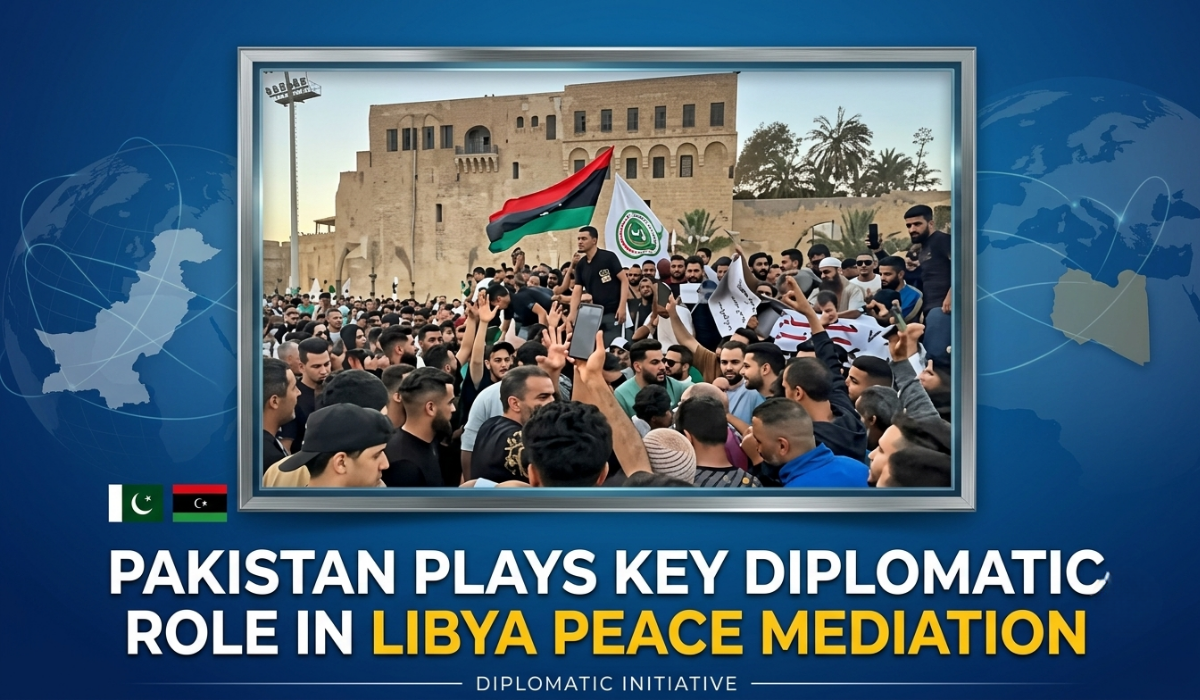
Pakistan is stepping into a new kind of spotlight. For years, the world has known Pakistan mostly for its role in South Asian politics and its long friendship with China. But something new is happening. Pakistan Plays Key Diplomatic Role in Libya Peace Mediation, and this move is turning heads across the Middle East, North Africa, and beyond.
If you’ve been following the news lately, you may have seen reports that Pakistan has quietly stepped in to help settle one of the longest-running conflicts in North Africa. Libya has been split for over a decade. Two rival governments have fought for control, and countless peace talks have failed. Now, Pakistan is trying to succeed where others could not.
In this article, we’ll break down exactly what’s happening, why Pakistan got involved, who the key players are, and what this could mean for the region and for Pakistan’s own standing in world affairs. Let’s dive in.
What’s Happening in Libya Right Now
Libya has been a country divided since 2011. That’s when a NATO-backed uprising toppled longtime leader Muammar Gaddafi. Instead of bringing stability, his fall opened the door to years of civil war. Today, Libya is split between two rival power centers: a western administration and an eastern one.
The western side is home to the Government of National Unity, based in Tripoli. The eastern side is controlled by the Libyan National Army, led by the powerful Haftar family. Each side controls its own territory, military forces, and even oil resources. This split has made it nearly impossible for Libya to function as one unified country.
Foreign powers have also gotten involved over the years. The United States, Turkey, the United Arab Emirates, and Egypt have all tried to shape the outcome in Libya. Each of these countries has its own interests, and that has made unity even harder to achieve. So when a new mediator like Pakistan enters the picture, people naturally want to know why.
How Pakistan Got Involved in Libya’s Peace Process
According to multiple reports, Pakistan quietly began working behind the scenes late last year to bring Libya’s rival sides together. This wasn’t a public announcement or a flashy diplomatic summit. It was quiet, careful groundwork done away from the cameras.
What makes this interesting is that both Libyan sides reportedly asked for Pakistan’s help. That’s a big deal. It means Pakistan wasn’t pushing its way into someone else’s conflict. Instead, it was invited by people who felt Pakistan could actually make a difference.
Why would two rival Libyan factions trust the same outside country? Part of the answer lies in Pakistan’s unique position. Unlike the US, Turkey, or the UAE, Pakistan doesn’t have decades of competing interests tied up in Libya’s oil fields or territory. That neutral standing may be exactly what made both sides comfortable reaching out.
The Meeting That Started It All: Asim Munir and Saddam Haftar
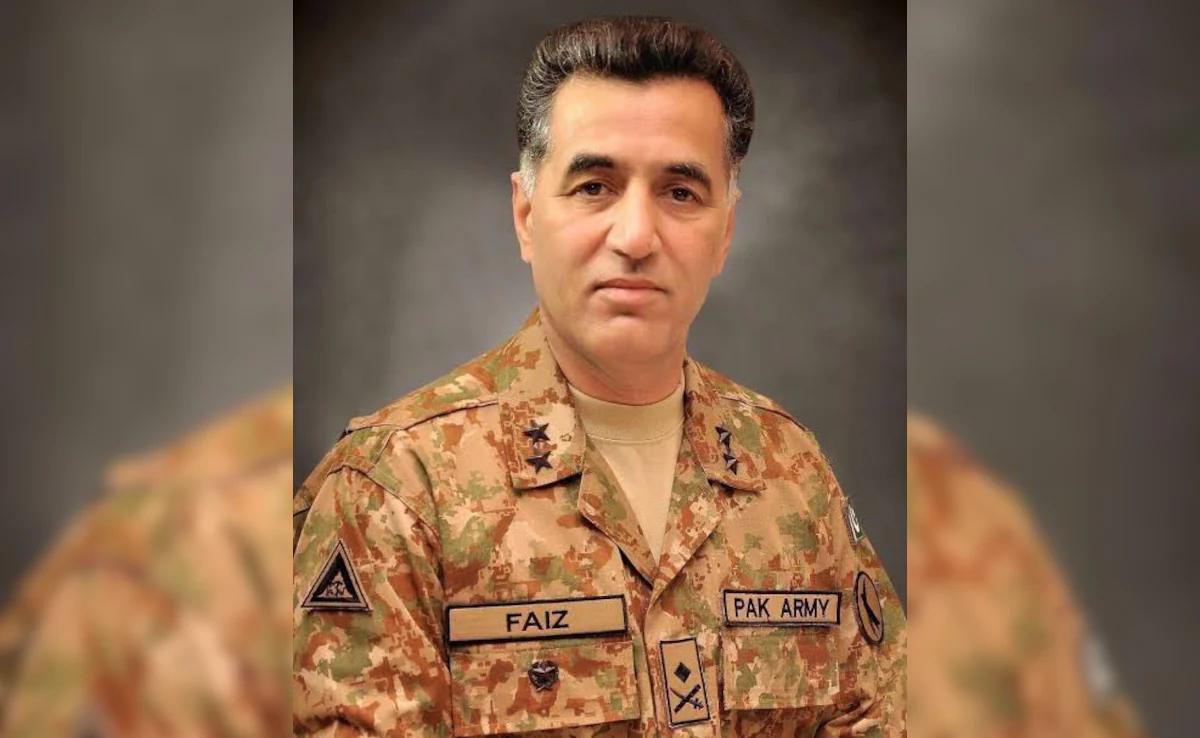
One event stands out as a turning point. Pakistan’s military chief, Field Marshal Asim Munir, met with Saddam Haftar in Rawalpindi. Saddam Haftar is the son of Khalifa Haftar, the powerful commander of the Libyan National Army who controls much of eastern Libya.
This meeting mattered a lot. Just days after it happened, Saddam Haftar traveled to Washington and met with US Secretary of State Marco Rubio. The timing wasn’t a coincidence. It showed that Pakistan’s outreach was connected to a bigger, US-supported push to bring Libya’s factions to the table.
The State Department later released a statement welcoming the efforts of Libyan leaders to overcome their divisions. It also confirmed continued US support for Libyan unity. This sequence of events, Rawalpindi first and then Washington, tells us that Pakistan’s role wasn’t happening in isolation. It was part of a larger, coordinated diplomatic effort.
Why Libya’s Rival Factions Trust Pakistan
You might be wondering why two groups that don’t trust each other would both be willing to work with the same mediator. There are a few good reasons for this.
First, Pakistan has managed to build relationships with both sides of Libya’s divide. That’s rare. Most outside powers have picked a side over the years, whether by supplying weapons, offering political support, or backing one government over another. Pakistan, by staying more neutral, has kept doors open on both ends.
Second, Pakistan has recently gained credibility as a mediator elsewhere in the world. It played a central role earlier this year in facilitating dialogue between the United States and Iran, two countries that rarely see eye to eye. That effort earned repeated praise from officials in Washington. Success in one difficult mediation naturally builds trust for future ones.
Third, Pakistan has been exploring defense ties with Libya’s eastern-based Libyan National Army. Reports mention discussions around selling JF-17 fighter jets and Super Mushshak trainer aircraft. While this raises some questions given the UN arms embargo on Libya, it also shows that Pakistan has real, practical relationships on the ground, not just diplomatic talk.
The Role of the United States and Saudi Arabia
Pakistan isn’t working alone on this. Reports indicate that the United States is fully aware of and supportive of Pakistan’s involvement in Libya. Washington has been pushing for a diplomatic solution in Libya for months, and Pakistan’s entry into the process appears to fit into that broader American strategy.
Saudi Arabia is also backing this effort. The Saudis have long been active players in Middle Eastern and North African diplomacy, and their support adds extra weight to Pakistan’s mediation attempt. When two influential countries like the US and Saudi Arabia stand behind a mediator, it sends a signal to all parties involved that the effort deserves to be taken seriously.
This kind of multi-country backing also gives Pakistan more leverage. Mediation is hard work, and having powerful allies in your corner can help push stubborn parties toward compromise when talks hit a wall.
Qatar and Turkey’s Push for Pakistan’s Involvement
Interestingly, it wasn’t just the US and Saudi Arabia encouraging Pakistan to step in. Qatar and Turkey, two countries that have long supported Libya’s western government, also reportedly urged Pakistan to get involved in the mediation process.
This detail is important because Qatar and Turkey have historically been seen as backers of one side of the Libyan conflict. Their support for Pakistan’s mediation suggests they believe Pakistan can bridge the gap fairly, without simply favoring the eastern faction it has built defense ties with.
Having encouragement from countries on both sides of the political divide, the US and Saudi Arabia on one hand, and Qatar and Turkey on the other, gives Pakistan’s mediation effort broader international legitimacy. It’s rare for a mediator to have this kind of wide-reaching support from competing camps.
Understanding the Libya Reunification Plan
At the center of these mediation efforts is something called the Libya Reunification Plan. This plan outlines a proposed 36-month transitional power-sharing arrangement. It would create a new governing body called the Government of National Consensus and Presidential Council.
Under this proposed plan, the faction connected to Khalifa Haftar would gain significant authority over Libya’s national budget. This is a major point of negotiation because whoever controls the budget effectively controls the country’s oil wealth and public spending.
Analysts caution that any agreement still faces an uphill battle. Similar deals in other conflicts have fallen apart after signing, so there’s no guarantee this plan will stick even if all sides agree to it on paper. Still, having a detailed framework on the table is progress that Libya hasn’t seen in years.
Key Elements of the Proposed Plan
- A 36-month transitional government structure
- Formation of the Government of National Consensus and Presidential Council
- Budget authority extended to the Haftar-aligned faction
- Resolution of disputes over posts and election rules
- A framework for managing Libya’s oil revenues fairly
Pakistan’s Growing Diplomatic Profile on World Stage
This isn’t the first time Pakistan has stepped up as a peacemaker this year. Its involvement in easing tensions between the United States and Iran already put Islamabad on the map as a serious diplomatic player. Now, with Libya, Pakistan is showing that its first success wasn’t a one-time thing.
For a country that has often been discussed mainly in terms of regional security issues, this shift matters. Pakistan is positioning itself as a country that can talk to almost anyone, from Washington to Tehran to Tripoli to Benghazi. That kind of flexibility is valuable in a world where trust between nations is often in short supply.
If Pakistan’s mediation in Libya succeeds, even partially, it could open doors to more diplomatic opportunities in the future. Countries that struggle to find neutral, trusted mediators may start looking toward Islamabad more often.
Table: Key Players in the Libya Conflict
| Player | Role | Backing Countries |
| Government of National Unity (GNU) | Western Libya administration, based in Tripoli | Qatar, Turkey |
| Libyan National Army (LNA) | Eastern Libya faction, led by the Haftar family | Pakistan (defense ties), regional allies |
| United States | Pushing for broad diplomatic settlement | Supports Pakistan’s mediation |
| Saudi Arabia | Backing mediation efforts | Supports Pakistan’s mediation |
| Pakistan | Neutral mediator between both sides | Requested by both Libyan factions |
Table: Pakistan’s Diplomatic Timeline in 2026
| Month | Event | Significance |
| Late 2025 | Pakistan begins quiet mediation efforts | Marks the start of Islamabad’s Libya involvement |
| Earlier 2026 | Pakistan facilitates US-Iran dialogue | Builds Pakistan’s credibility as a mediator |
| Last month | Asim Munir meets Saddam Haftar in Rawalpindi | Direct engagement with eastern Libyan leadership |
| Days later | Saddam Haftar visits Washington, meets Marco Rubio | Confirms US alignment with Pakistan’s efforts |
| Ongoing | Details of Libya Reunification Plan finalized | Sets the stage for a possible unity government |
Challenges Ahead for the Libya Peace Deal
Even with strong international backing, Pakistan’s mediation faces real obstacles. Libya’s conflict runs deep, and past peace deals have collapsed for many reasons. Let’s look at a few of the biggest challenges standing in the way.
Balancing Competing Foreign Interests
The United States, Turkey, the UAE, Egypt, Qatar, and Saudi Arabia all have their own goals in Libya. Any peace plan needs to satisfy, or at least not upset, all of these outside powers. That’s a tough balancing act for any mediator, including Pakistan.
Disputes Over Oil Revenue and Budget Control
Libya’s oil wealth is one of the biggest prizes in this conflict. Giving one faction control over the national budget, as the current plan proposes, could create resentment on the other side if not handled carefully. Money disputes have derailed Libyan peace talks before, and they could easily do so again.
Election Rules and Political Posts
Libya hasn’t held a stable national election in years. Deciding who gets which government post and how future elections will work is another sticking point. Even small disagreements over these details have historically been enough to collapse fragile agreements.
The Risk of Deals Falling Apart
Analysts have pointed out that agreements which look solid on paper don’t always hold up in practice. Similar power-sharing deals in other conflicts around the world have fallen apart after being signed. Pakistan and its partners will need to keep pushing even after any initial agreement is reached to make sure it actually sticks.
What This Means for Pakistan’s Foreign Policy
Pakistan’s involvement in Libya says a lot about where its foreign policy is heading. Historically, Pakistan’s diplomatic energy has been focused heavily on its immediate neighborhood, India, Afghanistan, and China. Branching out into North African and Middle Eastern peace efforts marks a noticeable shift.
This new direction could bring several benefits to Pakistan. A stronger reputation as a trusted mediator can lead to better relationships with Gulf states, the US, and other influential countries. It can also open the door to more economic and defense partnerships down the road, especially with countries like Libya, Qatar, and Saudi Arabia.
At the same time, this kind of high-profile diplomacy comes with risks. If the Libya mediation fails, it could hurt Pakistan’s credibility just as it’s starting to build a reputation as an honest broker. That’s likely part of why Pakistani officials are reportedly being careful and methodical rather than rushing toward a quick, unstable deal.
How This Compares to Pakistan’s Role in US-Iran Talks
Pakistan’s Libya mediation didn’t come out of nowhere. Just months earlier, Pakistan played a central role in easing tensions between the United States and Iran. That effort was widely praised, including by officials within the Trump administration.
There are some similarities between the two situations. In both cases, Pakistan positioned itself as a neutral party trusted by both sides of a tense relationship. In both cases, the US played a supporting role, aware of and involved in Pakistan’s efforts. And in both cases, success would boost Pakistan’s global standing significantly.
However, there are also differences. The US-Iran situation involved two nation-states with a long history of hostility, while the Libya conflict involves two factions within the same country. Mediating a civil conflict often requires different skills than mediating between two established governments, since internal power struggles can be even more personal and complicated.
Frequently Asked Questions About Pakistan’s Role in Libya
Why is Pakistan mediating in Libya?
Pakistan was asked by both of Libya’s rival factions to help mediate their long-standing conflict. Its neutral position, along with recent diplomatic success in US-Iran talks, made it an appealing choice for both sides.
Who else is involved in supporting Pakistan’s mediation?
The United States and Saudi Arabia are backing Pakistan’s efforts. Qatar and Turkey, which support Libya’s western government, also encouraged Pakistan’s involvement.
What is the Libya Reunification Plan?
It’s a proposed agreement that would create a 36-month transitional government called the Government of National Consensus and Presidential Council, aiming to unify Libya’s rival administrations.
Will this peace effort definitely succeed?
There’s no guarantee. Analysts warn that similar peace deals in other conflicts have collapsed after being signed. Disputes over budget control, election rules, and political posts remain major hurdles.
How does this affect Pakistan’s global image?
A successful mediation would boost Pakistan’s reputation as a trusted international peacemaker, building on its recent role in facilitating US-Iran dialogue.
Final Thoughts
Pakistan Plays Key Diplomatic Role in Libya Peace Mediation, and this development is worth watching closely in the months ahead. Whether or not this effort leads to lasting peace in Libya, it already shows something important: Pakistan is no longer just a regional player focused on South Asia. It’s stepping onto a bigger stage.
The road ahead won’t be easy. Old rivalries, foreign interests, and disputes over money and power could still derail progress. But for now, Pakistan has earned a seat at one of the world’s most difficult negotiating tables, and that alone marks a meaningful shift in how the world sees Islamabad’s role in global diplomacy.
If Pakistan can help bring even a fragile peace to Libya, it won’t just be a win for Tripoli and Benghazi. It will be a clear signal that Pakistan’s diplomatic reach is growing far beyond its own borders