
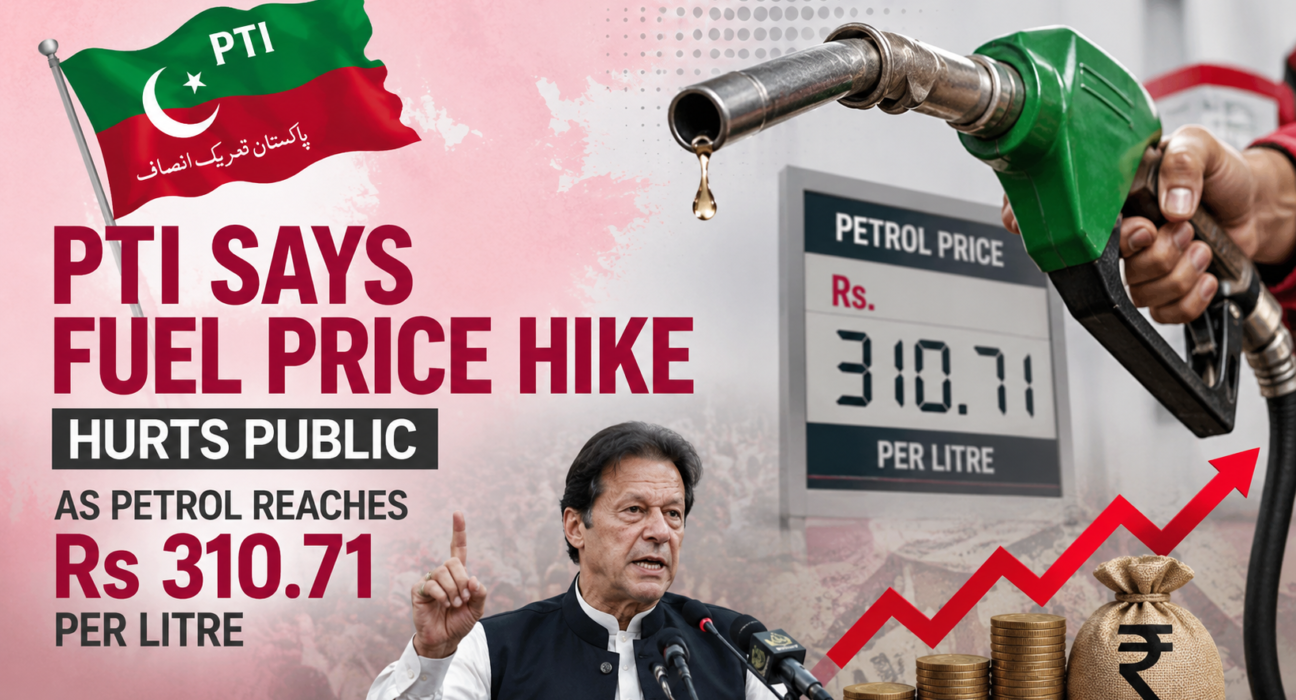
Pakistan Tehreek-e-Insaf (PTI) has strongly criticized the latest increase in fuel prices, saying the decision will place an even greater financial burden on millions of Pakistanis already struggling with rising living costs. Following the government’s latest notification, the price of petrol has climbed to Rs 310.71 per litre, sparking fresh political debate and public concern across the country.
The opposition party argues that the continued rise in petroleum prices will directly affect transportation, food costs, and household expenses, making daily life more difficult for ordinary citizens. With inflation remaining a major issue, the fuel price adjustment has become a key topic in Pakistan’s political and economic landscape.
| Fuel Price Overview | Details |
| Petrol Price | Rs 310.71 per litre |
| Main Concern | Rising inflation and cost of living |
| PTI’s Position | Government should provide relief instead of increasing fuel prices |
| Expected Impact | Higher transport fares, food prices, and business operating costs |
Public Faces Fresh Economic Pressure
The latest petrol price hike is expected to have a ripple effect throughout Pakistan’s economy. Fuel prices influence almost every sector, from public transportation and logistics to agriculture and manufacturing. As transportation costs increase, businesses often pass these additional expenses on to consumers, resulting in higher prices for essential goods.
Many families are already managing tight household budgets due to inflation. The latest increase means commuters, small business owners, and delivery services may have to spend significantly more on fuel, reducing their purchasing power and increasing financial stress.
PTI Criticizes Government’s Economic Policy
| PTI’s Main Concerns | Explanation |
| Higher Inflation | The party believes expensive fuel will accelerate inflation across the country. |
| Public Hardship | Rising petrol prices place additional pressure on middle and lower-income families. |
| Business Costs | Increased transportation expenses may reduce profits for businesses and increase consumer prices. |
| Need for Relief | PTI urges the government to introduce policies that reduce financial pressure on citizens instead of increasing fuel costs. |
PTI leaders have argued that fuel pricing should prioritize public welfare. According to the party, increasing petroleum prices at a time when inflation remains high makes it more difficult for citizens to meet their everyday needs. The opposition has called on the government to adopt measures that provide economic relief rather than adding to household expenses.
Impact on Transportation Sector
Public transport operators are among the first groups affected whenever fuel prices rise. Bus operators, ride-hailing drivers, taxi services, and freight companies typically experience immediate increases in operating costs.
These additional expenses often lead to higher fares for passengers and increased shipping charges for businesses. As transportation becomes more expensive, the prices of groceries, construction materials, and other essential products may also rise.
Businesses May Pass Costs to Consumers
Small and medium-sized businesses rely heavily on transportation to move products across the country. Higher petrol prices increase logistics costs, forcing many companies to either absorb the losses or transfer the additional expense to customers.
Retailers, wholesalers, and manufacturers may revise product prices in response to rising fuel costs, contributing to further inflation and reducing consumer spending power.
Public Reaction to Petrol Price Increase
The latest increase has generated widespread discussion among citizens. Many people have expressed concerns about managing household budgets as fuel costs continue to rise. Daily commuters, salaried employees, and small traders are particularly worried about the long-term impact of repeated fuel price adjustments.
Economic analysts also note that sustained increases in petroleum prices can slow consumer spending, as households allocate more of their income toward transportation and essential expenses.
Looking Ahead
The fuel price increase has once again highlighted the ongoing debate over Pakistan’s economic policies and inflation management. While the government may defend the adjustment based on global oil market trends and fiscal requirements, opposition parties such as PTI continue to argue that citizens need immediate financial relief.
As petrol reaches Rs 310.71 per litre, the coming weeks will determine how the increase affects inflation, transportation costs, and public sentiment. The issue is likely to remain at the center of Pakistan’s political and economic discussions as both policymakers and opposition leaders present their respective approaches to addressing the country’s economic challenges.
Meta Title: PTI Says Fuel Price Hike Hurts Public as Petrol Reaches Rs 310.71 Per Litre
Meta Description: PTI criticizes the latest fuel price increase as petrol reaches Rs 310.71 per litre, warning of rising inflation, higher transport costs, and increased financial pressure on Pakistani households.