

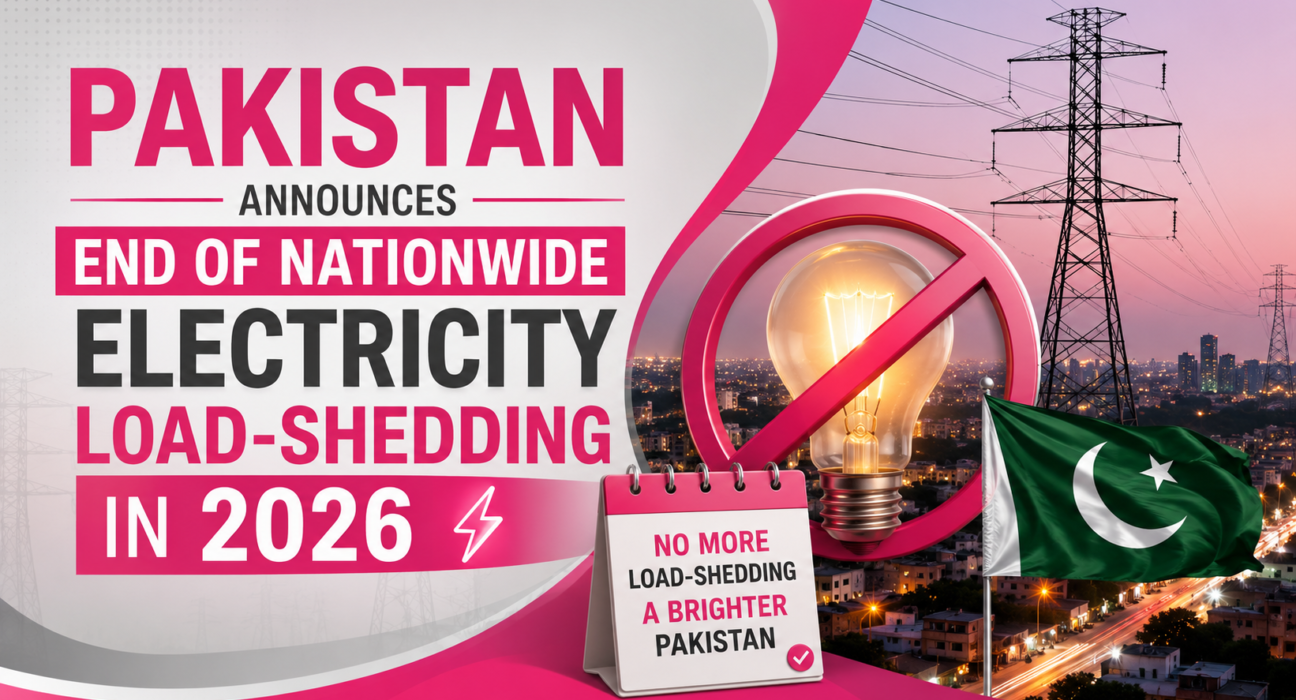
Pakistan has officially announced the end of nationwide electricity load-shedding in 2026, marking a significant milestone for the country’s energy sector. The federal government stated that planned power outages have been eliminated across the country following improvements in electricity generation, fuel availability, and transmission management. While localized outages caused by technical faults or maintenance may still occur, officials say the era of scheduled nationwide load-shedding has come to an end.
For millions of Pakistanis, this development represents more than just uninterrupted electricity. It signals progress toward a more reliable power system, greater economic stability, and improved quality of life. Businesses, industries, students, and households are all expected to benefit from a more consistent electricity supply.
| Key Highlights | Details |
| Announcement | Pakistan officially ends nationwide scheduled electricity load-shedding in 2026 |
| Main Reason | Increased power generation and improved fuel supply |
| Impact | Better electricity availability for homes, businesses, and industries |
| Exceptions | Localized outages due to technical faults or maintenance may still occur |
Pakistan’s Major Energy Milestone
The government attributed the achievement to a combination of increased electricity production, improved hydropower generation, and timely imports of liquefied natural gas (LNG). Officials also highlighted better coordination between power generation companies and distribution networks, allowing electricity demand to be met more efficiently.
For years, electricity shortages affected daily life across Pakistan. Scheduled power cuts disrupted businesses, slowed industrial production, and created challenges for students and households. Ending nationwide load-shedding is therefore considered one of the country’s most important energy achievements in recent years.
Table: Expected Benefits of Ending Load-Shedding
| Sector | Expected Benefits |
| Households | Continuous electricity for daily activities and improved comfort |
| Businesses | Higher productivity with fewer interruptions |
| Industries | Stable manufacturing operations and lower operational costs |
| Education | Better learning environment for students |
| Healthcare | More reliable electricity for hospitals and clinics |
Economic Impact
A reliable electricity supply can significantly strengthen Pakistan’s economy. Small businesses often suffered financial losses due to unexpected power outages, while factories faced production delays that reduced exports and increased manufacturing costs.
With uninterrupted electricity, industries can improve productivity, create more employment opportunities, and attract both local and foreign investment. Investors generally prefer countries with stable infrastructure, making reliable electricity an important factor for long-term economic growth.
The government believes that reducing energy disruptions will also improve Pakistan’s competitiveness in regional and international markets.
Relief for Households
Families across Pakistan are expected to experience noticeable improvements in their daily lives. Regular electricity allows households to use essential appliances without worrying about scheduled outages, particularly during the hot summer months.
Students preparing for examinations will benefit from uninterrupted study time, while remote workers and online businesses can operate more efficiently. Reliable electricity also reduces dependence on backup generators and alternative power sources, lowering household expenses.
Challenges That Still Remain
Although scheduled nationwide load-shedding has officially ended, experts caution that Pakistan’s power sector still faces several long-term challenges. Electricity theft, outdated transmission infrastructure, circular debt, and rising energy demand continue to require attention.
Localized outages caused by technical faults, weather conditions, or maintenance work may still occur. Therefore, maintaining a stable electricity system will require continuous investment in infrastructure, renewable energy, and modernization of the national grid.
The government has also emphasized the importance of improving operational efficiency to ensure that recent progress remains sustainable.
Looking Ahead
Pakistan’s announcement marks an important turning point in the country’s energy journey. If the current improvements are maintained, the nation could move closer to achieving long-term energy security while supporting economic development and improving public services.
Continued investment in renewable energy projects, transmission upgrades, and efficient power management will be essential to sustain uninterrupted electricity across the country. By addressing remaining structural challenges, Pakistan can build a stronger and more resilient energy sector for future generations.
Conclusion
The official end of nationwide electricity load-shedding in Pakistan during 2026 is a major achievement that offers hope for economic growth, improved living standards, and greater confidence in the country’s energy system. While occasional localized outages may still happen due to technical reasons, the elimination of scheduled nationwide power cuts represents meaningful progress. Going forward, consistent policy implementation and continued investment will play a crucial role in ensuring that Pakistan’s electricity network remains reliable, efficient, and capable of meeting the country’s growing energy needs.