

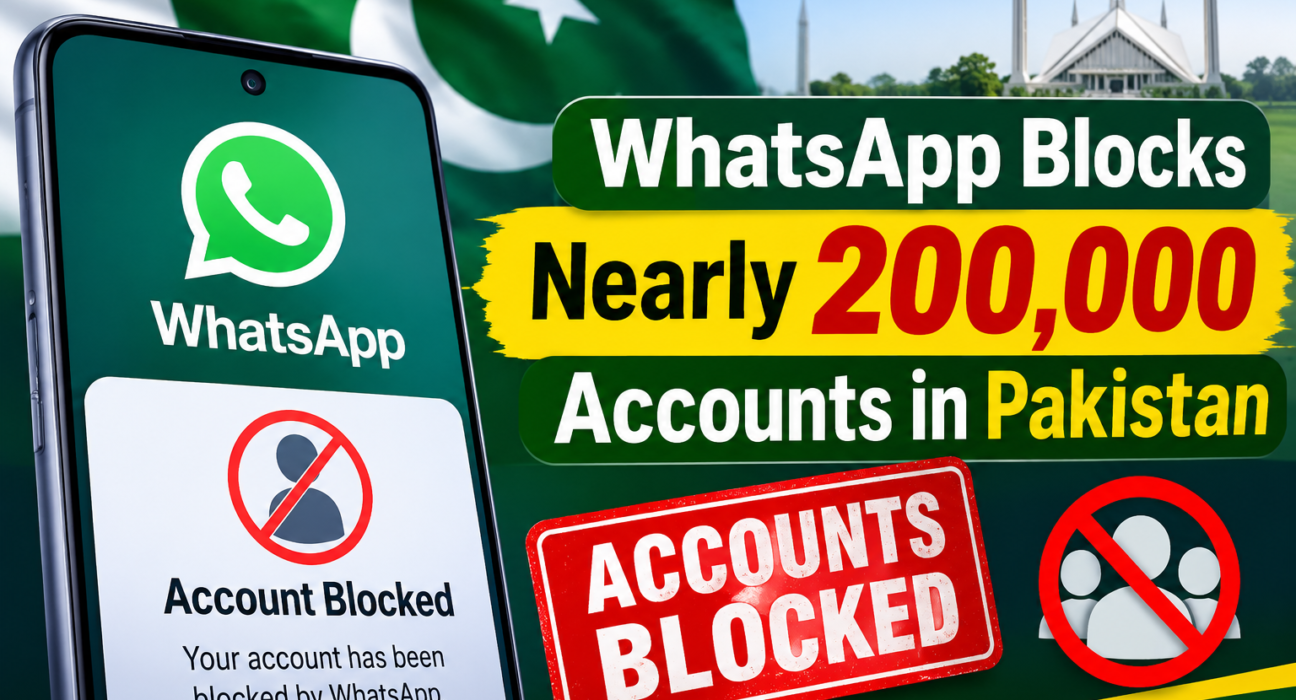
If you use WhatsApp in Pakistan, you’ve probably seen the news. Meta has blocked about 176,000 WhatsApp accounts linked to recycled mobile numbers, after a request from the Pakistan Telecommunication Authority (PTA). That is close to 200,000 accounts, which is why the headline sounds so big.
This guide explains what happened and why it matters. It also covers the simple steps that keep your own account safe. I’ve kept it plain and practical, so you can use it today.
What Happened and What the Numbers Say
The story started to take shape in the middle of 2026. PTA began warning people that WhatsApp accounts tied to inactive or cancelled SIMs could be blocked. By late October, PTA confirmed the blocking had started. On November 6, 2026, news outlets reported that Meta had shut down 176,000 accounts on PTA’s request.
Here are the key facts in one place.
Key Facts at a Glance
| Detail | What was reported |
| Accounts blocked | About 176,000 |
| Who asked for it | Pakistan Telecommunication Authority (PTA) |
| Who acted | Meta, the company that owns WhatsApp |
| Reason | Fraud through accounts on recycled or inactive numbers |
| Recycled numbers held by operators | Around 16 million |
| Numbers PTA shared with Meta so far | Around 10 million |
I want to be clear about one thing. The figure in the reports is 176,000, not exactly 200,000. “Nearly 200,000” is a fair way to describe it, but I won’t round it up and call it fact. Good content, and good journalism, sticks to the numbers that were published.
The Timeline in Simple Words
First came the warnings. PTA told users to keep their WhatsApp linked to active numbers. Then came the first blocks, which followed an awareness campaign. Finally, Meta confirmed the large batch of 176,000 accounts. So this wasn’t a sudden move. People were told ahead of time, even if many never saw the message.
What Does “WhatsApp Blocks Nearly 200,000 Accounts in Pakistan” Really Mean for You?
Let’s start with the good news. If you use your own active SIM and you log in to WhatsApp regularly, this action was not aimed at you. The blocked accounts were attached to numbers that had been deactivated, cancelled, or left unused.
Still, the story matters for everyone. Your phone number is the key to your WhatsApp account. If that number slips away from you, so does your account. And when a number slips away, someone else may end up holding it.
Who Is Most Likely to Be Affected
You should pay attention if any of these fit you:
- You switched to a new SIM and never moved your WhatsApp to it.
- You stopped using an old number but kept the account.
- Your SIM was blocked or cancelled for any reason.
- You use a number you don’t fully control, such as one registered in a relative’s name.
Most of us know at least one person like this. Maybe you’re that person. A few minutes of checking can save you a lot of trouble later.
What Are Recycled Mobile Numbers?
You don’t need to be a tech expert to understand this. A recycled number is a phone number that used to belong to one person and was later given to someone else.
Here’s how it works. You buy a SIM, and the number is yours. If the SIM stays unused for a long time, or the connection gets cancelled, the telecom company can take that number back. Later, it may hand the same number to a brand new customer.
Why Recycling Happens
Phone numbers are limited, and a country can’t make them forever. Telecom companies reuse numbers to make good use of what they have. Recycling is normal, and it happens all over the world.
Why It Becomes a Problem for WhatsApp
The trouble starts because WhatsApp ties your account to your number. If you never moved your account away from a dead number, it can stay linked to it. When the new owner of that number signs up, they may get access to a profile with the old owner’s name, photo, and sometimes contacts or chat links.
That is a real privacy risk. It is also an opening for fraud.
Why PTA Moved Against These Accounts
PTA said it had received complaints about scams run through WhatsApp accounts on inactive or cancelled numbers. According to officials, these numbers were being reused, and that gave some people a way to exploit accounts linked to earlier subscribers.
The Cyber Fraud Angle
Think about how a scam works. A fraudster wants people to trust the message they get. An account with an old history, an old profile picture, and a link to real contacts looks believable. That helps scammers. They can ask for money, share fake links, or pretend to be someone you know.
By blocking accounts on recycled numbers, PTA is trying to close that door. Officials described the plan as a way to reduce cyber fraud and strengthen safeguards for users.
A Consumer Protection Move
The authority framed the step as a safety measure for ordinary people. It’s easy to see the logic. If a number no longer belongs to the person who started the account, nobody can be sure who is behind it. Blocking those accounts removes that doubt.
How Meta and PTA Are Working Together
This wasn’t a one-time action. The two sides have agreed on a way to keep going.
The Monthly Data-Sharing Plan
Reports say PTA will share details of 5,000 recycled numbers with Meta every month. Accounts tied to those numbers will then be blocked in phases. The idea is to work through the long list step by step instead of all at once.
The numbers are large. Telecom operators hold around 16 million recycled numbers, and PTA has already passed details of 10 million to Meta for checking. That tells us this is a long project, not a quick fix.
Why Phased Blocking Makes Sense
Doing it in steps gives everyone time to check the data. It also gives users more time to update their numbers before their accounts are touched. For a country with so many WhatsApp users, a careful rollout is usually safer than a sudden sweep.
A Separate Incident: When Real Users Got Locked Out
It’s worth keeping two stories apart, because people mix them up. In early August 2026, many WhatsApp users around the world found their accounts suddenly restricted. The app told them their account activity and device details were being reviewed. ProPakistani reported that Meta confirmed the issue and said it was restoring access.
How This Differs From the PTA Action
That August problem looked like a review system gone wrong. Meta said it sometimes gets these things wrong and tries to fix them fast. It did not give a number or explain the cause.
The 176,000 accounts are a different matter. Those blocks followed a request from PTA and focused on recycled numbers. So if your account was locked in August, that is not the same event.
Why This Matters for Trust
Both stories show one thing. Automatic systems protect us, but they can also make mistakes. That’s why you should always keep a backup plan, which I’ll cover later.
What the Block Means for Your Chats and Privacy
Let’s talk about the part many readers care about most. Does a block like this mean someone is reading your messages? Nothing in the published reports says that. The action was about stopping misuse of accounts on numbers that changed hands.
Your Personal Chats
WhatsApp chats are protected with end-to-end encryption, which means only you and the person you chat with can read them. A block on an account doesn’t change how that encryption works. It only cuts off access to the account itself.
The Real Privacy Risk
The bigger danger sits with the old account on the old number. If you leave an account behind on a number you no longer use, someone new could try to take it over. That could expose your name, your profile photo, and possibly the groups you were in. So the block actually works in your favor if the account is one you abandoned.
How to Check If Your WhatsApp Is Safe
You don’t need special tools. Take five minutes and go through this list.
Step 1: Confirm Your SIM Is Active
Check that the SIM linked to your WhatsApp is working and registered in your name. If you haven’t used it in a long time, make a call or send a message from it. Active use keeps a number from being treated as inactive.
Step 2: Use the Change Number Feature
If you’ve moved to a new number, don’t just install WhatsApp again and start fresh. Open WhatsApp, go to Settings, then Account, and choose Change Number. This moves your chats, groups, and settings to the new number. PTA has specifically urged people who changed numbers to use this feature.
Step 3: Turn On Two-Step Verification
This adds a personal PIN to your account. Even if someone gets your number, they can’t open your account without that PIN. It’s one of the strongest and simplest protections you can add.
Step 4: Back Up Your Chats
Make a backup of your chats on a regular basis. If an account ever gets blocked by mistake, a backup lets you recover your important messages and files more easily.
What to Do If Your Account Gets Blocked
Panic doesn’t help. A calm checklist does.
First, Read the Message on Screen
WhatsApp usually tells you why access is limited. In the August incident, the app said it was reviewing account activity and would send a result, typically within 24 hours. Wait for that before you try anything drastic.
Then, Check the Number
Ask yourself whether the SIM is active and still yours. If the number was inactive or cancelled, the block may be linked to the PTA action. In that case, getting a working SIM and verifying it with WhatsApp is the first thing to try.
Use the In-App Help Option
If your account was blocked by mistake, use the support option inside the app and explain your situation clearly. Keep your message short. Mention your phone number in full international format, and say that you use the number actively.
Avoid Shortcuts and Fake Recovery Services
When people get locked out, scammers appear fast. Some offer to “unblock” accounts for money. Don’t pay anyone, and never share your six-digit WhatsApp code with anyone. That code is the key to your account. Nobody from WhatsApp will ask you for it.
Staying Safe from WhatsApp Scams in Pakistan
This story is really about fraud, so let’s talk about spotting it. Scams on WhatsApp usually follow a few patterns.
Common Tricks to Watch For
- A message from an unknown number claiming to be a friend or relative in trouble.
- A link that promises a prize, a job, or a government payment.
- A request for your verification code, saying it was “sent by mistake.”
- A message that pushes you to act right now.
Simple Habits That Protect You
Pause before you click. If a message looks odd, call the person on a normal phone call and check. Don’t forward suspicious links, because that spreads the problem to people who trust you. And don’t share personal details like your CNIC, bank card details, or OTP codes in chat.
These habits cost nothing, and they stop most scams before they start.
What This Means for Businesses and Online Sellers
Many small shops and online sellers in Pakistan run their whole customer service through WhatsApp. For them, a blocked account can mean lost sales and angry customers.
Keep Your Business Number Active
If your business uses a SIM for WhatsApp, make sure it stays active and registered. Don’t leave a business number idle for long stretches. If you change numbers, use the Change Number feature so your customers and groups move with you.
Plan for the Worst Day
Keep your customer list saved somewhere outside WhatsApp, like a simple spreadsheet. Give customers a second way to reach you, such as a phone call or a page on another platform. That way a sudden lockout doesn’t stop your business.
Quick Safety Checklist for Everyone
| Action | Why it helps | How often |
| Use your SIM regularly | Keeps the number from being marked inactive | Every few weeks |
| Use Change Number after switching SIMs | Moves your account safely | Every time you switch |
| Turn on two-step verification | Stops takeover even if someone has your number | Once, then keep the PIN safe |
| Back up your chats | Helps you recover after a lockout | Regularly |
| Never share your six-digit code | Blocks the most common scam | Always |
What Comes Next for WhatsApp in Pakistan
With 16 million recycled numbers in the system and thousands more to be reported each month, this process will continue for some time. Expect more news, more warnings, and probably more blocked accounts as the lists get checked.
A Shift Toward Number Accountability
The bigger idea is simple. Authorities want the person using a number to be the person who owns it, and they want accounts to match real, active connections. That’s a good step for safety, even if it feels strict.
What You Can Expect as a User
For most people, life will go on as normal. The main change is a habit: keep your SIM active, update your number when it changes, and treat your WhatsApp account like something worth protecting. For full details on the telecom side of this story, you can read the Dunya News report.
Final Thoughts
The block of roughly 176,000 WhatsApp accounts is a big number, but the lesson is small and clear. Your phone number is the lock on your account, and a number you don’t control can’t keep that lock safe. Meta and PTA acted to cut down on fraud, and users can help by doing a few simple things.
Check your SIM, use Change Number when you switch, turn on two-step verification, and never share your code. These steps take minutes and protect your chats, your contacts, and your money. Share this guide with family and friends who still use old numbers, because one quick check today can stop a bigger problem tomorrow.