

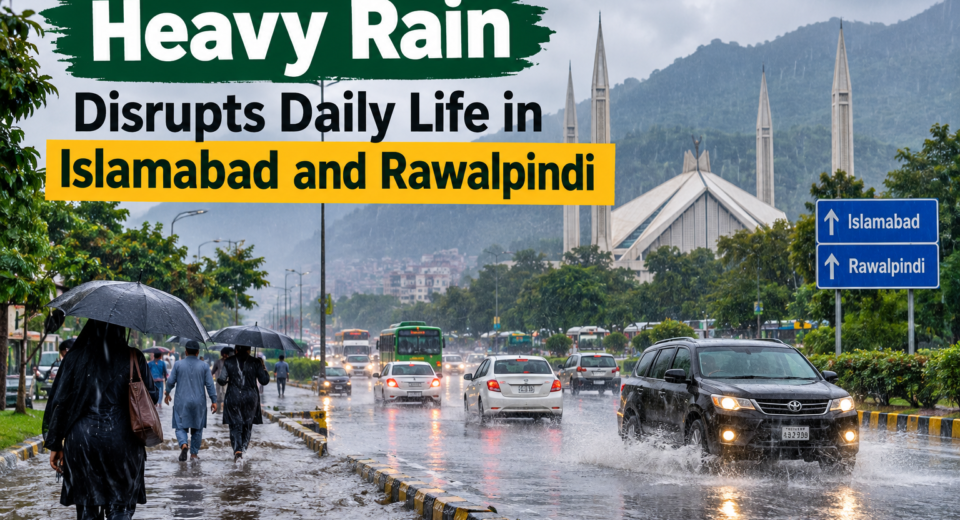
Heavy Rain Disrupts Daily Life in Islamabad and Rawalpindi
When the clouds roll in over the Margalla Hills, people in the twin cities know what may come next. A light drizzle can turn into hours of heavy rain, and the day changes fast. Roads fill up, power goes out, schools close, and people rush home early. This article looks at how the rain affects ordinary life, what causes the trouble, and what you can do to stay safe and keep going. I wrote this in plain language, so you can read it quickly and use it in real life. Heavy Rain Disrupts Daily Life in Islamabad and Rawalpindi: What Is Really Happening Every year, the monsoon brings relief from the summer heat. The air cools, the trees turn deep green, and the Margalla Hills look their best. But the same rain also brings stress to millions of people who live in the twin cities. When the downpour is heavy, water collects on roads faster than drains can carry it away. Traffic slows to a crawl. Small streets turn into streams. People who rely on motorbikes or rickshaws get soaked and stuck. Office workers arrive late or not at all, and shop owners watch customers disappear. A Quick Look at the Typical Impact The effects are easy to spot when you step outside: None of this is new, but it still catches many people off guard. A short break in the rain can feel like the end of the storm, and then the next wave arrives. Why Islamabad and Rawalpindi Get Hit So Hard by Monsoon Rain The twin cities sit close to the hills, and that matters. Moist air moves in from the south and gets pushed upward by the mountains. As it rises, it cools and drops its water. That is why this region often gets stronger rainfall than nearby plains. The Role of the Margalla Hills The Margalla Hills act like a wall. Clouds collect against them, and the rain falls hard and fast. The water then runs down the slopes toward the city. Streams that look calm in summer can swell in a short time. Weather Patterns and Western Disturbances Sometimes the monsoon winds meet a western weather system. When these two meet, the result can be thunderstorms with sudden, heavy bursts of rain. Forecasters follow these patterns closely, and you can check the latest alerts on the Pakistan Meteorological Department website before you plan your day. Fast Growth and Less Open Ground The twin cities have grown a lot over the years. More buildings, roads, and paved lots mean less soil to soak up water. When rain has nowhere to sink in, it flows across the surface and gathers in low spots. That is a big reason why even a few hours of rain can cause flooded streets. How Heavy Rain Slows Down Roads and Daily Traffic Ask anyone who has driven through the twin cities during a storm, and they will tell you the same thing: traffic becomes a different beast. Main Roads Under Pressure Busy routes like Murree Road, Srinagar Highway, and Islamabad Expressway carry thousands of vehicles every hour. When rain makes the surface slick and water pools along the edges, drivers slow down. Even one stalled car can block a whole lane. The delay then spreads backward for kilometers. Underpasses and Low Points Underpasses are some of the trickiest spots. Water collects in them quickly, and a car that looks like it can pass may stall halfway. If you see water filling an underpass, please do not try to cross it. Taking a longer route is always safer than getting trapped. Smaller Streets and Neighborhood Lanes In many neighborhoods, narrow lanes have weak drainage. Water rises, mixes with mud and trash, and makes walking hard. Children, older adults, and people with health problems struggle the most in these conditions. The Struggle of Commuters, Students, and Office Workers Rain does not stop life. People still have places to be. That is where the real trouble starts. Getting to Work on Time Many workers travel from Rawalpindi to offices in Islamabad every morning. When rain slows the road, a thirty-minute trip can stretch to two hours. Some people leave home very early. Others choose to wait and hope the weather improves. Either way, the day begins with stress. Students and Schools Schools sometimes close or change their timings when the rain is strong. This helps keep children safe, but it also disrupts learning. Parents have to rearrange their own schedules, and families who depend on school transport face extra worry. Online classes help in some cases, but not every home has a steady internet connection. Daily Wage Earners For people who earn money day by day, a rainy day can mean no income. Street vendors, laborers, rickshaw drivers, and delivery riders often cannot work safely in a storm. Their hardship does not always make the news, but it is real, and it is worth remembering. Urban Flooding and Blocked Drains in the Twin Cities Flooding is the picture most people think of when they hear about heavy rain here. It does not always mean a huge disaster. Often, it is a slow, frustrating problem that repeats every season. Why Drains Fail Drains get clogged by plastic bags, bottles, leaves, and construction waste. When the storm hits, the water cannot flow out, so it rises onto the road. Cleaning drains before the monsoon makes a big difference, but it needs steady effort from city teams and from residents too. The Story of Nullah Leh Rawalpindi is closely tied to Nullah Leh, a stream that runs through the city. In normal weather, it carries a modest flow. During heavy rain, the water level can climb quickly, and people living near its banks watch it with worry. Officials often keep a close eye on the levels and issue warnings when the water is rising. Low-Lying Areas and Housing Societies Some neighborhoods sit lower than the roads around them. When water collects, it can enter shops