

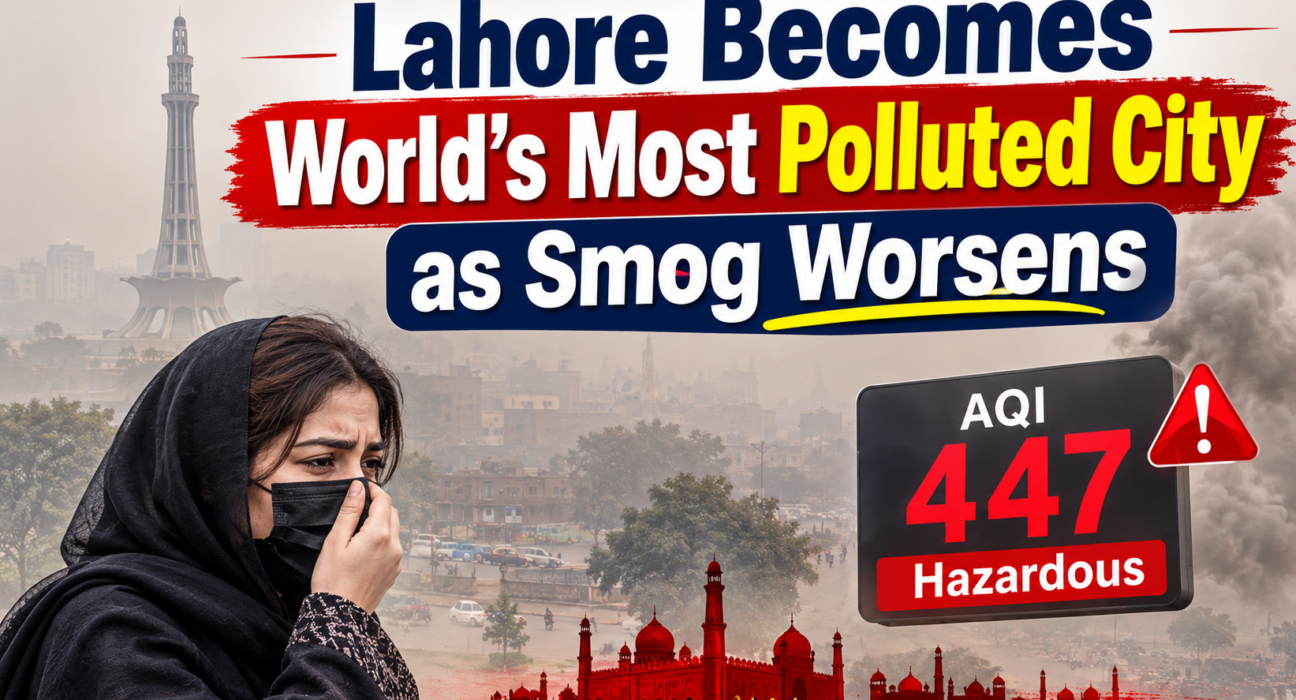
If you woke up this week with itchy eyes and a scratchy throat, you are not alone. A gray, heavy haze is sitting over Lahore again, and the numbers are not pretty. Lahore was ranked the world’s most polluted major city on a recent morning, with an Air Quality Index (AQI) of 296 at 10am on October 28, as smog thickened with the colder weather. Let’s talk about what is going on, why it keeps happening, and what you can do about it today. dawn
Why Did Lahore Become World’s Most Polluted City as Smog Worsens?
Short answer: a perfect storm. Lahore sits in a flat region where polluted air has nowhere to go once winter arrives. Add thousands of vehicles, factories, crop fires, and construction dust, and the air turns toxic fast.
Think of it like a pot with the lid on. Every day, new smoke and dust go in. In winter, the lid (cold, still air) stays shut, so the pollution builds up. That is why the air quality index climbs from “unhealthy” to “hazardous” in just a few weeks.
How the Smog Season Builds Up
In early October, the air is usually only moderately bad. On October 2, Lahore topped IQAir’s list with an AQI of 167, which is “unhealthy.” By late October, readings were far higher. The jump happens because temperatures drop, winds slow down, and farmers in the region clear their fields by burning leftover crop stalks. dawn
What Does an AQI Number Actually Mean?
You hear numbers like 296 or 394 on the news, but what do they tell you? The AQI is a simple scale that shows how clean or dirty the air is.
A Quick Guide to the Scale
- 0 to 50: Good. Safe for everyone.
- 51 to 100: Moderate. Fine for most people.
- 101 to 150: Unhealthy for sensitive groups, like kids and older adults.
- 151 to 200: Unhealthy for everyone.
- 201 to 300: Very unhealthy.
- 301 and above: Hazardous.
The US Environmental Protection Agency treats air as satisfactory when the AQI is under 50. So when Lahore crosses 300, the air is many times worse than what experts call safe. It is not just uncomfortable. It is a real health risk.
Why PM2.5 Is the Real Villain
Most of the danger comes from PM2.5, which are tiny particles about 30 times thinner than a human hair. You cannot see them one by one, but you breathe them in all the same. They slip deep into your lungs and can even enter your bloodstream.
Last November, IQAir noted that Lahore’s PM2.5 level was 54.4 times higher than the World Health Organization’s yearly guideline. That is a staggering gap, and it shows this is not a one-time problem.
The Main Causes Behind Lahore’s Smog Problem
No single thing causes smog. It is a mix of daily habits, industry, and weather. Let’s break down the biggest culprits.
Vehicle Exhaust and Traffic Jams
Lahore has millions of cars, motorcycles, rickshaws, and trucks. Many run on old engines and low-quality fuel. Every traffic jam pumps out clouds of vehicular emissions. When you sit in traffic on Ferozepur Road or Mall Road, you are breathing it all in.
Industrial Smoke and Brick Kilns
Factories and brick kilns around the city burn coal, wood, and even rubber to save money. Their chimneys release black smoke, sulfur, and fine dust. Some small industries have no filters at all. Much of this pollution goes unchecked because inspecting hundreds of sites is hard work.
Crop Residue Burning
After harvest, many farmers burn leftover rice stalks to clear land fast. It is cheap, but the smoke travels for miles. Add to that smoke coming from fields across the border, and the whole region gets covered. Easterly winds have been pushing polluted air from India’s border areas into Lahore, making the smog worse across central Punjab.
Construction Dust and Open Waste Burning
New roads, plazas, and housing projects kick up loads of dust. On top of that, people burn garbage in empty plots and on street corners. It seems harmless, but plastic and trash release toxic fumes. These small fires add up across a city of more than 13 million people.
How Weather Turns Pollution into Thick Smog
Why does the problem peak between October and January? The answer is a weather trick called temperature inversion.
The Lid Effect in Winter
Normally, warm air near the ground rises and carries pollution up and away. In winter, a layer of warm air traps cold air underneath, like a blanket. The smoke and dust stay stuck near the ground, right where you breathe. With low wind speed, nothing blows the dirty air away.
Why Mornings Feel the Worst
Mornings and late nights are the most dangerous hours. The air is coldest and calmest then, so pollution settles low. That is why many people notice thick haze when they leave for work or school. If you can, plan outdoor errands for the afternoon, when the air is usually a bit better.
How Smog Affects Your Health
Let’s be honest. Smog is not just a nuisance. It affects almost everyone in the city, from toddlers to grandparents.
Short-Term Effects You May Notice
- Burning or watery eyes
- Sore throat and dry cough
- Headaches and tiredness
- Trouble breathing, especially for people with asthma
- Skin irritation
These symptoms often show up within hours of heavy exposure. Hospitals in Lahore usually see more patients with chest and breathing problems during smog season.
Long-Term Risks You Should Know About
Breathing dirty air year after year raises the risk of respiratory disease, heart problems, and stroke. It can slow lung growth in children and may hurt unborn babies. Doctors also link long-term exposure to lung cancer. This is why health experts take smog so seriously.
Who Is Most at Risk
Children, pregnant women, older adults, and people with asthma or heart conditions are hit hardest. Outdoor workers, like traffic wardens, street vendors, and delivery riders, also face daily exposure with little protection.
What the Government Is Doing About It
Officials in Punjab have not ignored the crisis. In recent years, the province has tried several steps. In past seasons, authorities declared smog emergencies and the courts pushed for action as readings crossed 400.
Anti-Smog Operations and New Rules
Punjab ran its first anti-smog gun operation last year, spraying fine water mist across the city to help settle dust and pollutants, and this helped lower unhealthy air levels. Authorities have also tried to crack down on crop burning, smoky vehicles, and polluting factories. Work-from-home orders and school closures have been used on the worst days.
Why Progress Feels Slow
The honest truth is that quick fixes only help for a day or two. Real change needs cleaner fuel, better public transport, stronger factory rules, and help for farmers to stop burning stalks. Lahore also shares its air with neighboring regions, so cooperation across borders matters too. Without long-term plans, the smog returns every year.
Simple Ways to Protect Yourself and Your Family
You cannot control the weather, but you can control how much smog you breathe. Here are easy steps that really work.
Smart Daily Habits
- Check the AQI each morning on a trusted app like IQAir before heading out.
- Wear an N95 mask outdoors. Cloth and thin surgical masks do very little against PM2.5.
- Keep windows shut during the thickest smog hours, especially early morning and night.
- Limit outdoor exercise when the AQI is above 150. Walk indoors instead.
- Drink plenty of water and eat fruits rich in vitamin C to support your body.
Make Your Home Safer
An air purifier with a HEPA filter can make a big difference in a bedroom. If that is too costly, keep indoor plants and mop floors often to cut dust. Avoid burning incense, candles, or wood indoors, since they add to indoor pollution. Seal gaps around doors and windows to keep smoky air out.
Help Kids and Elders
Ask schools to cancel outdoor sports on bad air days. Keep an eye on elders who cough more than usual. If a family member has asthma, keep their inhaler and medicines handy, and call a doctor early if breathing gets harder.
What Can We Do as a Community?
Fixing smog is not just the government’s job. Small choices by millions of people add up quickly.
Everyday Choices That Cut Pollution
- Carpool or use public transport when you can.
- Get your car or bike tuned so it does not blow black smoke.
- Never burn garbage, leaves, or plastic.
- Plant trees at home, in schools, and in your neighborhood.
- Report smoky factories and kilns to the authorities.
None of these feels huge on its own. But if a few million people do them, Lahore’s air can improve.
Raising Awareness
Talk about it. Share the daily AQI with friends, family, and coworkers. The more people understand the problem, the more pressure there is on leaders to act. Awareness often starts at the dinner table.
Frequently Asked Questions About Lahore’s Smog
When does smog season usually start and end?
It generally begins in October, peaks in November and December, and fades by late January or February when winds pick up and rain arrives.
Is it safe to go outside when the AQI is hazardous?
It is best to avoid it. If you must go out, wear an N95 mask, keep trips short, and avoid heavy exercise.
Does rain help clear the smog?
Yes. Rain washes many particles out of the air and often brings quick relief. Sadly, the effect fades if pollution sources keep running.
Is Lahore the only polluted city in Pakistan?
No. Karachi, Multan, Rawalpindi, and Peshawar have all shown unhealthy readings in recent seasons. Lahore, though, often ranks at the very top.
Clean Air Is Everyone’s Right
Lahore topping the list of the world’s most polluted cities is a wake-up call, not a badge of shame to ignore. The causes are clear: exhaust, industrial smoke, crop burning, dust, and winter weather that traps it all. The effects on our lungs, hearts, and children are real.
The good news is that smog is not a mystery we cannot solve. Cleaner fuel, tougher rules, smarter farming, and simple habits at home can all help. Until the air gets better, check the AQI, wear a proper mask, and look after the people around you. Lahore has faced tough days before, and with steady effort, its skies can clear again.