
Peshawar woke up to a serious security story on Sunday, 22 November 2026. Police and the army worked together on a late-hit operation on the edge of the city, and three militants did not survive it. If you live in Khyber Pakhtunkhwa, or you simply follow Pakistan’s security situation, this report is for you.
I wrote it in plain words so you can understand it without any background. Everything about the operation comes from the published report by Dunya News, which quotes the Khyber Pakhtunkhwa CTD spokesperson. I have kept the facts separate from my own comments, so you can tell the two apart.
You will find out where it happened, how it started, what the officials recovered, and what it means for people in Peshawar. Let’s get into it.
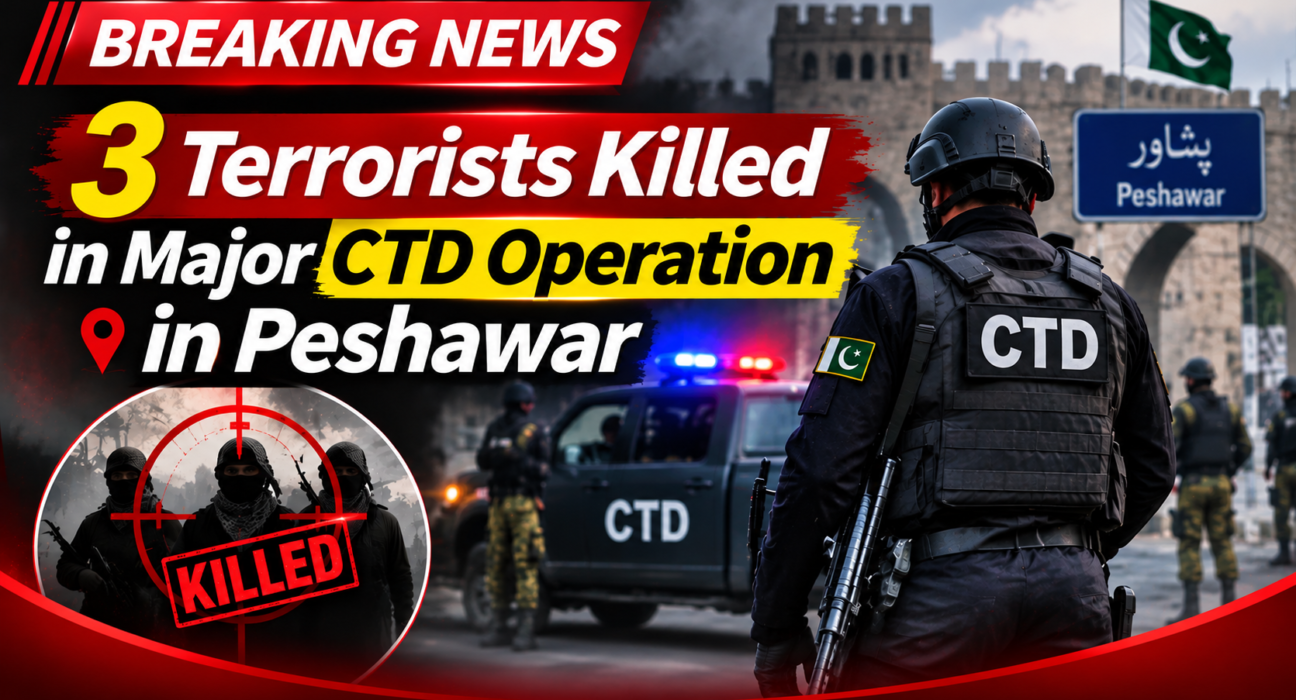
Breaking News: 3 Terrorists Killed in Major CTD Operation in Peshawar: What We Know So Far
Here is the short version. Three militants from the proscribed group Fitna al-Khawarij were killed in a joint operation by the Counter Terrorism Department and the Pakistan Army in Peshawar’s Matani area, officials said on Sunday. The state uses the name Fitna al-Khawarij for militants linked to banned groups that attack Pakistani targets.
Quick Facts at a Glance
The table below gives you the main points in one place.
| Detail | Information |
| Date reported | Sunday, 22 November 2026 |
| Location | Matani area, Peshawar |
| Forces involved | CTD Khyber Pakhtunkhwa (SWAT unit) and Pakistan Army |
| Militants killed | Three |
| Group named by officials | Fitna al-Khawarij |
| Other suspects | Escaped; search operation continues |
Why This Story Matters
Peshawar is the capital of Khyber Pakhtunkhwa, and it has seen many security challenges over the years. When the CTD stops a threat before it turns into an attack, people notice. This operation is also a good example of how modern counter-terrorism work happens. It starts with information, then moves to planning, and only then to action on the ground.
How the Operation Started: The Intelligence Tip
Every operation like this begins long before the first shot. It begins with information. In this case, intelligence sources reported that militants linked to Fitna al-Khawarij were present along Pasani Road, near Adizi Khor in Matani.
The Alleged Plan
The CTD spokesperson said the suspects were allegedly planning attacks on government installations and other activities meant to harm Pakistan’s security and sovereignty. That is an official claim. It is not a court finding. Still, it explains why the teams moved fast. When officials believe a group may attack government buildings, they do not wait.
Why Speed Matters in Tip-Based Raids
Think of an intelligence tip like a ripe fruit. It is good only for a short time. Militants move, change hideouts, and hide in farmland or bushes. So the CTD has to check the information and act while it is still fresh. This time, the teams reached the spot on the same night.
Where and How the Operation Unfolded
Let’s walk through the night step by step, based on what officials said.
SWAT Teams Move In With the Army
Teams from the CTD’s SWAT unit, along with Pakistan Army personnel, reached the location and took positions to arrest the suspects. Notice the word “arrest.” The plan was to catch them, which is the normal first goal in these raids. Police want suspects alive so they can ask questions and learn about other cells.
SWAT officers train for hard situations like this one. They carry protective gear, work in small groups, and cover each other’s moves. Having soldiers beside them adds strength and safety, especially in an open, bushy area where visibility is poor.
The Firefight
Things changed in seconds. The militants opened heavy fire when they saw the security forces, so the personnel fired back in self-defence.
This detail is repeated in almost every report of a CTD raid. Officials say the suspects shoot first, and the officers answer. That is the official version. Journalists usually cannot reach the scene during the fight, so the public depends on police statements.
After the Gunfire Stopped
Once the shooting ended, the teams searched the area. The search led to the recovery of three bodies. Officers then began the next job, which was to find out who these men were and what they carried.
Who Were the Militants? Identification Details
Identification matters. It helps police connect a person to past cases, family networks, and groups.
Names Given by the CTD
The dead were identified as Abdul Rashid, Saeedullah and Saeed Nawab. Officials also said they found national identity cards on the bodies. Those cards will help investigators confirm identities, trace addresses, and check records.
I want to be careful here. At this stage, the names and the group link come from police. Independent confirmation usually comes later through court records or follow-up reports. A responsible reader keeps that in mind.
Group Link: Fitna al-Khawarij
As noted earlier, officials tied the three men to Fitna al-Khawarij. This label is used by the Pakistani state for militants it links to the banned Tehreek-e-Taliban Pakistan network and similar groups. If you see the term in news, it points to that category of militancy.
Weapons and Items Recovered From the Site
The recovery list tells us a lot about what the men may have been ready to do. It is not just a list of objects. It shows how prepared they were.
Recovery List
Items Recovered by Security Personnel
| Item | Quantity |
| Kalashnikov rifles | 2 |
| Pistol | 1 |
| Hand grenades | 3 |
| Magazines | 5 |
| National identity cards | Recovered (number not stated) |
This follows the report that security personnel recovered two Kalashnikov rifles, a pistol, three hand grenades, five magazines and national identity cards from the dead men.
What the Weapons Suggest
Two rifles and a pistol are enough to cause real harm in a short time. Hand grenades make the risk bigger, because they can hurt many people in a crowded place. Five magazines mean the group had spare ammunition for a longer fight.
That does not prove what they would have done. It does show they were armed and ready. Officers will likely test these weapons and check whether they match earlier crimes.
The Role of CTD Khyber Pakhtunkhwa in Peshawar’s Security
Many readers know the police, but fewer know what the CTD does day to day. So let me explain in simple terms.
What the CTD Does
The Counter Terrorism Department is a special wing of the provincial police. Its job is to stop terrorism, investigate attacks, and arrest or neutralise militants. It works on intelligence. It also runs its own SWAT teams for high-risk raids.
In Khyber Pakhtunkhwa, the CTD has been busy for many years. The province sits next to Afghanistan, and it has faced repeated militant violence. That is why the CTD has built experience in raids like the one in Matani.
Working Alongside the Army
Joint operations are becoming common. Police know the local area and the legal process. The army adds firepower, training, and extra manpower. Together, they cover more ground and reduce the risk to each officer. Sharing intelligence between agencies also means fewer gaps in what they know.
You can read the original report on this operation at Dunya News. It is a good place to check the official wording yourself.
Why Intelligence-Based Operations Matter
You may have noticed that most CTD raids are called intelligence-based operations, or IBOs. This is not just a fancy name. It tells you how the whole system works.
Information First, Force Last
A good IBO starts with a tip from a source, a phone trace, a past case file, or a field report. Analysts check it, add other clues, and decide if it is solid. Only then do teams go out. This approach tries to reduce mistakes and protect ordinary people nearby.
Preventing Attacks Before They Happen
The biggest benefit is prevention. When an operation stops a planned attack, nobody sees the tragedy that did not happen. There are no funerals and no headlines about victims. That is hard to measure, but it is the real goal.
Of course, the system is not perfect. Sometimes information is late, and sometimes suspects slip away. In this very case, some of them did.
The Search for the Escaped Suspects
Not everyone at the scene was caught or killed. Other suspected militants escaped under the cover of darkness and dense bushes, the spokesperson said.
Why Escapes Happen
Night operations in open land are tricky. Bushes, ditches, and uneven ground give suspects many places to run. Officers also have to avoid chasing blindly, because that can put them in danger or hurt bystanders. So teams often secure the area first, then expand the search.
What Happens Next
A search operation is underway in the area to track down and arrest the fleeing suspects. In practice, this means checkpoints, house-to-house checks, surveillance, and follow-up on any new tips. The bodies, identity cards, and weapons may also give leads about who else was with them.
If you live nearby, expect more police presence for some time. That is normal after an event like this, and it is meant to keep things safe.
Official Reaction and Commitment From Police Leadership
Senior officers usually comment after a successful operation. This case was no different.
What the Top Officers Said
The Khyber Pakhtunkhwa Inspector General of Police, Zulfiqar Hameed, and the Additional IG of the CTD reaffirmed their commitment to preventing militants from carrying out their activities and bringing those involved in terrorism to justice.
Statements like this do two things. They give credit to the teams on the ground, and they send a message to the public and to militant groups that police will keep up the pressure.
Reading Between the Lines
I always tell readers to look at the wording. Words like “commitment” and “justice” point to a long fight, not a single win. One operation does not end a threat. It removes one risk, and the work goes on.
For a second source covering a similar joint operation, you can also read the Express Tribune report on the CTD and army action in Peshawar.
What This Means for Peshawar Residents
Now let’s talk about real life. News like this affects how people feel as they go to work, school, and the market.
A Mix of Relief and Worry
Many residents feel relief when they hear that armed men were stopped. At the same time, news of militants near the city can be unsettling. Both feelings are normal. It helps to stay calm and rely on official updates instead of social media rumours.
Daily Life and Movement
Operations like this can bring extra checkpoints or short road closures near the area. Plan your trips with a little extra time. If police ask for your ID, cooperate politely. The checks are there to protect everyone.
Trust Between Police and Public
Counter-terrorism works best when people trust the police. Many tips come from ordinary citizens who notice something odd in their neighbourhood. When residents feel safe sharing information, officers can act earlier. That trust is built slowly, with honest communication and respect for the law.
Earlier CTD Operations in Peshawar: The Bigger Picture
This was not the first time the CTD has acted in Peshawar, and it likely will not be the last. Looking at earlier cases gives helpful context.
A Similar Raid in December 2025
In December 2025, a report described how the CTD in Peshawar, with SWAT teams, raided a location on credible information, and three terrorists were killed while two accomplices escaped. The pattern looks familiar. A tip comes in, teams move, shots are exchanged, and some suspects get away.
What the Pattern Tells Us
Seeing similar events across months shows that militant networks keep trying to operate near the city. It also shows that the CTD keeps responding with raids built on intelligence. Neither side is going away quickly, so steady, careful police work matters.
I should add a note about accuracy. Several different Peshawar operations have ended with three suspects dead, in different places and years. Always check the date and the location before you share any news. Mixing up events spreads confusion.
How You Can Stay Safe and Support Police Efforts
You do not need to be a police officer to help. Small habits from ordinary people make a big difference.
Simple Safety Habits
- Stay alert in crowded places and notice anything unusual.
- Keep your identity documents with you when you travel.
- Follow police instructions at checkpoints.
- Avoid going near an active operation site, even to take photos.
Sharing Information the Right Way
If you see suspicious activity, tell the police through official channels. Do not try to handle it yourself. Give clear details such as the place, time, and what you saw. Avoid guessing or exaggerating, because wrong information can waste police time.
Be Careful With What You Share Online
During breaking news, fake claims spread fast. Before you forward a message, check it against trusted news outlets. Sharing unverified videos can also reveal police movements and put officers at risk. When in doubt, wait for the official statement.
Final Thoughts
Let me sum up the main points. On the night reported by Dunya News, CTD SWAT teams and Pakistan Army personnel moved on a tip about armed men near Adizi Khor in Matani, Peshawar. The suspects fired heavily, the forces answered, and three militants died. Officers recovered rifles, a pistol, grenades, magazines, and identity cards. Other suspects ran into the dark, and a search is still going on.
This event shows both the strengths and the limits of counter-terrorism. Good intelligence and teamwork can stop a plan early. Yet some suspects still slip away, so the job is never fully done.
I hope this report gave you a clear and fair picture. Keep following trusted news sources for updates, especially on the search for the escaped suspects. As new facts come out, official statements may change or add detail, so treat this article as accurate to the information available on 23 November 2026.