

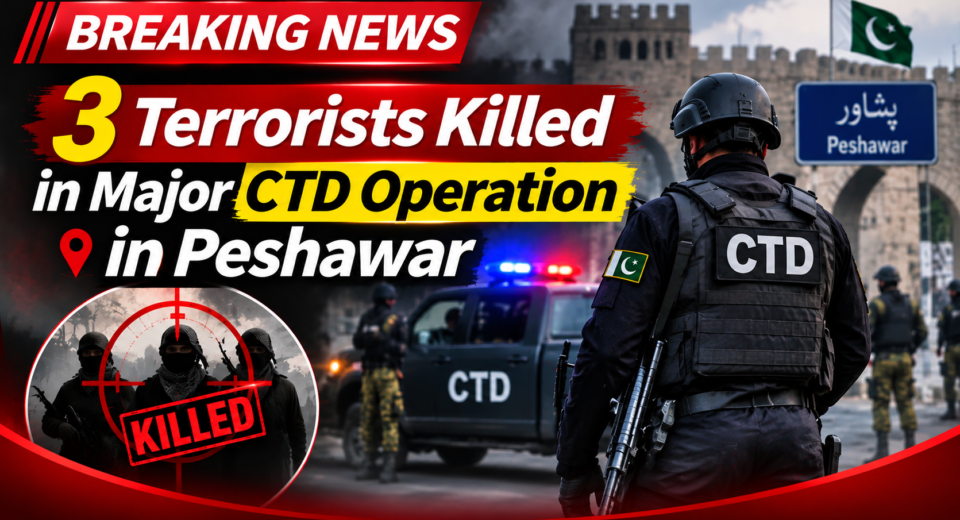
Breaking News: 3 Terrorists Killed in Major CTD Operation in Peshawar
Peshawar woke up to a serious security story on Sunday, 22 November 2026. Police and the army worked together on a late-hit operation on the edge of the city, and three militants did not survive it. If you live in Khyber Pakhtunkhwa, or you simply follow Pakistan’s security situation, this report is for you. I wrote it in plain words so you can understand it without any background. Everything about the operation comes from the published report by Dunya News, which quotes the Khyber Pakhtunkhwa CTD spokesperson. I have kept the facts separate from my own comments, so you can tell the two apart. You will find out where it happened, how it started, what the officials recovered, and what it means for people in Peshawar. Let’s get into it. Breaking News: 3 Terrorists Killed in Major CTD Operation in Peshawar: What We Know So Far Here is the short version. Three militants from the proscribed group Fitna al-Khawarij were killed in a joint operation by the Counter Terrorism Department and the Pakistan Army in Peshawar’s Matani area, officials said on Sunday. The state uses the name Fitna al-Khawarij for militants linked to banned groups that attack Pakistani targets. Quick Facts at a Glance The table below gives you the main points in one place. Detail Information Date reported Sunday, 22 November 2026 Location Matani area, Peshawar Forces involved CTD Khyber Pakhtunkhwa (SWAT unit) and Pakistan Army Militants killed Three Group named by officials Fitna al-Khawarij Other suspects Escaped; search operation continues Why This Story Matters Peshawar is the capital of Khyber Pakhtunkhwa, and it has seen many security challenges over the years. When the CTD stops a threat before it turns into an attack, people notice. This operation is also a good example of how modern counter-terrorism work happens. It starts with information, then moves to planning, and only then to action on the ground. How the Operation Started: The Intelligence Tip Every operation like this begins long before the first shot. It begins with information. In this case, intelligence sources reported that militants linked to Fitna al-Khawarij were present along Pasani Road, near Adizi Khor in Matani. The Alleged Plan The CTD spokesperson said the suspects were allegedly planning attacks on government installations and other activities meant to harm Pakistan’s security and sovereignty. That is an official claim. It is not a court finding. Still, it explains why the teams moved fast. When officials believe a group may attack government buildings, they do not wait. Why Speed Matters in Tip-Based Raids Think of an intelligence tip like a ripe fruit. It is good only for a short time. Militants move, change hideouts, and hide in farmland or bushes. So the CTD has to check the information and act while it is still fresh. This time, the teams reached the spot on the same night. Where and How the Operation Unfolded Let’s walk through the night step by step, based on what officials said. SWAT Teams Move In With the Army Teams from the CTD’s SWAT unit, along with Pakistan Army personnel, reached the location and took positions to arrest the suspects. Notice the word “arrest.” The plan was to catch them, which is the normal first goal in these raids. Police want suspects alive so they can ask questions and learn about other cells. SWAT officers train for hard situations like this one. They carry protective gear, work in small groups, and cover each other’s moves. Having soldiers beside them adds strength and safety, especially in an open, bushy area where visibility is poor. The Firefight Things changed in seconds. The militants opened heavy fire when they saw the security forces, so the personnel fired back in self-defence. This detail is repeated in almost every report of a CTD raid. Officials say the suspects shoot first, and the officers answer. That is the official version. Journalists usually cannot reach the scene during the fight, so the public depends on police statements. After the Gunfire Stopped Once the shooting ended, the teams searched the area. The search led to the recovery of three bodies. Officers then began the next job, which was to find out who these men were and what they carried. Who Were the Militants? Identification Details Identification matters. It helps police connect a person to past cases, family networks, and groups. Names Given by the CTD The dead were identified as Abdul Rashid, Saeedullah and Saeed Nawab. Officials also said they found national identity cards on the bodies. Those cards will help investigators confirm identities, trace addresses, and check records. I want to be careful here. At this stage, the names and the group link come from police. Independent confirmation usually comes later through court records or follow-up reports. A responsible reader keeps that in mind. Group Link: Fitna al-Khawarij As noted earlier, officials tied the three men to Fitna al-Khawarij. This label is used by the Pakistani state for militants it links to the banned Tehreek-e-Taliban Pakistan network and similar groups. If you see the term in news, it points to that category of militancy. Weapons and Items Recovered From the Site The recovery list tells us a lot about what the men may have been ready to do. It is not just a list of objects. It shows how prepared they were. Recovery List Items Recovered by Security Personnel Item Quantity Kalashnikov rifles 2 Pistol 1 Hand grenades 3 Magazines 5 National identity cards Recovered (number not stated) This follows the report that security personnel recovered two Kalashnikov rifles, a pistol, three hand grenades, five magazines and national identity cards from the dead men. What the Weapons Suggest Two rifles and a pistol are enough to cause real harm in a short time. Hand grenades make the risk bigger, because they can hurt many people in a crowded place. Five magazines mean the group had spare ammunition for a longer fight. That does not prove what they would have done. It does show