

Big military news can feel confusing fast. One day you see a short clip on state TV, and an hour later every headline has a different spin. So let’s slow down and go through this one step by step, in plain English.
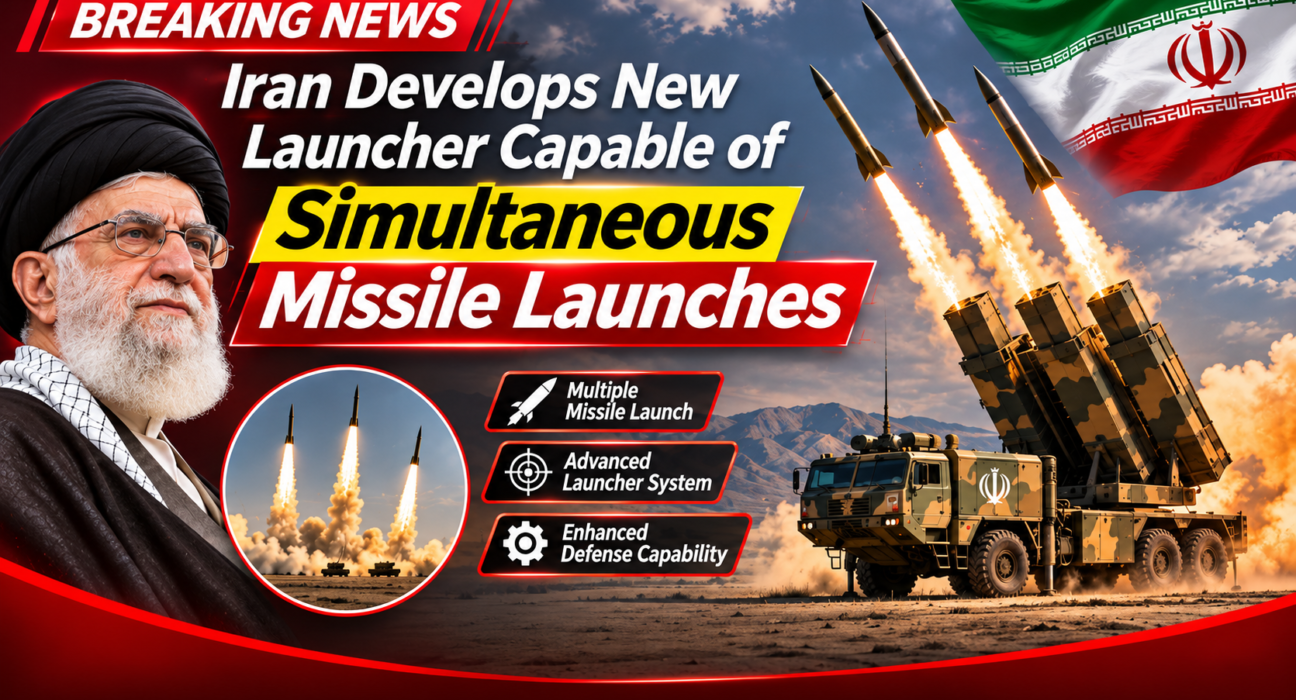
Iran has shown off a new launcher that it says can fire two missiles at the same time. The footage came from inside an underground base. It landed in the middle of a tense war, so people far outside the region are paying attention. Below, I’ll cover what was shown, what is still unproven, and why the story matters.
Breaking News: Iran Unveils New Launcher Capable of Firing 2 Missiles at Once
The story broke over the weekend. Iranian state media aired footage of military commanders touring an underground missile facility, and the footage included a launcher designed to fire two liquid-fuelled missiles at once. The news spread quickly across outlets in the Middle East, Europe, and the United States.
What State TV Actually Showed
The broadcast was a showcase. Footage from the site went out on Iranian state television, and the Islamic Revolutionary Guard Corps (IRGC) presented the system. The location of the complex was not disclosed. That last detail matters. We know what the cameras showed us, but we do not know where it was filmed.
Who Was in the Room
State news agency IRIB said the unveiling happened during a visit by IRGC commander Ahmad Vahidi and aerospace chief Seyed Majid Mousavi. When top commanders show up on camera, the message is usually meant for more than one audience. It speaks to people at home, to Iran’s allies, and to its enemies.
Why the Timing of This Announcement Matters
Timing is a big part of any military reveal. Countries rarely show new hardware by accident. They pick the moment, and they pick the message.
This reveal came while Iran is in a heated standoff with the United States and Israel. Reports say the broadcast was meant to show Iran can still strike if the war speeds up again, and to push back on Washington’s claims that the missile program has been destroyed. So this was about more than a new piece of equipment. It was a statement.
Think of it like a boxer who has taken a few hits and steps into the ring with his gloves up. He may be hurting, but he wants the other side to know he can still swing. That is how many analysts read this video.
There is also an economic side. Iran is under growing economic pressure from a US naval blockade that has disrupted its oil exports. When a country is squeezed financially, showing military strength can be a way to signal that it will not back down. Al Jazeera
How a Dual Launcher Works in Simple Words
You do not need an engineering degree to get the basic idea. A missile launcher is a vehicle or platform that carries a missile, raises it into position, and sends it on its way. Most launchers carry one missile. A dual launcher carries two.
Why Two Is Better Than One
The main benefit is speed and volume. If a crew can fire two missiles in one go, it does not need to reload as often. That means fewer vehicles, fewer crews, and less time out in the open. In a fast-moving conflict, less time exposed can be the difference between a launcher surviving and a launcher being hit.
What Iran Has Done Before
This is not Iran’s first dual launcher. The new launcher appears to be an advance over an earlier dual launcher that fired two solid-fuel missiles at a time. So the idea is not new. What seems new is that this version is built for liquid-fuel missiles.
Liquid Fuel vs. Solid Fuel: Why It Matters
The fuel type is the most interesting detail in this whole story. Here is a simple comparison.
| Feature | Liquid-Fuel Missile | Solid-Fuel Missile |
| Fuel storage | Often fueled before launch | Fuel is packed inside ahead of time |
| Launch readiness | Usually takes more prep time | Usually quicker to fire |
| Flight control | Can adjust speed and path more easily | Less adjustable once lit |
| Efficiency | Generally more efficient | Generally simpler and sturdier |
| Handling | More complex to manage | Easier to move and store |
The Efficiency Angle
Liquid fuel is more efficient and gives operators some ability to change a missile’s speed and trajectory. That is a real advantage on paper. It can help a missile reach farther or follow a smarter path.
The Trade-Off
The trade-off is prep time. Liquid-fuel systems are often harder to get ready quickly. That is one reason an underground base makes sense. Crews can work out of sight, away from satellites and drones, and then move fast when it is time to act.
Inside the Underground “Missile City”
The launcher was not shown on its own. It was part of a bigger reveal, and the setting was just as important as the hardware.
Earlier this month, Iran also revealed a new underground missile base equipped with ballistic and cruise missiles. People now call these sites “missile cities” because they are huge tunnel networks cut deep into rock and mountains.
Why Go Underground
There are a few simple reasons. Tunnels protect weapons from air strikes and spying. They also give crews a place to store, repair, and prepare missiles in one spot.
One analyst quoted by Al Jazeera made this point well. Rami Khouri of the American University of Beirut said Iran can safely store spare parts, raw materials, and chemicals for making missiles and drones at underground sites, along with the finished weapons. In other words, these places are factories and warehouses as well as hideouts.
A Hard Target
For any military planning a strike, tunnels are a headache. You may know roughly where a base is, but getting weapons deep enough to cause damage is tough. That is why underground bases keep showing up in Iran’s messaging.
What Iran Claims About Range, Accuracy, and GPS
Now we get to the part where I want you to slow down and read carefully. Many of the big claims here come from Iranian officials and state media. Those are claims, not confirmed facts.
The Claimed Upgrades
The base is said to house upgraded, new-generation missiles with longer range and better precision, guided by home-built systems that work without GPS. If true, GPS-free guidance would be a big deal, because GPS can be jammed or blocked in a conflict.
What Nobody Has Verified
Here is the catch. There is no independent assessment of the system’s range, accuracy, or GPS independence, and the reports do not name the missile type. That means outside experts cannot yet say how good this equipment really is.
So when you see a headline that makes this launcher sound unstoppable, take a breath. A video can show a launcher. It cannot prove how well the missiles will fly.
The War Backdrop Behind the Headlines
To understand why this launcher is in the news, you need the bigger picture. This is not a quiet period. It is a tense stage of an ongoing conflict.
The Regional Fallout
Earlier in the conflict, Iran responded by firing missiles and drones at countries across the region, and allied militant groups in Lebanon, Yemen, and Iraq also joined in. That shows how fast a fight like this can spread beyond two countries.
Trouble on the Water
The same weekend as the launcher was revealed, there was fresh trouble at sea. Reports describe three oil tankers hit around the Strait of Hormuz, including one that the Iranian navy said struck a naval mine and caught fire. The Strait of Hormuz is one of the busiest oil routes on earth. Any trouble there can push fuel prices up around the world, including in places like Pakistan.
So the launcher reveal did not happen in a bubble. It sits alongside blockades, damaged ships, and nervous markets.
What Commanders Said Along With the Reveal
Weapons shows usually come with words, and these did. The tone was defiant.
IRGC commander Vahidi said that what is happening to Iran’s enemies is only the beginning. That is a warning aimed straight at Washington and Tel Aviv.
Reading Between the Lines
Statements like this are part strategy and part theater. Leaders want to look strong, and they want their rivals to worry. At the same time, they do not always tell the full truth about what they can do. That is why smart readers look at what is shown, what is said, and what outside experts can actually confirm.
A Message for Home
There is also a message for Iran’s own people. A government under pressure often wants citizens to see that its forces are still strong and in control. A big video from inside a “missile city” does exactly that.
Claims vs. Confirmed Facts
Here is a quick scorecard to help you sort the story. It splits what is solid from what is still open.
Table 2: What Is Confirmed and What Is Still Unproven
| Topic | Status | Notes |
| A new dual launcher was shown on state TV | Confirmed as broadcast | Multiple outlets reported the footage |
| It fires two liquid-fuel missiles | Iranian claim | Not independently tested |
| Longer range and better precision | Iranian claim | No outside review so far |
| GPS-free guidance | Iranian claim | Unverified |
| Exact location of the base | Unknown | Not disclosed |
| Missile type used | Unknown | Not named in reports |
Why This Split Is Useful
When you separate the two columns in your head, the story gets calmer. The launcher is real enough to be filmed. Its true combat value is still a big question mark.
What This Could Mean for Regional Security
So what changes if the claims are even partly true? Let’s go through the possibilities without hype.
For Iran
A launcher that fires two missiles at once could boost Iran’s ability to launch quickly and then move away. That could make its forces harder to hit. It could also give Iran more bargaining weight in any future talks.
For the United States and Its Allies
For the US, Israel, and Gulf states, the reveal is a reminder that missile threats have not vanished. The title of one report even described the footage as a warning to Trump, as the US weighs strikes. Defense planners will study every frame of this video for clues about what Iran has and how it might use it.
For Everyday People
Most of us are not planning missile defenses. But a flare-up here can hit our wallets. Oil prices, shipping costs, and flight routes all react when tension rises in the Gulf. That is why a story about a launcher can end up affecting petrol prices thousands of miles away.
How the World Is Reacting
News outlets around the globe picked up the story within hours. Al Jazeera ran a detailed explainer, and you can read it for yourself on the Al Jazeera report on Iran’s dual-missile launcher and new missile city.
Different Outlets, Different Angles
Some stories focus on technology. Others focus on politics. A few lean on the dramatic side and frame the video as a taunt. None of this means the underlying footage is fake. It just means each outlet is telling the story in its own way, so reading two or three sources gives you a fuller picture.
What to Watch Next
Keep an eye out for three things. First, any independent analysis of the launcher from defense experts. Second, any real use of it in the field. Third, how Washington responds, since talk of strikes is already in the air.
How to Read Military News Without Getting Fooled
Since this topic is full of strong claims, here are a few habits that help. I use them myself when I follow fast-moving stories.
Check Who Is Speaking
Always ask who is making the claim. A state broadcaster has a goal. So does an opposing government. Neither is a neutral referee, so look for outside experts when you can.
Look for Independent Confirmation
A claim becomes much stronger when someone outside the source confirms it. In this case, that has not happened yet for range or accuracy. Until it does, treat those numbers carefully.
Compare More Than One Source
Read at least two outlets from different regions. If they agree on the basics, such as a launcher was shown and the IRGC presented it, you can trust those basics. If they disagree on the details, hold off before sharing.
Be Careful With Old Footage
Missile videos get recycled all the time. Some outlets also mix in older stories. For example, back in 2020 reports described an Iranian launcher said to fire several ballistic missiles in a row. Mixing years can confuse readers, so always check the date on a clip or article.
Final Thoughts: A Strong Show, Still Many Unknowns
Let’s wrap it up. Iran has shown what it says is a new launcher that fires two liquid-fuel missiles at once, filmed inside an underground base and presented by top IRGC leaders. The clip is real, and the message behind it is loud and clear.
But the bigger claims, like longer range, better precision, and GPS-free guidance, have not been independently checked. Reports also do not name the missile type or reveal where the base is. That leaves a big gap between what Iran says and what outside experts can confirm.
The story also fits into a bigger, riskier moment, with a US blockade, tanker incidents near the Strait of Hormuz, and talk of possible strikes. That is why even a single launcher video is getting so much attention.
My advice is simple. Stay curious, read more than one source, and wait for solid proof before you believe any single dramatic claim. As new facts come out, this story will keep changing, and the best readers are the ones who keep an open mind and check the details.