

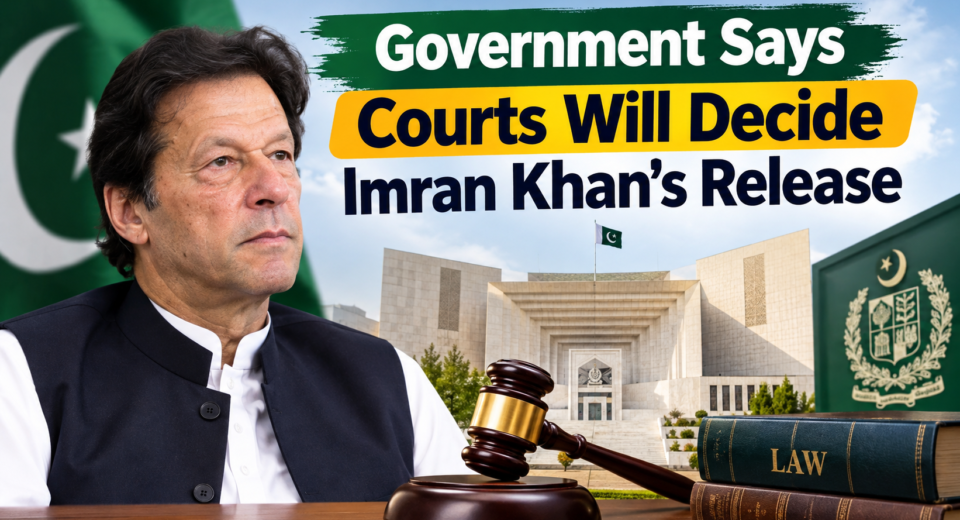
Government Says Courts Will Decide Imran Khan’s Release
Imran Khan’s Release: Why the Government Keeps Pointing to the Courts If you follow Pakistani politics, you have probably noticed one sentence repeated by government ministers this week. It goes something like this: release is a matter for judges, not for the government. In this article, I’ll break down what that statement really means, why it matters right now, and what could happen next. I’ll keep it simple and stick to facts, so you can make up your own mind. Government Says Courts Will Decide Imran Khan’s Release: What It Means Let’s start with the core message. On Tuesday, September 29, 2026, Federal Law Minister Azam Nazeer Tarar told reporters that the party founded by Imran Khan should chase his release through the court system. As Arab News reported, he said the government has repeatedly made clear that the forum for this is the courts, not the government itself. In plain English, the government is saying it cannot simply sign a paper and open the jail gate. It says only a judge can order a prisoner’s release, and that route runs through appeals and bail hearings. The Short Version Why People Are Talking About It Now The timing is the big reason. PTI had planned a march toward Islamabad on September 27. After authorities blocked major roads leading to the capital, the party moved the march to October 4. The law minister’s comments came just days before that new date, so they are part of a larger tug of war between the two sides. The Latest Update in Simple Words News moves fast, so let’s pin down what we know as of today. What Happened This Week PTI is pushing to bring attention to its founder’s imprisonment. The government says it must protect the capital and its people. Roads from Khyber Pakhtunkhwa, the province PTI governs, toward Islamabad have faced blockages. PTI says it wants a peaceful protest. The government says it is acting to keep people safe. At the same time, Law Minister Tarar said Khan’s appeal is already pending, so the party should follow that process. Pakistan Today carried the same message, adding that serious political talks remain possible but that release is a court matter. Who Said What Senator Rana Sanaullah, an adviser to the Prime Minister on political affairs, backed the same line. He said a release order would come from the courts, and that marching on or attacking Islamabad would not free anyone. He also criticized the Khyber Pakhtunkhwa government, saying it should focus on public welfare. PTI strongly disagrees with that view. So both leaders repeated one idea: go to court, not to the streets. How We Got Here: Imran Khan’s Path to Jail To understand the argument, you need a little background. Don’t worry, I’ll keep it short. From Prime Minister to Prisoner Imran Khan became prime minister in 2018. In April 2022, he lost power through a no-confidence vote in parliament. That was a historic moment, because no prime minister in Pakistan had been removed that way before. After that, legal cases began piling up. He was arrested in 2023 and has been in jail since August of that year. The charges range from corruption to terrorism-related allegations. Khan says all of them are politically motivated. The government says it does not interfere with the work of judges. A Quick Timeline Year Key Event 2022 Khan loses power in a no-confidence vote 2023 Arrested; courts grant and later rework relief in several cases August 2023 Imprisoned after a conviction and has stayed in jail since 2024 General election; Khan-backed candidates win the most directly elected seats 2026 Law minister says courts, not protests, must decide his release The 2024 Election Factor In the 2024 general election, candidates backed by Khan won the most directly elected seats. Still, no party got a clear majority. Prime Minister Shehbaz Sharif formed a coalition government. That result is a big reason PTI supporters feel so strongly today. They believe the public showed its support at the polls, and they want their leader free. Why the Government Keeps Pointing to the Courts You might wonder why ministers repeat the same line so often. There are a few reasons, and each one makes sense from the government’s point of view. Reason One: It Matches the Constitution Pakistan’s system separates the government from the judiciary. A minister cannot cancel a sentence. Only a court can suspend one, overturn it, or grant bail. When ministers say “go to court,” they are describing how the law is supposed to work on paper. Reason Two: It Shifts the Pressure Let’s be honest, this also has a political side. If the government says the courts decide, then protest pressure points at judges instead of ministers. That makes it harder for PTI to claim the government is the one holding Khan back. Reason Three: It Keeps the Door Open Here’s a small detail many people miss. Law Minister Tarar did not say talks are off the table. He said the government has never refused serious dialogue. So the message has two parts: negotiate if you want, but a prisoner’s release is still decided by judges. What the Law Minister and Rana Sanaullah Actually Said Headlines can twist words, so let’s go back to the plain statements. Azam Nazeer Tarar’s Message Tarar said the forum for release is the courts, and that PTI’s appeal is pending, so the party should pursue it. He also defended road closures and security steps, saying the government’s first job is to protect lives and property. He pointed to problems at earlier protests as the reason for caution. In another statement reported by Daily Times, Tarar said a board of senior doctors had examined Khan on the orders of the Supreme Court. He said that if any legal gaps remain, the courts should deal with them. Rana Sanaullah’s Earlier Remark This is not the first time the government has used this approach. In 2025, Sanaullah said the government would