
Imran Khan’s Release: Why the Government Keeps Pointing to the Courts
If you follow Pakistani politics, you have probably noticed one sentence repeated by government ministers this week. It goes something like this: release is a matter for judges, not for the government. In this article, I’ll break down what that statement really means, why it matters right now, and what could happen next. I’ll keep it simple and stick to facts, so you can make up your own mind.
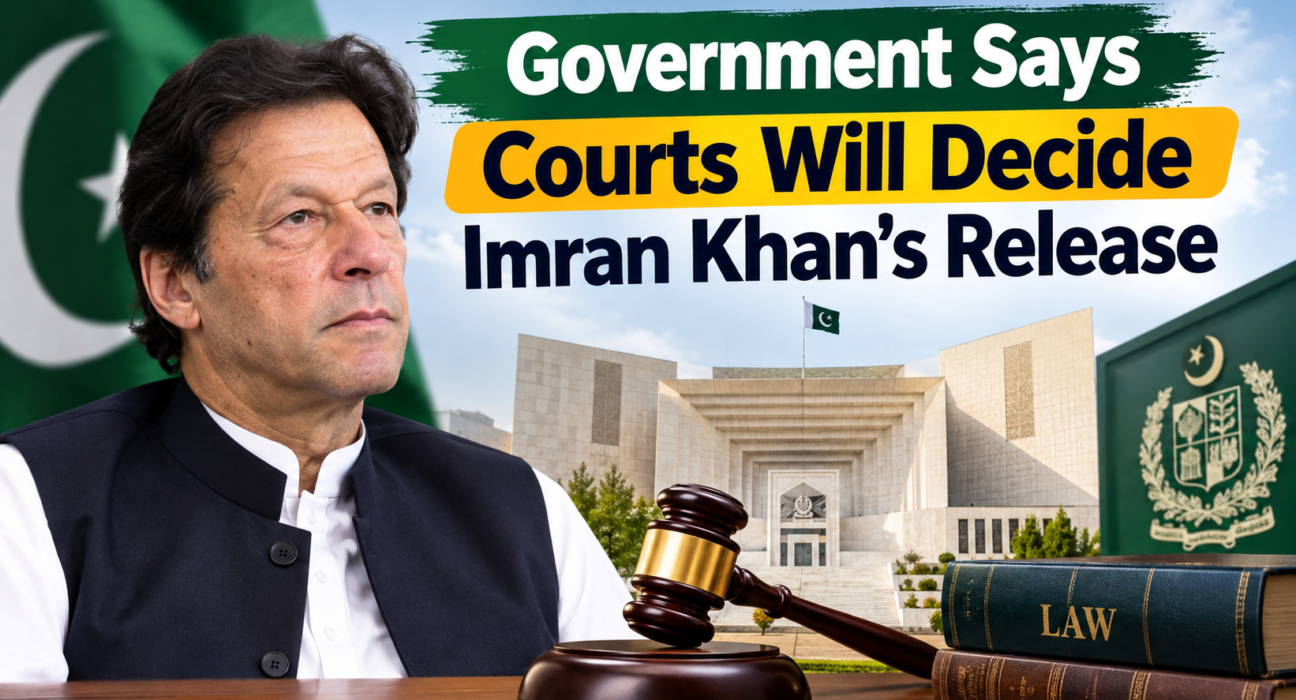
Government Says Courts Will Decide Imran Khan’s Release: What It Means
Let’s start with the core message. On Tuesday, September 29, 2026, Federal Law Minister Azam Nazeer Tarar told reporters that the party founded by Imran Khan should chase his release through the court system. As Arab News reported, he said the government has repeatedly made clear that the forum for this is the courts, not the government itself.
In plain English, the government is saying it cannot simply sign a paper and open the jail gate. It says only a judge can order a prisoner’s release, and that route runs through appeals and bail hearings.
The Short Version
- The government says it does not control Khan’s release.
- It says PTI should use its pending appeal.
- It wants the party to avoid street protests and marches.
- It says talks are still possible, but court matters stay with the courts.
Why People Are Talking About It Now
The timing is the big reason. PTI had planned a march toward Islamabad on September 27. After authorities blocked major roads leading to the capital, the party moved the march to October 4. The law minister’s comments came just days before that new date, so they are part of a larger tug of war between the two sides.
The Latest Update in Simple Words
News moves fast, so let’s pin down what we know as of today.
What Happened This Week
PTI is pushing to bring attention to its founder’s imprisonment. The government says it must protect the capital and its people. Roads from Khyber Pakhtunkhwa, the province PTI governs, toward Islamabad have faced blockages. PTI says it wants a peaceful protest. The government says it is acting to keep people safe.
At the same time, Law Minister Tarar said Khan’s appeal is already pending, so the party should follow that process. Pakistan Today carried the same message, adding that serious political talks remain possible but that release is a court matter.
Who Said What
Senator Rana Sanaullah, an adviser to the Prime Minister on political affairs, backed the same line. He said a release order would come from the courts, and that marching on or attacking Islamabad would not free anyone. He also criticized the Khyber Pakhtunkhwa government, saying it should focus on public welfare. PTI strongly disagrees with that view.
So both leaders repeated one idea: go to court, not to the streets.
How We Got Here: Imran Khan’s Path to Jail
To understand the argument, you need a little background. Don’t worry, I’ll keep it short.
From Prime Minister to Prisoner
Imran Khan became prime minister in 2018. In April 2022, he lost power through a no-confidence vote in parliament. That was a historic moment, because no prime minister in Pakistan had been removed that way before.
After that, legal cases began piling up. He was arrested in 2023 and has been in jail since August of that year. The charges range from corruption to terrorism-related allegations. Khan says all of them are politically motivated. The government says it does not interfere with the work of judges.
A Quick Timeline
| Year | Key Event |
| 2022 | Khan loses power in a no-confidence vote |
| 2023 | Arrested; courts grant and later rework relief in several cases |
| August 2023 | Imprisoned after a conviction and has stayed in jail since |
| 2024 | General election; Khan-backed candidates win the most directly elected seats |
| 2026 | Law minister says courts, not protests, must decide his release |
The 2024 Election Factor
In the 2024 general election, candidates backed by Khan won the most directly elected seats. Still, no party got a clear majority. Prime Minister Shehbaz Sharif formed a coalition government. That result is a big reason PTI supporters feel so strongly today. They believe the public showed its support at the polls, and they want their leader free.
Why the Government Keeps Pointing to the Courts
You might wonder why ministers repeat the same line so often. There are a few reasons, and each one makes sense from the government’s point of view.
Reason One: It Matches the Constitution
Pakistan’s system separates the government from the judiciary. A minister cannot cancel a sentence. Only a court can suspend one, overturn it, or grant bail. When ministers say “go to court,” they are describing how the law is supposed to work on paper.
Reason Two: It Shifts the Pressure
Let’s be honest, this also has a political side. If the government says the courts decide, then protest pressure points at judges instead of ministers. That makes it harder for PTI to claim the government is the one holding Khan back.
Reason Three: It Keeps the Door Open
Here’s a small detail many people miss. Law Minister Tarar did not say talks are off the table. He said the government has never refused serious dialogue. So the message has two parts: negotiate if you want, but a prisoner’s release is still decided by judges.
What the Law Minister and Rana Sanaullah Actually Said
Headlines can twist words, so let’s go back to the plain statements.
Azam Nazeer Tarar’s Message
Tarar said the forum for release is the courts, and that PTI’s appeal is pending, so the party should pursue it. He also defended road closures and security steps, saying the government’s first job is to protect lives and property. He pointed to problems at earlier protests as the reason for caution.
In another statement reported by Daily Times, Tarar said a board of senior doctors had examined Khan on the orders of the Supreme Court. He said that if any legal gaps remain, the courts should deal with them.
Rana Sanaullah’s Earlier Remark
This is not the first time the government has used this approach. In 2025, Sanaullah said the government would not oppose Khan’s release if the courts ordered it. That is an important line. It tells us the government’s stated position is that it will respect a court order, whatever that order turns out to be.
Reading Between the Lines
Here’s my take, in simple terms. The government is trying to look calm and lawful. PTI hears something different. To PTI supporters, “let the courts decide” sounds like “wait forever.” That gap in how the same sentence lands is the heart of the whole fight.
PTI’s Side of the Story
A fair article needs both sides, so let’s look at PTI’s view.
The Political Case Argument
PTI says the cases against Khan are politically motivated. The party argues that he is in jail because of his politics, not because of a fair trial. From that angle, telling PTI to just use the courts feels like being told to trust the same system it criticizes.
Why PTI Wants Street Power
PTI believes public pressure matters. Its leaders argue that peaceful protest is a basic right and a normal part of democracy. They also point out that they won the most directly elected seats in 2024, and say that gives them a strong public mandate to speak up.
Where the Two Views Collide
The government says protests will not free Khan. PTI says protests keep the issue alive. Both can be partly right. Courts decide legal outcomes, but public attention can shape the political climate around them. That is why this fight keeps going in both places at once.
The October 4 Islamabad March
This is the date everyone is watching.
Why the Date Changed
PTI first planned to march on September 27. Authorities blocked major routes from Khyber Pakhtunkhwa to Islamabad, so the party pushed the date to October 4. The government says it blocked roads to protect the capital. PTI says it only wants to protest peacefully.
What Could Happen
Nobody can say for sure, but a few outcomes are possible:
- The march goes ahead with heavy security and road closures.
- Talks between the two sides lower the tension before the date.
- Court hearings change the mood and shift the focus back to the legal track.
If you live in or near Islamabad, keep an eye on official travel updates, since closures can change quickly.
A Note on Safety
Both sides say they want to avoid violence. That is good news. Past protests in Pakistan have turned tense, which is exactly why the government cites safety again and again. Whatever your political view, a peaceful outcome helps everyone.
How Pakistan’s Court Process Works for Appeals and Bail
Let’s slow down and explain how the legal path works, because it helps you understand why things take time.
Trial Courts, High Courts, and the Supreme Court
A case usually starts in a trial court. If someone is convicted, they can file an appeal in a high court. After that, the matter can move to the Supreme Court. Each step has hearings, notices, and sometimes long delays.
Bail Versus Acquittal
These two words get mixed up a lot. Bail or a suspended sentence means a person can be out of jail while the case continues. Acquittal means the court cancels the conviction. Either result could lead to release, but they are not the same thing.
Why It Takes So Long
Khan faces more than one case. A release would usually need relief in each case that keeps him in custody. That is why even a good result in one case does not always open the jail gate. This is also a reason the government can say “the appeal is pending” and still be technically correct.
Courts Have Surprised Before
Back in May 2023, a Pakistani court granted Khan bail in multiple cases soon after a dramatic arrest. The coalition government was upset at the time, and Prime Minister Shehbaz Sharif even said the judiciary had become an “iron shield” for Khan. So history shows that courts can move in unexpected ways, and that politicians react strongly either way.
The Health Issue and the Supreme Court Medical Board
Health is another part of this story, and it has added to the tension.
What the Government Says
Law Minister Tarar said a board of senior doctors examined Khan on the Supreme Court’s orders. He said Khan’s sister, who took part in the process, spoke publicly and described him as healthy and fit.
Why It Matters
Medical reports can matter in court. Judges sometimes consider a prisoner’s health when they look at bail or other relief. So this topic is not just about care. It can also become part of the legal argument.
A Neutral Way to See It
I can’t verify medical claims from far away, and neither can most readers. What we can say is that Khan’s treatment has become part of the larger dispute, and that families, lawyers, and courts are all involved. Anyone’s health in custody deserves proper care, and that point is one both sides can agree on.
What Foreign Governments Say
Pakistan’s issue has drawn attention abroad, and the language used is very similar to the government’s own.
The United States
The US State Department has said that legal proceedings against the former prime minister are matters for Pakistani courts to decide. Some US lawmakers from both parties have urged the release of political prisoners, but the State Department’s official line has been more careful.
The United Kingdom
The UK government has said judicial matters are for Pakistan’s courts. At the same time, it has asked Pakistan to respect fair trial rights, due process, humane detention, and access to proper medical care, according to a House of Lords Library briefing.
What This Tells Us
Outside governments usually avoid telling another country’s judges what to do. They stress fair process instead. So when Pakistan’s ministers say courts will decide, they are echoing a line that many foreign governments use too. The difference is that foreign officials also add a reminder about human rights and fair treatment.
Politics vs Law: Where the Line Gets Blurry
Here’s where things get tricky, and honestly, where most readers feel stuck.
A Government Statement Can Be True and Still Be Political
It is true that only courts can release a prisoner. It is also true that a statement like this has political value. Both things can sit side by side. A fair reader can accept the legal fact and still ask whether politics shapes the surrounding events.
Trust in Institutions
Much of the debate comes down to trust. If you trust the courts to be fair, then “let the courts decide” sounds reasonable. If you doubt that, the same words sound like an excuse. Pakistan’s political divide has made trust a rare thing, and that is why this one sentence creates so much heat.
A Comparison of Positions
The Two Positions at a Glance
| Topic | Government Position | PTI Position |
| Who decides release | Courts only | Courts, but with public pressure |
| Protest march | Unneeded and a security risk | A peaceful, lawful right |
| The cases | Handled independently by judges | Politically motivated |
| Talks | Possible, but not on court matters | Open, with release as the main demand |
Looking at the table, you can see the sides share some ground. Both say the courts matter and both say they are open to talks. They differ on how much pressure is fair and on whether the cases are truly independent.
What Could Happen Next
Nobody has a crystal ball, but we can look at likely paths.
The Legal Track
The pending appeal is the main route the government keeps highlighting. If hearings move forward and a court grants relief, the release conversation changes quickly. If hearings stall, PTI will likely say that proves its point about delays.
The Political Track
Talks could cool things down. The government has said it has never refused serious dialogue. PTI has said it wants its founder freed and its mandate respected. If both sides find even a small area of agreement, the October 4 date could pass more calmly.
The Street Track
If the march goes ahead, the next few days could be tense. Heavy security, closed roads, and large crowds are all possible. Any clash would change the political mood overnight and could harden positions on both sides.
What to Watch
- Court hearing dates on the pending appeal
- Any statement from judges about timelines
- Whether talks start before October 4
- How roads and security look around the capital
So, what is the big takeaway? The government’s message is simple: Imran Khan’s release is a legal matter, and courts will decide it. PTI‘s message is just as clear: the cases are political, and public pressure is a fair response. Both claims will keep colliding in the days ahead.
If you want to stay informed without getting lost in noise, focus on three things. First, follow the actual court calendar. Second, watch what ministers and PTI leaders say about talks. Third, check reliable news sources before sharing any claim online, because rumors spread fast during tense weeks like this one.
One thing is certain. This story is far from over, and the next court date or the October 4 march could shift it again. I’ll keep my eye on it, and I hope this guide helped you see the full picture in plain, simple terms.