

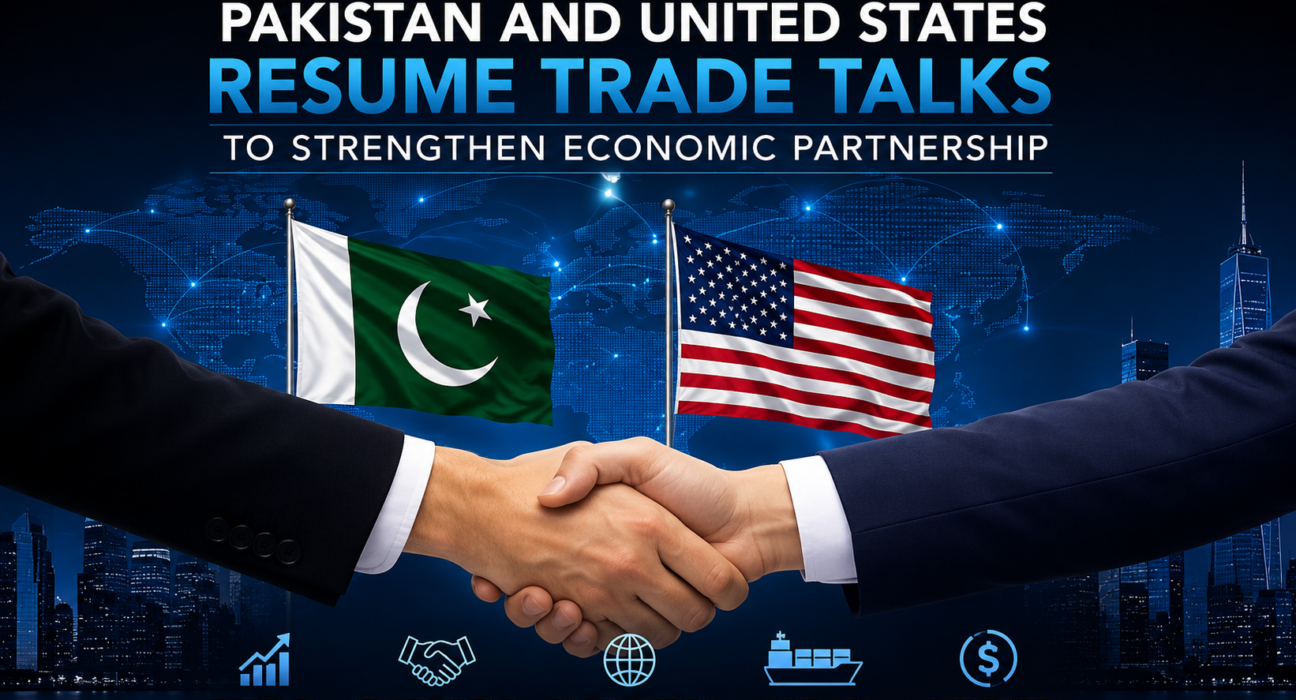
Pakistan and the United States have resumed trade talks in a significant move aimed at strengthening economic cooperation and expanding bilateral commerce. The renewed dialogue comes at a time when both countries are seeking new opportunities to boost investment, improve market access, and create a more stable business environment. Officials from both sides have expressed optimism that stronger trade relations could benefit businesses, investors, and consumers alike.
The revival of trade discussions reflects a broader commitment to deepening economic ties beyond traditional diplomatic cooperation. For Pakistan, stronger engagement with the United States offers the potential to increase exports, attract foreign direct investment, and create employment opportunities. For the United States, Pakistan remains an important regional partner with a growing consumer market and strategic economic importance.
Why the Trade Talks Matter
Trade between Pakistan and the United States has remained an important pillar of bilateral relations for many years. The United States is one of Pakistan’s largest export destinations, particularly for textile products, apparel, leather goods, surgical instruments, and sporting equipment. Resuming formal trade discussions signals that both governments are willing to address existing challenges while exploring new areas of cooperation.
Business leaders believe improved trade relations could encourage greater private-sector collaboration, reduce barriers to commerce, and enhance investor confidence. As global supply chains continue to evolve, stronger economic partnerships are becoming increasingly valuable for both developing and developed economies.
Key Areas Under Discussion
Several important issues are expected to dominate the latest round of negotiations, including:
- Expanding bilateral trade volumes.
- Improving market access for exporters.
- Encouraging foreign direct investment (FDI).
- Strengthening cooperation in agriculture, technology, and manufacturing.
- Promoting digital trade and innovation.
- Enhancing customs and regulatory cooperation.
Both countries are also expected to discuss ways to simplify trade procedures and encourage greater participation by private businesses.
Economic Benefits for Pakistan
Pakistan’s economy could gain significantly from stronger trade relations with the United States. Increased exports would generate valuable foreign exchange earnings while supporting local industries. Sectors such as textiles, information technology, agriculture, pharmaceuticals, and engineering products may benefit from expanded access to American markets.
Foreign investment could also accelerate industrial development, introduce advanced technologies, and improve productivity. These developments may create new employment opportunities and strengthen Pakistan’s long-term economic resilience.
Opportunities for American Businesses
The renewed trade dialogue also presents opportunities for American companies interested in expanding operations in South Asia. Pakistan’s young population, growing digital economy, and expanding middle class make it an increasingly attractive market for investment.
American businesses may find opportunities in renewable energy, information technology, healthcare, agriculture, financial services, education, and infrastructure development. Greater cooperation could also promote knowledge sharing and innovation between businesses in both countries.
Challenges That Still Need Attention
Despite the positive momentum, several challenges remain. Businesses continue to face concerns related to regulatory procedures, taxation, customs processes, and policy consistency. Improving transparency and creating a predictable investment environment will be essential for sustaining investor confidence.
Global economic uncertainty, inflationary pressures, and regional geopolitical developments may also influence future trade negotiations. However, continued dialogue demonstrates both countries’ willingness to resolve issues through constructive engagement.
Future Outlook
The resumption of Pakistan-US trade talks represents a positive step toward strengthening one of the region’s important economic relationships. If negotiations produce practical agreements, businesses on both sides could benefit from increased trade opportunities, stronger investment flows, and closer commercial partnerships.
Economic experts believe sustained cooperation can help diversify Pakistan’s export base while providing American businesses with access to emerging opportunities in South Asia. Continued engagement between policymakers and the private sector will be critical to turning these discussions into tangible economic outcomes.
As negotiations progress, businesses and investors will closely monitor developments, hoping that renewed cooperation leads to stronger economic growth, increased trade, and long-term prosperity for both nations.
Table 1: Key Highlights of the Trade Talks
| Aspect | Details |
| Countries Involved | Pakistan and the United States |
| Main Objective | Strengthen bilateral trade and economic cooperation |
| Focus Areas | Trade, investment, technology, agriculture, manufacturing |
| Expected Benefits | Higher exports, increased investment, job creation |
| Business Impact | Improved market access and stronger investor confidence |
Table 2: Potential Economic Impact
| Sector | Expected Impact |
| Textiles | Higher exports to the US market |
| Information Technology | Increased collaboration and investment |
| Agriculture | Better trade opportunities and technology transfer |
| Manufacturing | Growth through foreign investment |
| Employment | New jobs across export-oriented industries |
| Economy | Improved foreign exchange earnings and sustainable growth |
Conclusion
The decision by Pakistan and the United States to resume trade talks marks an encouraging development in bilateral relations. By focusing on trade expansion, investment, and economic cooperation, both countries have an opportunity to build a stronger and more resilient partnership. While challenges remain, continued dialogue and practical reforms can unlock significant economic benefits, strengthen investor confidence, and create long-term opportunities for businesses and citizens in both nations.