

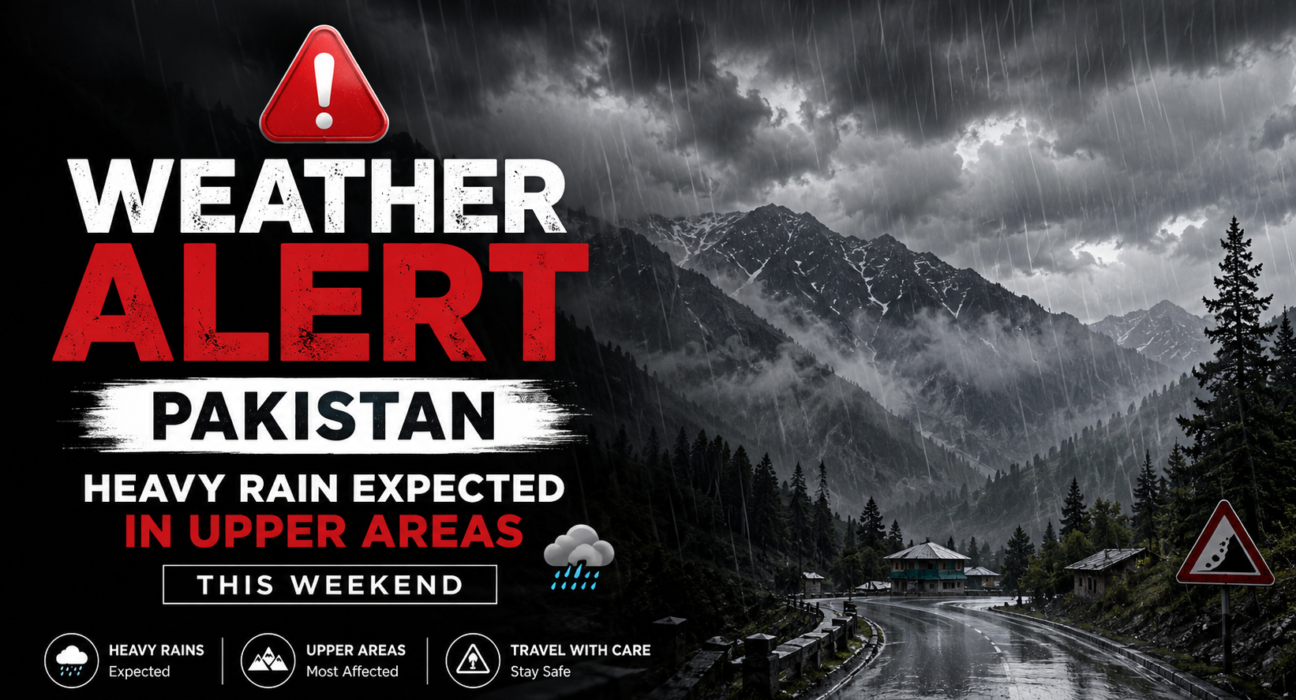
Pakistan is expected to experience another spell of wet weather as a fresh weather system moves across the northern and upper regions this weekend. According to the latest forecast from the Pakistan Meteorological Department (PMD), widespread rain, thunderstorms, and isolated heavy downpours are likely to affect several parts of the country, prompting authorities to advise residents to remain cautious. The weather system is expected to influence areas including Islamabad, Rawalpindi, Murree, Galiyat, Khyber Pakhtunkhwa, Azad Jammu and Kashmir, and Gilgit-Baltistan, where moderate to heavy rainfall may continue over the weekend. Some parts of northern Punjab could also receive showers accompanied by gusty winds and thunderstorms.
The upcoming weather system is expected to provide much-needed relief from the intense summer heat that has affected many regions over the past several weeks. Cooler temperatures and cloudy conditions are likely to improve weather conditions for residents, particularly in the upper parts of the country. However, the same rainfall could also create hazardous conditions in low-lying and mountainous areas. The PMD has warned that heavy rain may trigger flash floods in streams and nullahs, urban flooding in major cities, and landslides in hilly regions, potentially disrupting transportation and daily activities. Tourists planning to visit popular destinations such as Murree, Naran, Kaghan, Hunza, and Skardu are advised to monitor official weather updates, avoid unnecessary travel during periods of heavy rainfall, and follow safety instructions issued by local authorities. Residents living in vulnerable areas should remain alert, take precautionary measures, and stay informed through reliable weather advisories throughout the weekend
Weather Forecast at a Glance
| Region | Expected Weather | Risk Level |
| Gilgit-Baltistan | Heavy rain with thunderstorms | High |
| Azad Jammu & Kashmir | Moderate to heavy rainfall | High |
| Murree & Galiyat | Persistent rain and possible landslides | High |
| Islamabad | Rain and thunderstorms | Moderate |
| Upper Khyber Pakhtunkhwa | Heavy showers in several districts | High |
| Northern Punjab | Light to moderate rain | Moderate |
Bold Heading: Areas Most Likely to Receive Heavy Rainfall
The strongest impact of this weather system is expected across Pakistan’s northern mountainous regions. Districts in Gilgit-Baltistan, Azad Jammu and Kashmir, upper Khyber Pakhtunkhwa, Murree, Galiyat, and surrounding hill stations could receive moderate to heavy rainfall accompanied by thunderstorms.
Some locations may experience intense rain over a short period, increasing the possibility of flash flooding in streams and local rivers. Mountain roads could also become slippery, making travel conditions more challenging throughout the weekend.
Possible Weather Hazards
Heavy rainfall often brings more than just cooler temperatures. Weather experts warn that prolonged rain in hilly terrain can trigger landslides and block important highways connecting tourist destinations.
Residents living near rivers, streams, and low-lying areas should remain alert for sudden increases in water levels. Urban centers may also experience temporary flooding where drainage systems become overwhelmed by heavy rainfall.
Strong winds and thunderstorms may occasionally disrupt electricity supply, damage weak structures, and reduce visibility on roads, especially during peak rainfall periods.
Travel Advisory for Weekend Visitors
Many families plan trips to Murree, Nathiagali, Kaghan Valley, Swat, and other northern destinations during weekends. However, travelers should carefully monitor weather forecasts before departure.
If traveling is necessary, motorists should:
- Check weather updates before leaving.
- Avoid driving during heavy downpours.
- Maintain safe distances between vehicles.
- Stay away from flooded roads and fast-flowing streams.
- Carry emergency supplies, including water, flashlights, and mobile phone chargers.
Tourists should also follow instructions issued by local authorities regarding road closures or weather-related advisories.
How the Rain Will Affect Temperatures
The arrival of rain is expected to bring a noticeable drop in daytime temperatures across northern Pakistan. Cities that have experienced hot and humid conditions over the past several days may finally receive welcome relief.
Cooler weather is also expected to improve air quality in some regions by reducing dust and pollution levels. However, humidity may remain high immediately after rainfall.
Advice for Residents
Residents in areas likely to receive heavy rainfall should take simple precautions to minimize risks. Clearing drainage around homes, securing outdoor furniture, and avoiding unnecessary travel during thunderstorms can significantly improve safety.
Parents should ensure children stay away from overflowing drains, rivers, and streams, while farmers are advised to monitor weather developments that may affect crops and livestock.
Emergency kits containing drinking water, medicines, batteries, and important documents can also prove useful if weather conditions worsen unexpectedly.
What to Expect This Weekend
Weather conditions are expected to remain unsettled throughout much of the weekend, with periods of rain and thunderstorms affecting upper parts of Pakistan. While the rainfall will help reduce heat, residents should remain prepared for localized flooding, landslides, and temporary travel disruptions.
The Pakistan Meteorological Department is expected to continue monitoring the weather system and may issue further advisories if conditions become more severe. Staying informed through official weather updates and exercising caution can help ensure everyone’s safety during this spell of wet weather.
Conclusion
The approaching weather system serves as an important reminder that Pakistan’s monsoon season can bring both relief and challenges. While cooler temperatures and rainfall are welcome after prolonged heat, heavy showers also carry risks that should not be ignored. Whether you are planning a weekend getaway or staying at home, keeping an eye on the latest weather forecasts and following official safety advice will help you stay prepared and protected.