

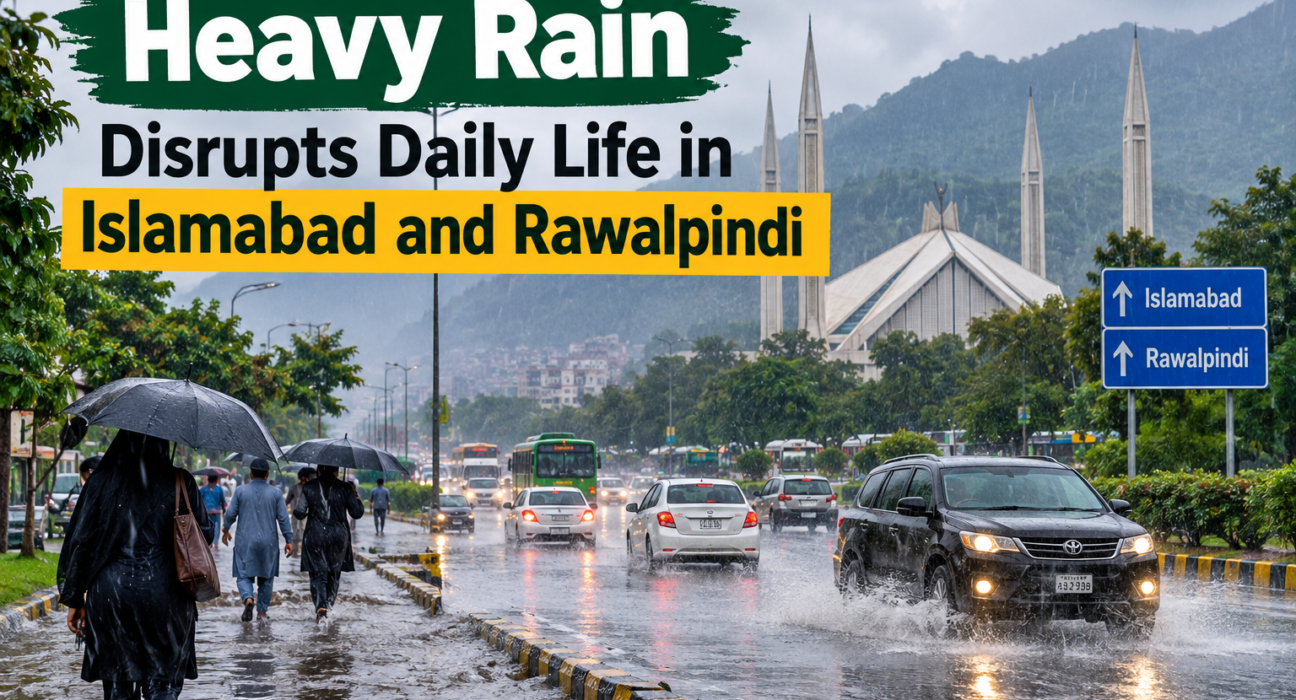
When the clouds roll in over the Margalla Hills, people in the twin cities know what may come next. A light drizzle can turn into hours of heavy rain, and the day changes fast. Roads fill up, power goes out, schools close, and people rush home early. This article looks at how the rain affects ordinary life, what causes the trouble, and what you can do to stay safe and keep going.
I wrote this in plain language, so you can read it quickly and use it in real life.
Heavy Rain Disrupts Daily Life in Islamabad and Rawalpindi: What Is Really Happening
Every year, the monsoon brings relief from the summer heat. The air cools, the trees turn deep green, and the Margalla Hills look their best. But the same rain also brings stress to millions of people who live in the twin cities.
When the downpour is heavy, water collects on roads faster than drains can carry it away. Traffic slows to a crawl. Small streets turn into streams. People who rely on motorbikes or rickshaws get soaked and stuck. Office workers arrive late or not at all, and shop owners watch customers disappear.
A Quick Look at the Typical Impact
The effects are easy to spot when you step outside:
- Roads and underpasses collect water within minutes.
- Public transport runs late or stops for a while.
- Electricity feeders trip, and homes go dark.
- Mobile networks get slow in some areas.
- Markets empty out as shoppers head home.
None of this is new, but it still catches many people off guard. A short break in the rain can feel like the end of the storm, and then the next wave arrives.
Why Islamabad and Rawalpindi Get Hit So Hard by Monsoon Rain
The twin cities sit close to the hills, and that matters. Moist air moves in from the south and gets pushed upward by the mountains. As it rises, it cools and drops its water. That is why this region often gets stronger rainfall than nearby plains.
The Role of the Margalla Hills
The Margalla Hills act like a wall. Clouds collect against them, and the rain falls hard and fast. The water then runs down the slopes toward the city. Streams that look calm in summer can swell in a short time.
Weather Patterns and Western Disturbances
Sometimes the monsoon winds meet a western weather system. When these two meet, the result can be thunderstorms with sudden, heavy bursts of rain. Forecasters follow these patterns closely, and you can check the latest alerts on the Pakistan Meteorological Department website before you plan your day.
Fast Growth and Less Open Ground
The twin cities have grown a lot over the years. More buildings, roads, and paved lots mean less soil to soak up water. When rain has nowhere to sink in, it flows across the surface and gathers in low spots. That is a big reason why even a few hours of rain can cause flooded streets.
How Heavy Rain Slows Down Roads and Daily Traffic
Ask anyone who has driven through the twin cities during a storm, and they will tell you the same thing: traffic becomes a different beast.
Main Roads Under Pressure
Busy routes like Murree Road, Srinagar Highway, and Islamabad Expressway carry thousands of vehicles every hour. When rain makes the surface slick and water pools along the edges, drivers slow down. Even one stalled car can block a whole lane. The delay then spreads backward for kilometers.
Underpasses and Low Points
Underpasses are some of the trickiest spots. Water collects in them quickly, and a car that looks like it can pass may stall halfway. If you see water filling an underpass, please do not try to cross it. Taking a longer route is always safer than getting trapped.
Smaller Streets and Neighborhood Lanes
In many neighborhoods, narrow lanes have weak drainage. Water rises, mixes with mud and trash, and makes walking hard. Children, older adults, and people with health problems struggle the most in these conditions.
The Struggle of Commuters, Students, and Office Workers
Rain does not stop life. People still have places to be. That is where the real trouble starts.
Getting to Work on Time
Many workers travel from Rawalpindi to offices in Islamabad every morning. When rain slows the road, a thirty-minute trip can stretch to two hours. Some people leave home very early. Others choose to wait and hope the weather improves. Either way, the day begins with stress.
Students and Schools
Schools sometimes close or change their timings when the rain is strong. This helps keep children safe, but it also disrupts learning. Parents have to rearrange their own schedules, and families who depend on school transport face extra worry. Online classes help in some cases, but not every home has a steady internet connection.
Daily Wage Earners
For people who earn money day by day, a rainy day can mean no income. Street vendors, laborers, rickshaw drivers, and delivery riders often cannot work safely in a storm. Their hardship does not always make the news, but it is real, and it is worth remembering.
Urban Flooding and Blocked Drains in the Twin Cities
Flooding is the picture most people think of when they hear about heavy rain here. It does not always mean a huge disaster. Often, it is a slow, frustrating problem that repeats every season.
Why Drains Fail
Drains get clogged by plastic bags, bottles, leaves, and construction waste. When the storm hits, the water cannot flow out, so it rises onto the road. Cleaning drains before the monsoon makes a big difference, but it needs steady effort from city teams and from residents too.
The Story of Nullah Leh
Rawalpindi is closely tied to Nullah Leh, a stream that runs through the city. In normal weather, it carries a modest flow. During heavy rain, the water level can climb quickly, and people living near its banks watch it with worry. Officials often keep a close eye on the levels and issue warnings when the water is rising.
Low-Lying Areas and Housing Societies
Some neighborhoods sit lower than the roads around them. When water collects, it can enter shops and ground-floor homes. Residents then spend hours, sometimes days, cleaning up mud and dirty water. Damaged furniture, wet walls, and spoiled goods add to the cost.
A Simple Table of Common Problems
Here is a quick look at the problems that show up most often during strong rain, and what they mean for daily life.
| Problem | Where It Shows Up | Effect on People |
| Water on roads | Main roads and underpasses | Long delays and stalled vehicles |
| Blocked drains | Markets and old neighborhoods | Dirty water near shops and homes |
| Power cuts | Residential and business areas | No fans, lights, or water pumps |
| Slippery surfaces | Hill roads and lanes | Higher risk of accidents |
Power Cuts, Weak Signals, and Everyday Services
Rain does not only affect roads. It reaches the services we use every day without thinking about them.
Electricity Interruptions
During storms, power lines can trip, and transformers can fail. Sometimes the supply is cut on purpose as a safety step. Either way, homes lose light and fans. Families who use electric pumps for water may run short. Small businesses like bakeries and workshops stop working until power returns.
Please stay away from any fallen wires or wet poles. Water and electricity are a dangerous mix, and it is always best to report such hazards and keep your distance.
Mobile Networks and Internet
Heavy rain and strong winds can affect signal towers. Calls drop, messages are delayed, and internet speed falls. This hits people who work from home, students in online classes, and anyone who needs to reach family during a storm.
Water Supply and Cleanliness
Strange as it sounds, heavy rain can make clean water harder to find. Muddy runoff can mix with supply lines, and dirty water may reach taps. Boiling drinking water is a smart habit during and after the storm. This is simple, cheap, and protects your family.
Effects on Local Businesses, Markets, and Jobs
The economic side of heavy rain is easy to overlook, but it touches almost everyone.
Shops and Markets
Busy areas like Saddar, Raja Bazaar, and Blue Area see fewer customers when the weather is bad. Some shopkeepers close early, while others stay open and wait for buyers who never show up. Stock can also get damaged if water leaks inside.
Restaurants and Delivery Services
Food delivery becomes harder when roads are flooded. Riders face risk, orders take longer, and some companies pause service in the worst areas. Restaurants may lose their evening rush, though a few places do see a boost from people who want hot tea and snacks while the rain pours.
Construction and Outdoor Work
Building sites often stop work during heavy rain. Wet cement, slippery scaffolds, and muddy grounds are unsafe. Delays push back project timelines and cut into workers’ pay.
Looking at the Bigger Picture
When thousands of people lose a few hours of work, the total effect is large. That is why good planning and strong drainage are not just comfort issues. They are also money issues for families and for the city as a whole.
Health and Safety Concerns During and After the Rain
Staying healthy matters just as much as staying dry. Wet weather brings a few risks that are easy to prevent if you know about them.
Common Health Problems
Standing water attracts mosquitoes, and that can raise the risk of diseases like dengue. Dirty water can also cause stomach infections, skin problems, and colds. Children and older adults need extra care.
Road Safety Tips
Slippery roads cause many accidents. Here are some simple steps that help:
- Slow down and keep a bigger gap between vehicles.
- Turn on your headlights so others can see you.
- Avoid driving through deep water.
- Keep your tires and brakes in good shape.
- Wear a helmet and rain gear if you ride a motorbike.
Staying Safe at Home
Keep a torch, spare batteries, a power bank, and some dry food at home. Store clean drinking water in covered containers. Move valuable items off the floor if your area tends to flood. These small steps take little time but can save you a lot of trouble.
Cleaning Up After the Storm
After the water goes down, wash your hands often and clean the floors with disinfectant. Throw away food that touched floodwater. Keep stagnant water from collecting in buckets, tires, or pots around your home, since that is where mosquitoes breed.
How Authorities and Rescue Teams Respond
When the weather turns serious, many groups step in to help. Their work often goes unnoticed, but it matters a great deal.
City Teams and Emergency Services
Local teams work to clear blocked drains, pump out water from low roads, and remove fallen trees. Rescue workers help people stuck in flooded areas or vehicles. Traffic police guide drivers, close dangerous roads, and suggest safer routes.
Early Warnings and Public Alerts
Warnings are one of the best tools we have. Weather updates and disaster alerts give people time to prepare. The National Disaster Management Authority shares advisories and safety guidance that residents can follow, and it is wise to check them whenever heavy rain is forecast.
Where Things Can Improve
Many residents feel that cleaning drains should start well before the monsoon, not after the first flood. Better planning, stronger drainage, and quick repairs would help. Clear communication also matters, so people know which roads are safe and which are closed.
A Second Table: Who Does What
Roles During Heavy Rain Emergencies
| Group | Main Job | How You Can Help |
| Rescue teams | Help people in danger and clear blocked areas | Stay calm and follow instructions |
| Traffic police | Manage roads and close unsafe routes | Obey signs and avoid flooded roads |
| Weather department | Share forecasts and alerts | Check updates before travel |
| Residents | Keep drains and streets clean | Do not dump trash in drains |
Practical Tips to Handle Rainy Days Like a Pro
You cannot control the weather, but you can control how ready you are. A little planning makes rainy days far easier.
Plan Your Day Around the Forecast
Check the weather before you leave. If heavy rain is expected, try to finish important errands early. If you can work from home, that is often the safest choice. When you must travel, leave extra time and pick a route that avoids low roads.
Prepare Your Vehicle
Keep your wipers working and your tires in good shape. Check your brakes and lights. Keep a small kit in the car with a torch, a towel, a phone charger, and a bottle of water. If your car stalls in water, do not keep trying to start it. Turn it off, step out safely if you can, and call for help.
Protect Your Home and Belongings
Fix roof leaks before the rains begin. Clear the gutters and the water channels near your house. Keep important papers in waterproof bags. If you own a shop, raise stock above the floor level when you can.
Look Out for Neighbors
Rain brings out the best in communities. Check on older neighbors who live alone. Share a torch or a power bank if someone needs it. Offer a safe spot to someone stuck on the road. Small acts of kindness make a stressful day a little easier.
Long-Term Solutions for a More Rain-Ready Twin City
Short-term fixes help, but lasting change needs long-term thinking. The twin cities can do much better if everyone does their part.
Better Drainage and Planning
Wider drains, regular cleaning, and smart design can move water away faster. New housing projects should plan for rainwater from the start, not as an afterthought. Keeping natural streams open and free from blockage also helps a lot.
More Green Space and Trees
Trees and open ground soak up rain and slow the flow of water. Planting more trees, protecting parks, and keeping green belts safe can reduce flooding. It also keeps the air cleaner and the city cooler in summer.
Rainwater Harvesting
Some homes and buildings collect rainwater in tanks and use it for gardens, cleaning, or flushing. This reduces pressure on drains and saves clean water for drinking. It is a smart habit that more families can adopt.
Responsible Habits from Everyone
Even the best plan fails if drains are full of trash. Throwing waste in the right bins is a small step with a big payoff. When each person does a little, the whole city gains.
Rain is a blessing, and it is also a test. In Islamabad and Rawalpindi, a strong storm can slow roads, cut power, close schools, and hurt local business. Yet people here also show patience and kindness when things get tough. Neighbors help each other, rescue workers go out in the worst weather, and life finds a way to move forward.
The best thing you can do is stay informed, plan ahead, and put safety first. Check the forecast, avoid flooded roads, keep your home ready, and look out for people around you. With better planning from the authorities and better habits from residents, the twin cities can handle heavy rain with far less disruption.