

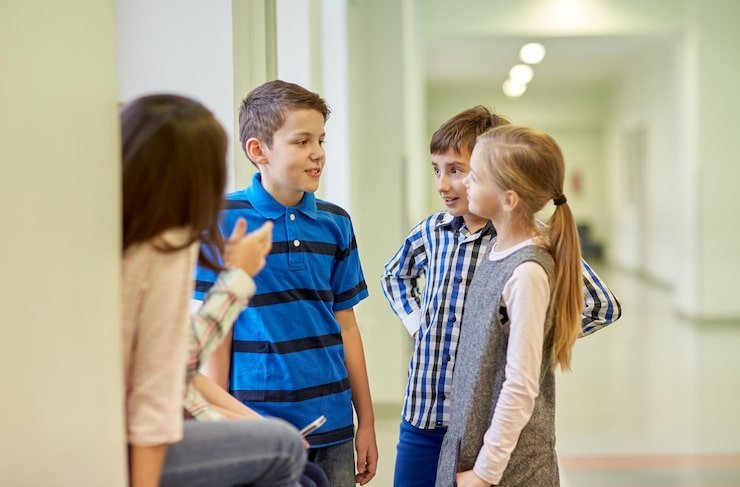
Are peer relationships shaping your school culture? Do you want positive interactions among students? These interactions contribute greatly to building a collaborative, inclusive peer environment.
In this blog we will discuss how we foster these relationships to build a healthy school community.
For example, a School Near Kabir Town plays a powerful role in determining the culture of a school and developing positive relationships.
What drives everything from the student interaction dynamics between classmates to the climate of the whole school are these bonds that form.
Let’s explore the ways that these connections cultivate a positive school climate; friendship as the firestarter and measuring groups and mutuals.
Building a Positive School Culture through Peer Relationships
Central to every great school is a positive culture. This fosters an environment through peer relationships where students feel safe, supported, and inspired to grow.
But when students are asked to interact positively with one another, they create norms of respect and empathy and even teamwork not just between pairs of students but across the school culture.
Having that sense of community is vital in creating the broader landscape and providing students with the validation that they belong.
Youth who collaborate with peers when they are studying, participating in extra-curricular activities or even over lunch breaks practice values that reflect those of the school.
The Influence of Peer Pressure on School Culture
Peer pressure is an important aspect of educational culture. Though peer pressure can often take a negative turn, pushing students towards destructive patterns of behavior and serving their community.
High-quality peer relationships usually come about when students each carry over different things, urging each other to do their very best, be it studying harder, participating in college activities, or supporting those in need.
When peer stress is used definitively, a safe and supportive school is able to grow to be a very powerful force by creating a subculture.
The environment in which students can only rely on each other to do things that match the values of the school, peer pressure soon becomes one of curiosity and self-improvement.
The Impact of Friendships on School Life
Friendships are the bedrock of peer relationships. Good, healthy roommate bonds lead students to gravitate toward their school. How conflict resolution and peer relationships influence school culture
There is always a certain degree of conflict inherent in social situations, schools included. But most importantly, the way conflicts are arranged and brought to a conclusion plays a large role in the school culture development process.
The manner in which the issue is resolved, through dialogue, collaboration, or external support, often also lays out a larger context of quality at an institution.
Group Dynamics and School Culture
Peer relationships encompass more than individual friendships but also the dynamics of groups. Sports teams, clubs, class projects are the interactions in groups that influence school culture.
Students learn teamwork, how to appreciate a variety of perspectives and respect for their classmates in these surroundings. These group experiences can help create the overall tone of the school.
Groups that work are places where inclusivity, collaboration, and mutual respect thrive. Toxic group environments create exclusion, bullying, and negativity overshadowing the whole school climate.
One of the things that needs to happen in schools is healthy group interactions; peer relationships should be contributing to a positive and welcoming school culture.
Conflict Resolution and Peer Relationships in Shaping School Culture
All social situations involve some level of conflict, including schools. But most importantly, how conflicts are compose and solved is a huge factor in the formation of the school culture.
The manner in which the issue is resolve, through dialogue, collaboration, or external support, often also lays out a larger context of quality at an institution.
These schools can teach students how to resolve their conflict by using resolution techniques. Some of these issues need more concentration to resolve.
The Role of Teachers in Supporting Peer Relationships
Though student-driven, peer relationships are still mediated by teachers. It is the teachers, by promoting positive peer relations, addressing conflict in productive ways and fostering inclusion that create a culture of positivity within the school.
For example, a School Near Bahria Orchard recognizes the importance of teachers who create a culture of respect and collaboration among each other.
They can also introduce programs or activities that foster students working together, discovering friendships and recognizing healthy relationships.
This makes students aware that connections with their peers hold the same importance as salutatorian and valedictorian status.
Final Thoughts
There is no doubt peer culture shapes school culture. It impacts everything from student academic performance to the climate of an entire school.
However, many schools can promote an atmosphere of positive peers where they ensure every scholar feels cared for and has the opportunity to grow academically within their school.
The influence of peers in organizing school subculture is clear. Let’s uphold these relationships and support each individual in developing a school lifestyle that allows everyone to flourish.
Also Read: Apple’s Cheapest MacBook Yet: Everything We Know About the Rumored MacBook “Neo”