
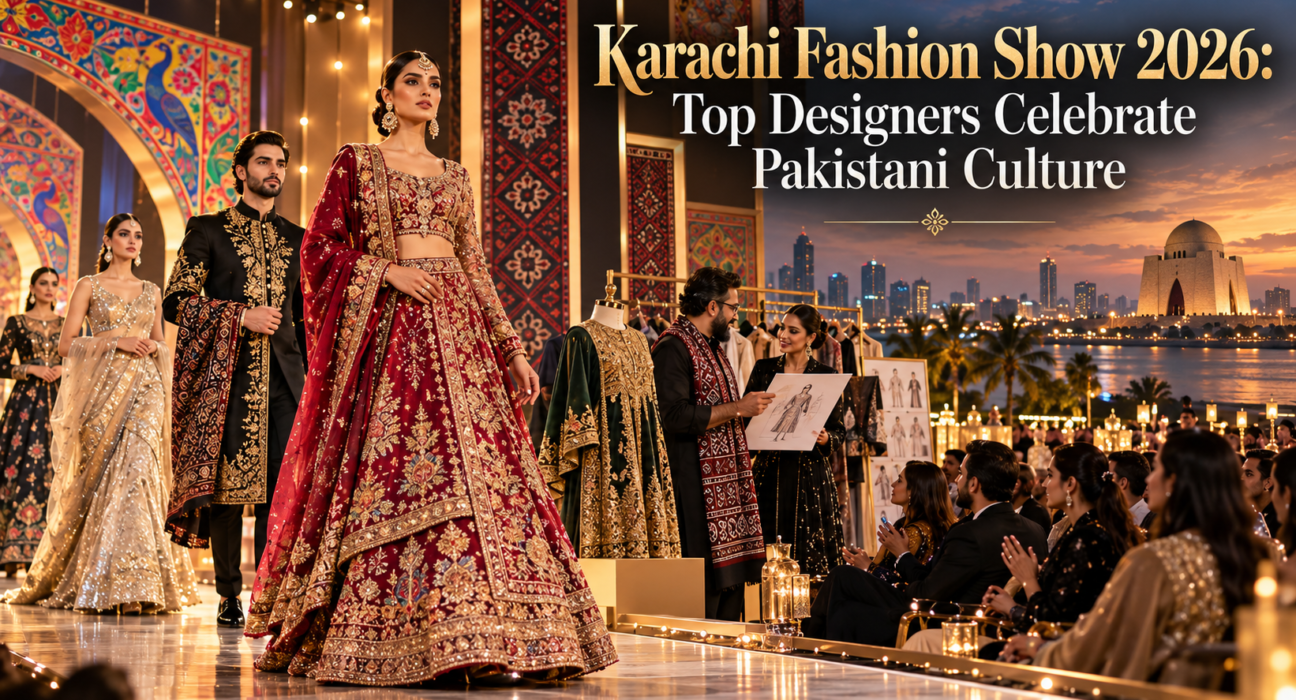
Karachi never does anything quietly, and its fashion scene is no different. In 2026 the city again became a stage where tradition and new ideas share the same runway. Designers, models, photographers, buyers, and fans all came for one reason. They wanted to see how Pakistani culture looks when it is dressed up, stitched with care, and walked down a catwalk under bright lights.
I have followed Pakistani fashion for years, and this season felt different. The mood was warm and proud, and the clothes had real stories behind them. In this guide, I will walk you through what happened, which ideas stood out, and what you can take away for your own wardrobe. I wrote it in simple words, so you can read it fast and enjoy every part.
Why Karachi Is the Heart of Pakistani Fashion
Karachi is the biggest city in Pakistan. It is also the country’s business capital, so it has money, talent, and a huge audience. Fashion needs all three. A designer can open a studio here, hire skilled workers, find fabric suppliers, and sell to customers in the same week.
A City Full of Colour and Contrast
Walk through Karachi and you will see old buildings next to glass towers. You will see truck art, street food stalls, sea breeze, and busy markets. This mix feeds the imagination of local designers. Many of them say the city itself is their moodboard.
That is why Karachi shows often feel lively. A collection might use soft pastel tones inspired by the beach and loud, bold shades inspired by bazaars. Both feel honest because both are part of daily life here.
A Strong Base for Business
Fashion is also a job market. Thousands of tailors, embroiderers, pattern makers, dyers, and stylists earn their living from it. When a big show happens, work flows to all of them. Orders go up, studios get busier, and young people see that fashion can be a real career.
Karachi Fashion Show 2026: Top Designers Celebrate Pakistani Culture and What Happened on the Runway
Let me share what we actually know. According to the Express Tribune, <a href=”https://tribune.com.pk/story/2631750/east-west-come-together-at-kaleidoscopic-karachi”>a showcase called “Kaleidoscopic Karachi” was held as part of LAAM Fashion Week 2026</a>. The report said the collections brought the colours, culture, and changing character of the city to the runway.
That description fits the bigger story of the year. Designers did not just present clothes. They presented Karachi itself, with all its moods.
What Kaleidoscopic Karachi Was About
A kaleidoscope is a toy with colourful pieces that make new patterns every time you turn it. The name was a smart choice for this city. Karachi has many communities, languages, foods, and traditions. Each one adds a piece to the picture.
On the runway, this idea showed up as many looks that did not copy each other. Some outfits were rich and traditional. Others were light, modern, and easy to wear. Together they gave the audience a full view of the city’s style.
East Meets West on One Stage
The same report noted that the collections mixed eastern and western shapes. This is a big theme in Pakistani fashion today. A long kurta may be paired with a sharp blazer. A traditional shawl may sit over a modern dress. A saree can be styled with a crop top or a structured jacket.
I love this trend because it matches how people really live. We go to offices, weddings, cafes, and family dinners, often in the same week. Our clothes should be able to move between those places, and many designers understood that this year.
HSY and the Voice of Senior Designers
Every fashion season has a few big names whose opinions carry weight. Designer Hassan Sheheryar Yasin, known as HSY, is one of them. His label started in 2000 as a bridal and formal wear house and grew into one of the most recognised names in the country.
A Message of Unity
HSY told the Express Tribune that he felt happy to see designers from all over Pakistan come together and watch each other’s work. He also said the show reminded him of the potential Karachi has, something he felt had not been seen for a long time.
I think this point matters more than it looks. Fashion is a competitive business, and designers often work in their own circles. When they sit in the same room and clap for each other, the whole industry gets stronger.
Why Platforms Like This Matter
HSY also described the fashion week as an important platform for the growth of the industry. He is right. A good platform gives designers a deadline, a crowd, and a reason to finish a bold idea. It also gives buyers and media a single place to see everything at once.
Without such events, many beautiful collections would never leave the studio. With them, a young designer in Karachi can be seen by someone in Lahore, Dubai, or London.
Culture on the Catwalk: Fabrics and Crafts
If you ask me what makes Pakistani fashion special, I will say craft. Our country has a long history of hand skills, and designers keep finding new ways to use them.
Ajrak and Sindhi Heritage
Ajrak is a block-printed cloth from Sindh with deep reds, blues, and geometric shapes. Karachi sits in Sindh, so this fabric is part of the city’s identity. Designers like to use it in fresh ways. You may see ajrak panels on a jacket, a border on a dress, or a pattern borrowed for prints.
It is a lovely way to honour local culture without making the outfit look like a costume.
Embroidery That Tells a Story
Hand embroidery is another star. Techniques like zardozi, dabka, resham, and tilla work take many hours. Each stitch is placed by a person, and you can feel that effort in the finished piece.
In 2026, embroidery looked a bit lighter. Instead of covering a whole outfit, designers placed it on necklines, sleeves, and hems. This keeps the look elegant and also makes the clothes easier to wear.
Handloom and Soft Fabrics
Handwoven cotton, khaddar, and silk blends also got attention. These fabrics breathe well, which is useful in our weather. They also feel personal. When you wear handloom, you are supporting a chain of weavers who keep an old skill alive.
The Colours of Karachi
Colour is one of the first things you notice at any Karachi show. This season did not disappoint.
Bold Shades for Big Moments
Deep emerald, royal blue, mustard, and rich maroon appeared again and again. These colours look great on camera and in real life. They also work well for weddings and festive events, where people want to stand out.
Soft Tones for Everyday Style
On the other side, you could find sand, sage green, dusty pink, and ivory. These tones suit daytime wear and summer events. They also pair nicely with simple jewellery.
I like that designers did not force one mood on everyone. You could pick loud or calm, and both felt like part of the same city.
Silhouettes: Eastern, Western, and Everything Between
Shape is just as important as colour. Here is a simple look at the main cuts that appeared in the conversation around the 2026 showcase.
Main Silhouettes and How to Wear Them
| Silhouette | Cultural Root | Modern Twist | Best For |
| Long kurta with straight trousers | Eastern | Sharper tailoring, cleaner lines | Office, family events |
| Flared gharara or sharara | Eastern, traditional | Shorter lengths, lighter fabric | Weddings, festive days |
| Saree | South Asian classic | Styled with jackets or belts | Evening events |
| Structured blazer with kurta | East and West mix | Bold buttons, cropped cuts | Work, dinners |
| Maxi dress with embroidery | Western base | Local hand work on sleeves | Parties, travel |
Why Fusion Keeps Growing
Fusion works because it respects both sides. You do not have to give up your roots to look modern. You also do not have to look old fashioned to honour your culture. This balance is exactly why many people feel connected to the designs they see.
Menswear Joins the Conversation
Men’s fashion is growing too. Kurta sets in earthy colours, waistcoats with subtle prints, and relaxed shalwar styles are getting more attention. Karachi has hosted menswear events for years, and more male customers now care about fit and fabric.
From Runway to Online Shopping
One of the biggest changes in Pakistani fashion is how fast clothes now move from the stage to your phone. The 2026 season is a good example. Daily Times reported that <a href=”https://dailytimes.com.pk/tag/laam-fashion-week/”>LAAM Fashion Week was introduced as Pakistan’s first runway-to-e-tail fashion platform</a>, with its first edition planned in Lahore from January 31 to February 3.
See It, Click It, Wear It
The idea is simple. You watch a collection, and soon after you can buy it online. In the past, you had to wait months to see a runway look in stores. Now the gap is much smaller.
This helps shoppers, and it helps designers too. They get quick feedback and quick sales, and they can learn which pieces people truly love.
What This Means for Small Brands
Smaller labels gain a lot from online selling. They do not need a big shop in a mall. A clear website, good photos, and honest delivery can be enough to reach customers across the country.
If you run a small brand, this is a strong lesson. Show your work with pride, tell your story clearly, and make buying easy.
New Talent Gets Its Moment
Big names bring crowds, but fresh voices bring energy. Every fashion week gives young designers a chance to show they belong.
Students and First-Time Labels
Fashion schools in Karachi train many creative people. When these students get to show their work on a real runway, it changes their lives. They meet mentors, press, and future clients, and they learn how a show really works.
Ideas That Feel Different
New designers often take more risks. They play with odd shapes, unusual fabric mixes, and playful prints. Not every idea becomes a hit, but this is how trends begin. Today’s experiment can become next year’s best seller.
What Visitors and Fans Experienced
A fashion show is not only about clothes. It is also about the feeling in the room. People dress up, take photos, meet friends, and cheer for their favourite looks.
The Atmosphere
Think of bright lights, loud music, and rows of well-dressed guests. Photographers wait at the end of the ramp. Models walk with confidence, and the crowd reacts to every strong moment. The Express Tribune noted that this showcase also explored the changing relationship between the city and photography, which shows how much visual culture shapes fashion today.
Why Photography Matters
Photos travel faster than words. One good picture of an outfit can reach thousands of people in minutes. Designers know this, so they plan their looks to be seen from every angle. If you follow fashion pages, you have probably seen how a single runway photo can start a trend.
Quick Trend Guide for 2026
| Trend | What It Looks Like | How You Can Try It |
| Light embroidery | Hand work only on neckline or cuffs | Pick a plain suit with a detailed border |
| Local prints | Ajrak or block print inspired patterns | Add a printed dupatta to a solid outfit |
| Earthy colours | Sand, olive, terracotta | Build a capsule wardrobe in these shades |
| East and West mix | Kurta with blazer or jacket | Wear a structured layer over your kurta |
| Handloom fabrics | Soft, breathable cotton and silk blends | Choose them for summer and daytime events |
Trends You Can Wear Right Now
You do not need a runway ticket to enjoy these ideas. Here is how to bring them into real life.
Style Tips for Women
Start with one statement piece. It could be an embroidered dupatta, a printed shawl, or a bright shirt. Keep the rest simple. If you love fusion, try a classic kurta with a tailored jacket. Add small earrings or a clean watch, and you are done.
For weddings, choose rich colours and light embroidery. This keeps you comfortable through a long evening while still looking festive.
Style Tips for Men
Begin with a well-fitted kurta in a calm shade like beige or olive. Add a waistcoat for formal moments. Good shoes matter more than people think, so polish them before you step out. A simple stole or shawl can finish the look in winter.
Shop Smart, Not Just Fast
Trends are fun, but quality matters more. Check the stitching, the fabric feel, and the size chart before you buy. Buy fewer pieces that you will wear again and again. This saves money and also helps the planet.
Craft, Sustainability, and the Future
There is another side of this story that is easy to miss. Pakistani fashion depends on human skill, and that skill needs care.
Protecting Artisans
Many embroiderers and weavers work from home or in small workshops. When designers pay them fairly and credit their names, the whole chain becomes healthier. Customers can help by supporting brands that treat workers with respect.
Slow Fashion Is Growing
More shoppers now care where their clothes come from. Natural fabrics, local dyes, and long lasting designs are getting more attention. A well-made outfit that lasts for ten years is better than five cheap ones that fall apart.
Looking Ahead
If this year is a sign, Pakistani fashion is moving in a confident direction. Designers are proud of their roots and open to new ideas. Platforms are linking shows with online shopping. Senior names like HSY are encouraging unity, and young talent is getting space to grow.
Karachi’s 2026 fashion moment was about more than pretty outfits. It was about identity. The city showed its many faces through colour, craft, and creative risk. Eastern and western styles shared the stage without fighting each other. Senior designers praised the spirit of togetherness, and new voices stepped forward with fresh energy.
For you, the lesson is easy to use. Wear what makes you feel like yourself. Mix old and new when it feels right. Support the artisans who make our clothes possible. And keep an eye on Karachi, because this city has a habit of setting trends first and explaining them later.
If you love Pakistani culture, fashion is one of the most beautiful ways to see it. Every thread, print, and stitch carries a little piece of home.