

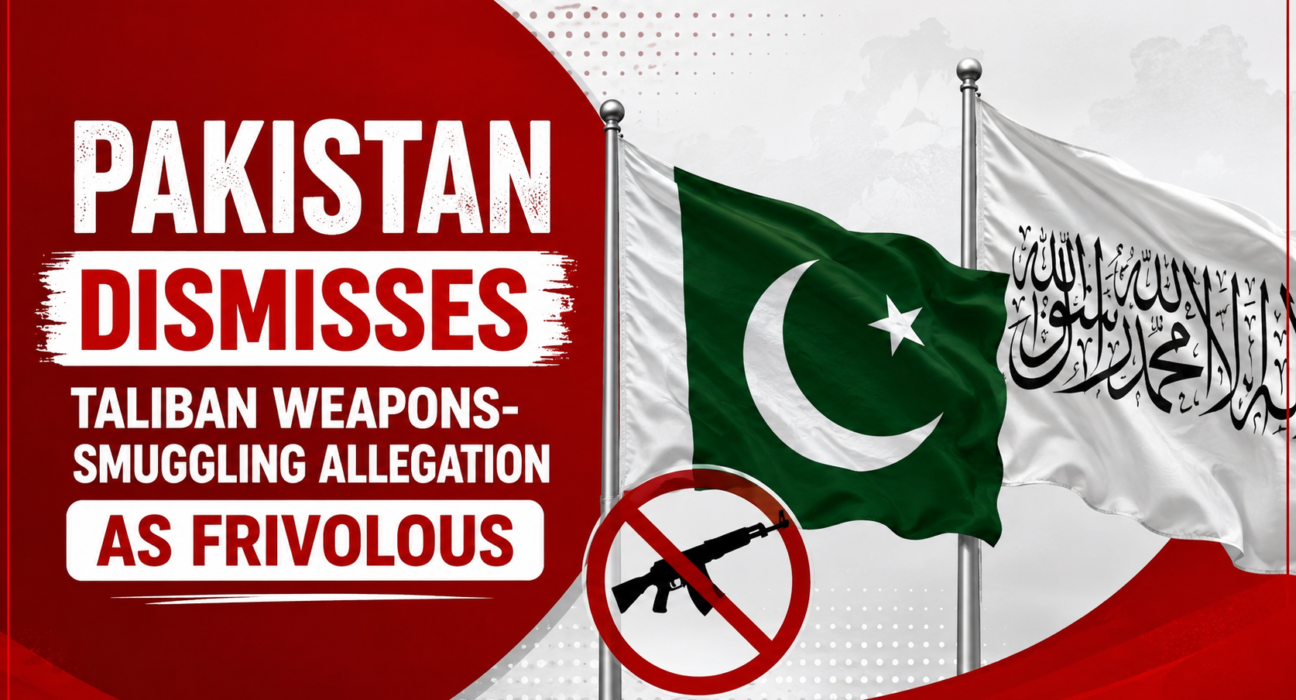
If you’ve been following the ever-tense relationship between Islamabad and Kabul, you already know that accusations tend to fly back and forth pretty regularly these days. The latest one, though, has managed to grab headlines across the region. Pakistan has flatly rejected a claim made by the Afghan Taliban regime that weapons were being smuggled across the border from Pakistan into Afghanistan for what the Taliban called “subversive activities.” And Islamabad didn’t hold back in its response either — the country’s Ministry of Information and Broadcasting called the whole thing “frivolous, baseless and contrary to established facts.”
So, what actually happened? According to reports, the Afghan Defence Ministry claimed it had discovered and seized dozens of tons of light and heavy weapons allegedly smuggled from Pakistan. That’s a pretty serious accusation on paper, and naturally, Pakistan wasn’t going to let it slide without a strong rebuttal.
Pakistan’s Response Comes Fast and Firm
Within hours, Pakistan’s information ministry posted a detailed statement on social media pushing back hard against the claim. The ministry pointed out something that’s honestly hard to ignore: Afghanistan is already sitting on a massive stockpile of weapons. Officials noted that the country is awash with enormous quantities of sophisticated weapons and military equipment abandoned after the withdrawal of US and coalition forces, with that leftover hardware estimated to be worth around $7.2 billion. On top of that, there are decades’ worth of Soviet-era weapons still floating around the country from earlier conflicts.
Given all that, Pakistan’s argument is pretty straightforward — why would anyone need to smuggle weapons into a country that’s already overflowing with them? The ministry suggested that pinning a “Pakistani connection” on these weapons looks less like a genuine security concern and more like a convenient distraction.
Shifting the Spotlight Back to Cross-Border Terrorism
This is really where the heart of Pakistan’s argument lies. Islamabad has consistently maintained that the real issue isn’t weapons moving into Afghanistan — it’s militant groups operating freely from Afghan soil and using that space to plan and launch attacks inside Pakistan. The ministry stated that these attempts to manufacture a Pakistani connection seem designed to divert international attention from the far more serious and documented concern of terrorist groups finding safe haven across the border.
This isn’t a new grievance, either. Pakistan has repeatedly pressed the Afghan Taliban government to crack down on militant hideouts, especially given the sharp rise in cross-border terrorist incidents in Khyber Pakhtunkhwa and Balochistan since 2021. Senior military officials have echoed this stance multiple times, stressing that Pakistan’s issue lies with the Taliban regime itself, not with the Afghan people.
A Quick Snapshot of the Dispute
| Aspect | Details |
|---|---|
| Allegation | Taliban claims weapons smuggled from Pakistan into Afghanistan |
| Pakistan’s Response | Called “frivolous, baseless and contrary to established facts” |
| Key Counterargument | Afghanistan holds $7.2 billion in abandoned US/coalition weapons |
| Additional Context | Large stockpiles of Soviet-era weaponry also present |
| Pakistan’s Core Concern | Terrorist groups operating from Afghan soil |
Where Things Stand Between Islamabad and Kabul
| Issue | Current Situation |
|---|---|
| Cross-border terrorism | Sharp rise in KP and Balochistan since 2021 |
| Pakistan’s demand | Dismantle terrorist sanctuaries in Afghanistan |
| Diplomatic tone | Increasingly strained, marked by public accusations |
| Broader context | Follows earlier disputes over alleged militant strikes |
At the end of the day, this latest exchange is just one more chapter in a relationship that’s been fraying for years. Whether or not the smuggling claim gets any traction internationally remains to be seen, but Pakistan’s message is loud and clear: stop pointing fingers across the border and start addressing what’s actually happening on Afghan soil.