
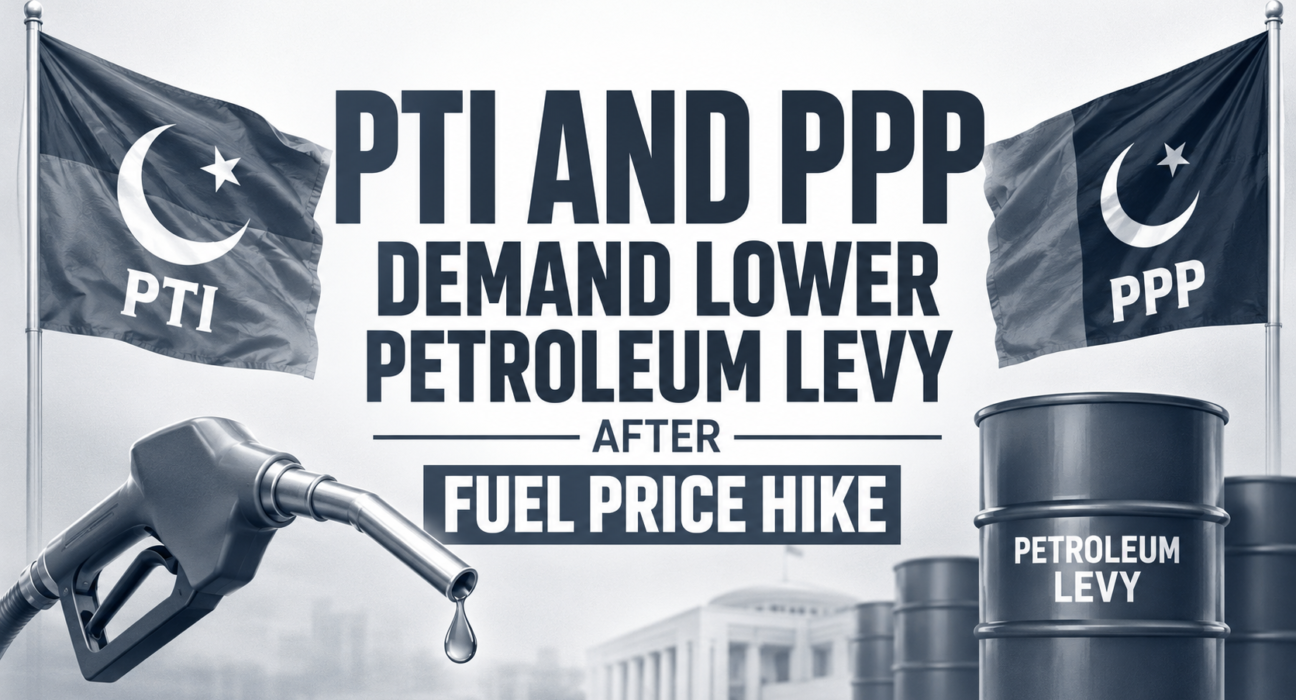
Pakistan’s latest fuel price increase has once again sparked political debate, with both the Pakistan Tehreek-e-Insaf (PTI) and the Pakistan Peoples Party (PPP) urging the federal government to reduce the petroleum levy. The opposition argues that rising fuel costs are placing an unbearable financial burden on ordinary citizens, especially at a time when inflation continues to affect household budgets.
The demand has reignited discussions about the government’s economic policies, revenue generation, and the balance between fiscal stability and public relief. As fuel prices directly influence transportation, food, and utility costs, the issue has become one of the most talked-about topics across Pakistan.
Fuel Price Hike Triggers Political Reaction
The federal government’s decision to increase petroleum prices has drawn criticism from political parties, economists, and the public alike. PTI leaders claim the price hike is worsening inflation and making daily life increasingly difficult for low- and middle-income families.
PPP leaders have also voiced similar concerns, calling on the government to reconsider the petroleum levy and provide immediate relief to consumers. According to both parties, reducing the levy would help lower fuel prices without compromising the country’s long-term economic objectives if managed carefully.
Key Highlights of the Issue
| Topic | Details |
| Fuel Price Increase | Government announced higher petrol prices due to international market trends. |
| PTI’s Position | Calls for reducing petroleum levy to ease inflation. |
| PPP’s Position | Demands immediate relief for consumers through lower fuel taxes. |
| Public Impact | Higher transport, food, and business costs. |
| Government’s Challenge | Maintaining revenue while managing economic stability. |
Political Responses at a Glance
| Political Party | Main Demand | Reason |
| PTI | Reduce petroleum levy | Lower inflation and provide public relief |
| PPP | Cut fuel taxes | Reduce cost of living and transportation expenses |
| Government | Continue current fiscal policy | Maintain revenue and economic commitments |
Why the Petroleum Levy Matters
The petroleum levy is a tax imposed on fuel products sold within Pakistan. It represents an important source of revenue for the federal government and is often used to finance public spending and infrastructure projects.
However, when international oil prices rise, maintaining a high petroleum levy can significantly increase the retail price consumers pay at fuel stations. This is why opposition parties frequently demand reductions during periods of rising global oil prices.
For millions of Pakistanis, even a small increase in fuel prices can have a ripple effect across the economy.
Impact on Ordinary Citizens
Fuel prices influence nearly every aspect of daily life. As transportation becomes more expensive, businesses often pass those additional costs on to consumers.
The latest increase is expected to affect:
- Public transportation fares
- Prices of fruits and vegetables
- Delivery and logistics charges
- Manufacturing costs
- Electricity generation expenses in certain sectors
For families already struggling with inflation, these additional costs further reduce purchasing power.
PTI’s Stand on the Issue
PTI leaders argue that lowering the petroleum levy would immediately reduce pressure on consumers. They believe the government should prioritize public welfare over collecting additional tax revenue during difficult economic conditions.
According to party representatives, reducing indirect taxes on fuel could help stabilize prices across multiple sectors and support economic activity.
PPP Calls for Consumer Relief
The Pakistan Peoples Party has echoed similar concerns, emphasizing that inflation has reached a point where many households are finding it difficult to manage essential expenses.
PPP leaders believe that reducing the petroleum levy would demonstrate the government’s commitment to protecting citizens from rising living costs. They have urged policymakers to review existing tax policies and introduce measures that directly benefit the public.
Government’s Economic Dilemma
While reducing the petroleum levy may provide short-term relief, it also presents challenges for government finances. Revenue generated through fuel taxes contributes significantly to the national budget.
Officials often argue that maintaining these revenues is necessary to meet fiscal targets, support development projects, and fulfill international financial commitments.
As a result, policymakers must balance public expectations with broader economic responsibilities.
Public Opinion Continues to Grow
Many citizens have expressed frustration over rising fuel prices, particularly on social media, where discussions about inflation continue to trend. Business owners, transport operators, and salaried employees have all highlighted the financial pressure created by repeated fuel price increases.
Economic experts suggest that while reducing the petroleum levy may provide temporary relief, long-term solutions require broader economic reforms, stable energy policies, and improved revenue collection from multiple sources.
What Happens Next?
The government’s response to the demands from PTI and PPP will be closely watched in the coming weeks. Any decision regarding the petroleum levy could influence fuel prices, inflation expectations, and public sentiment.
Whether the government chooses to reduce the levy or maintain its current policy, the debate underscores the growing importance of balancing economic stability with the financial well-being of ordinary Pakistanis.
Conclusion
The latest fuel price hike has intensified political pressure on the federal government, with both PTI and PPP demanding a reduction in the petroleum levy to provide relief to citizens. While the opposition views the levy as an immediate area for tax reduction, the government faces the challenge of protecting national revenue and maintaining fiscal discipline.
As inflation continues to impact households across Pakistan, fuel pricing remains a critical issue with significant economic and political implications. The coming policy decisions will not only shape fuel costs but may also influence public confidence in the government’s broader economic strategy.vv