

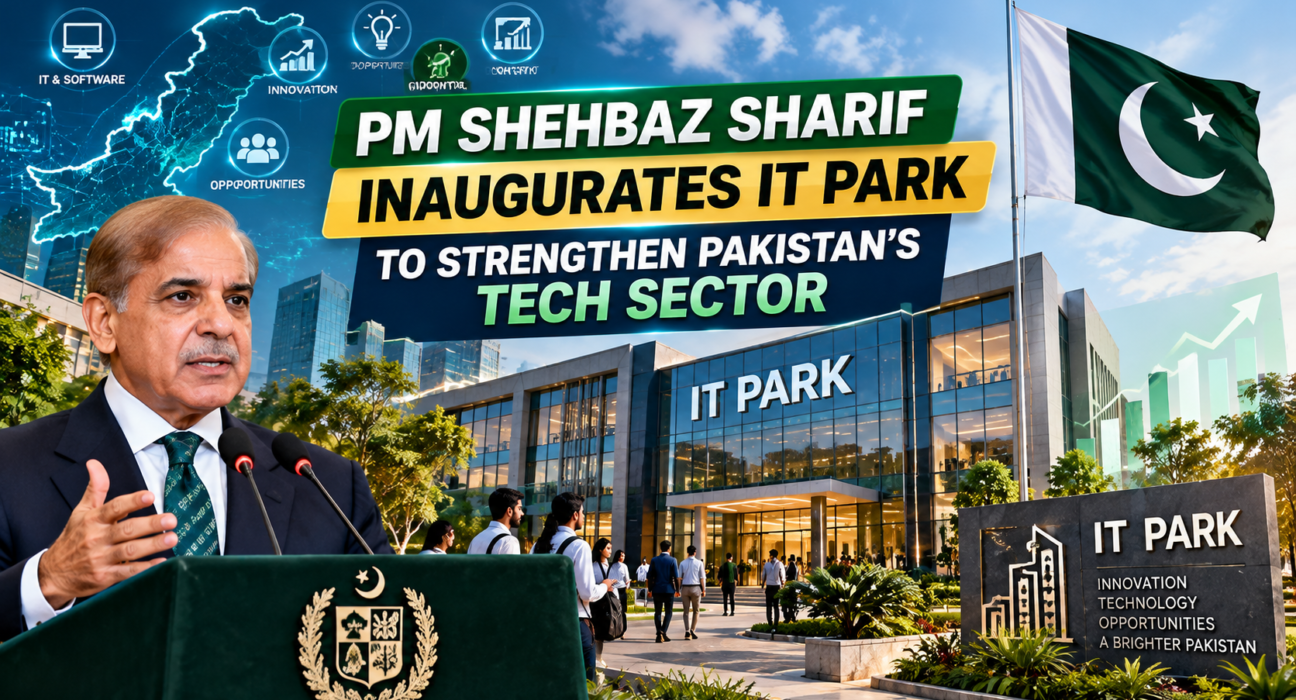
Pakistan has taken another step toward developing its technology industry as Prime Minister Shehbaz Sharif inaugurated Daanish IT Park in Islamabad on October 10, 2026. The new facility, officially known as the National Technology Park, aims to support technology startups, improve digital skills, encourage innovation, and create new opportunities for young professionals.
The project is part of Pakistan’s wider efforts to build a stronger digital economy. It is designed to bring technology companies, researchers, students, entrepreneurs, and industry experts together in one place.
During the inauguration ceremony, the prime minister highlighted the importance of artificial intelligence, modern education, and practical IT training. He also announced plans to develop similar technology parks in other parts of Pakistan.
The main question now is how this major investment in technology infrastructure will translate into jobs, successful businesses, and long-term economic growth.
PM Shehbaz Sharif Inaugurates IT Park to Strengthen Pakistan’s Tech Sector: What Does It Mean for Pakistan?
The inauguration of Daanish IT Park represents a new opportunity for Pakistan’s growing technology industry. The facility is intended to provide a shared environment where businesses, students, and technology experts can work on new ideas.
Unlike a traditional office building, a technology park brings different parts of the IT industry together. Businesses can meet skilled workers, startups can learn from experienced professionals, and students can explore practical projects.
For Pakistan, this type of environment could support innovation and help more young people enter the digital workforce.
However, the park’s long-term success will depend on how effectively it operates, how many businesses use its facilities, and whether its training programs meet the needs of the industry.
Key Highlights of the Daanish IT Park Inauguration
The inauguration ceremony took place in Islamabad on Saturday, October 10, 2026. Government officials, technology leaders, experts, and students attended the event.
| Detail | Information |
| Project name | Daanish IT Park |
| Official identity | National Technology Park |
| Location | Islamabad, Pakistan |
| Inauguration date | October 10, 2026 |
| Inaugurated by | Prime Minister Shehbaz Sharif |
| Main purpose | Technology innovation, business development and IT skills |
| Target participants | Startups, SMEs, students, entrepreneurs and IT companies |
| Future plans | Similar facilities proposed across Pakistan |
Prime Minister Shehbaz Sharif said the park should become a place where education, industry, and technology connect.
He also directed the relevant authorities to invite qualified national and international technology companies to participate in a transparent bidding process for operating the facility.
What Is Daanish IT Park in Islamabad?
Daanish IT Park is a technology-focused facility developed to strengthen Pakistan’s information technology ecosystem.
Its main goal is to support businesses and individuals working in software development, artificial intelligence, digital services, and other technology-related fields.
The facility is expected to bring together incubation centers, innovation hubs, small and medium-sized enterprises, and established technology companies.
A Place for Innovation and Business Growth
An innovation hub gives people space to develop ideas, test solutions, and learn from others.
For example, a young software developer may have an idea for a useful mobile application but lack the experience needed to turn it into a business.
With access to professional guidance, training, and industry contacts, that developer may have a better chance of building a working product.
This is the type of support that technology parks aim to provide.
Connecting Students With Industry Experts
One important feature of the project is the planned connection between education and industry.
Students often learn programming, networking, and software design in classrooms but have limited experience with commercial projects.
Working alongside experienced developers and technology companies could help them understand real business needs.
This practical learning may also improve their preparation for future employment.
How the New IT Park Could Create Jobs in Pakistan
Employment opportunities are among the most important potential benefits of the National Technology Park.
Pakistan has a large population of young people, including university graduates looking for suitable work.
As technology businesses grow, they may need software engineers, web developers, cybersecurity professionals, data analysts, and technical support staff.
The park could make it easier for companies to find skilled workers while helping graduates connect with potential employers.
However, the inauguration does not mean that a specific number of jobs has already been created.
Actual employment growth will depend on business activity, investment, company participation, and the availability of skilled professionals.
Role of Artificial Intelligence in Pakistan’s Digital Future
Artificial intelligence was a major topic during the inauguration ceremony.
AI is becoming increasingly useful in business, education, healthcare, agriculture, and software development.
Pakistan’s technology industry can benefit from these developments by preparing professionals to understand and use modern AI tools.
AI Training and Skill Development
Artificial intelligence training can help students understand machine learning, data analysis, automation, and modern software systems.
These skills are becoming useful across different industries.
For example, AI-powered software can help businesses study customer needs, manage information, and improve routine tasks.
A well-managed technology park could provide opportunities for students and professionals to learn such skills through practical experience.
Supporting Local AI Startups
Pakistan also has opportunities to develop AI-based products for local and international customers.
A startup might create software for schools, hospitals, online businesses, or farming operations.
Access to mentors, research support, and experienced companies could help young entrepreneurs improve their products.
Still, successful AI development requires reliable data, skilled teams, responsible use of technology, and continued financial support.
How Technology Startups and Small Businesses May Benefit
Startups and small businesses are important parts of Pakistan’s technology economy.
Many begin with a small team and limited resources. Although their ideas may be promising, they often face challenges involving financing, skilled workers, marketing, and business planning.
An effective technology park can help address some of these problems.
| Potential Support | Possible Benefits for Businesses |
| Startup incubation | Guidance for developing and improving business ideas |
| Industry networking | Connections with technology experts and established companies |
| Technical training | Opportunities to improve digital and professional skills |
| Innovation facilities | A shared environment for research and product development |
| Business mentoring | Support with planning, operations and market understanding |
| Industry collaboration | Opportunities to work on commercial technology projects |
These are potential benefits of the planned technology ecosystem. The availability of individual programs will depend on the park’s final operations and management arrangements.
Pakistan and South Korea Strengthen Technology Cooperation
International cooperation is another important part of the Islamabad technology project.
During the inauguration, Prime Minister Shehbaz Sharif appreciated the support of the Republic of Korea.
South Korean Ambassador Han Sungho also spoke about the relationship between the two countries and the importance of cooperation in information technology and artificial intelligence.
South Korea has considerable experience in technology development, advanced manufacturing, research, and digital infrastructure.
Cooperation with international technology partners could help Pakistan gain technical knowledge and improve professional training.
However, international support alone cannot guarantee success. Pakistan must also maintain effective project management, develop local skills, and create opportunities for businesses to grow.
Government Announces Plans for More IT Parks Across Pakistan
The government has also announced plans to establish similar modern technology parks in other parts of the country.
According to the announcement, the proposed expansion would include Pakistan’s provinces, Azad Jammu and Kashmir, and Gilgit-Baltistan.
This could help distribute technology opportunities beyond Islamabad.
Why Regional Technology Parks Matter
Technology companies and training opportunities are often concentrated in major cities.
Students and entrepreneurs in smaller towns may find it difficult to access professional networks or specialized training.
Regional technology facilities could help reduce this gap by connecting local talent with the wider technology industry.
The expansion remains a government plan, and further details about individual projects, budgets, locations, and completion dates will be needed.
Pakistan’s IT Exports and the Importance of Digital Growth
Pakistan’s information technology industry plays an important role in providing services to international customers.
Software development, IT consulting, and technology-based services allow Pakistani professionals to work with businesses around the world.
At the inauguration, Pakistan Digital Authority Chairman Dr. Sohail Munir stated that the country’s IT exports had crossed US$4.5 billion in the previous fiscal year.
This figure was presented during the ceremony and should be understood as an official’s reported statement.
Technology parks could support future export growth by helping businesses improve their skills, build stronger teams, and develop new products.
For example, a small software company may begin by serving local customers before expanding into international markets.
Access to experienced professionals and business networks can support that journey.
How the IT Park Could Help Freelancers and Young Developers
Pakistan has many people interested in freelancing, remote work, web development, graphic design, and digital marketing.
These professionals often learn independently through online courses and practical projects.
Technology training centers can add value by offering professional guidance, teamwork experience, and opportunities to understand industry standards.
A freelancer who learns software development or data analysis may later build a small agency or technology business.
Similarly, a university graduate could gain practical experience before applying for a full-time position.
The Islamabad IT Park may help create such opportunities if its future training and business programs are accessible to independent professionals.
Technology Skills That May Become More Important
As Pakistan develops its digital industry, several technical skills could become increasingly valuable.
These include software development, cloud computing, cybersecurity, artificial intelligence, data management, and mobile application development.
But technical knowledge is only one part of a successful career.
Employers also value communication, teamwork, problem-solving, and the ability to complete projects on time.
Students interested in IT careers should focus on building practical portfolios, improving their knowledge, and learning how technology solves everyday problems.
Challenges That Could Affect the IT Park’s Success
Although the inauguration is an important development, several challenges could influence the project’s future.
Professional Management and Transparency
The government has proposed selecting an experienced operator through a transparent bidding process.
Strong management will be important for attracting businesses, maintaining facilities, and providing useful programs.
Public information about the selected operator and operating rules could also help businesses understand how the park will function.
Reliable Infrastructure and Business Support
Technology companies need dependable electricity, high-speed internet, suitable workspaces, and technical support.
These services must be available consistently if the park is to attract serious commercial activity.
Affordable access and clear participation rules could also help smaller companies benefit.
Turning Training Into Employment
Training programs should match real industry needs rather than simply offering certificates.
Employers, universities, and training providers can work together to identify useful skills.
Tracking internships, business participation, startup progress, and employment outcomes would provide a clearer picture of the park’s impact.
What Happens Next for Daanish IT Park?
Following the inauguration, attention will turn toward the facility’s operations.
One important step is the proposed selection of a professional management company.
The government has stated that national and international IT and AI companies should have an opportunity to participate in the bidding process.
Other developments worth following include announcements about startup applications, company participation, training programs, research activities, and public access.
Students and entrepreneurs should rely on official announcements before assuming that registration, employment, or financial support is available.
More information about the inauguration can be found through the Associated Press of Pakistan’s official report.
The government’s plans for additional technology parks are covered by Radio Pakistan’s October 10 announcement.
A New Opportunity for Pakistan’s Technology Industry
The inauguration of Daanish IT Park in Islamabad marks an important development in Pakistan’s efforts to expand its technology industry.
The facility aims to connect education, innovation, business development, and artificial intelligence while creating opportunities for students, startups, and professionals.
The government’s plans for regional technology parks could also help more communities participate in the digital economy.
However, the project’s real value will become clear through its operations, business participation, training quality, and measurable results.
For Pakistan’s young technology professionals, the message is simple: improving practical skills, developing useful products, and exploring new business opportunities will remain essential as the country’s digital industry continues to evolve.