

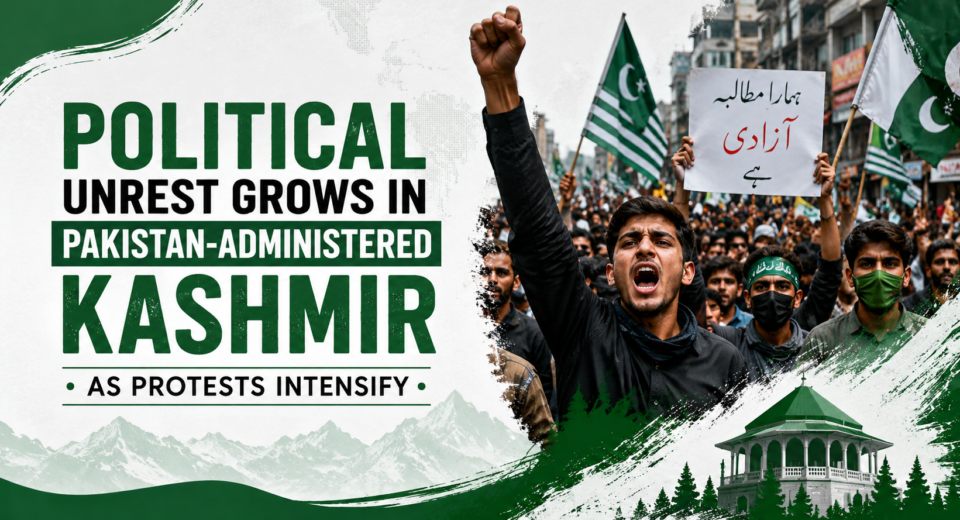
Political Unrest Grows in Pakistan-Administered Kashmir as Protests Intensify
Pakistan-administered Kashmir has experienced repeated protests, strikes, and clashes as people continue to raise concerns over rising living costs, electricity prices, governance, and political rights. Over the past few years, demonstrations have drawn thousands of residents, reflecting growing public frustration over economic hardships and demands for greater accountability. The unrest highlights a wider debate about how authorities respond to public concerns while balancing security and economic challenges. For many families, everyday issues such as inflation, utility bills, and employment opportunities have become central reasons for joining peaceful demonstrations. Why Are People Protesting? Several factors have contributed to the recent wave of protests across Pakistan-administered Kashmir. Many residents argue that the increasing cost of electricity and basic necessities has placed heavy pressure on household budgets. Rising inflation has also made it difficult for families to afford food, fuel, healthcare, and education. Another key issue is the demand for better governance and transparency. Protesters have called on officials to address economic problems more effectively and ensure that public resources are managed fairly. Community leaders have also urged authorities to engage in meaningful dialogue instead of allowing tensions to grow. These concerns have united people from different backgrounds, including traders, students, transport workers, and civil society groups. Main Reasons Behind the Demonstrations Issue Public Concern High electricity prices Residents say utility bills have become difficult to afford. Inflation Rising prices of food, fuel, and daily essentials have increased financial pressure. Employment Many young people are demanding more job opportunities. Governance Protesters are seeking greater transparency and accountability from authorities. Political representation Some groups are calling for stronger public participation in decision-making. Recent Events at a Glance Event What Happened Impact Public protests Large crowds gathered in several towns to demand economic relief. Increased public attention to local grievances. Strikes Businesses and transport services temporarily shut down during demonstrations. Daily life and commercial activities were disrupted. Clashes Some protests turned violent after confrontations between demonstrators and security forces. Injuries and property damage were reported in certain areas. Government response Authorities announced discussions and measures aimed at easing public concerns. Dialogue helped reduce tensions in some locations, although challenges remain. Economic Challenges Fuel Public Anger Economic pressure remains one of the biggest reasons behind the demonstrations. Families across the region have struggled with rising prices for essential goods while incomes have remained relatively unchanged. Small business owners have also reported declining profits because consumers are spending less. Young people have voiced concerns about limited employment opportunities. Many believe that stronger investment, infrastructure projects, and support for local businesses could help create jobs and improve living standards. These financial challenges have made economic reform a top priority for many residents. Political Concerns Continue Alongside economic demands, political concerns have also played an important role. Protesters have asked for more transparency in decision-making and greater public consultation on policies that directly affect their lives. Civil society organizations have encouraged peaceful demonstrations and constructive dialogue between authorities and community representatives. Many observers believe that open communication is essential to preventing future tensions. Government officials have emphasized their commitment to maintaining public order while considering measures to address economic concerns. What Could Happen Next? The coming months will likely depend on continued discussions between the government and community representatives. If meaningful progress is made on issues such as electricity costs, inflation, employment, and governance, public tensions could ease. However, if economic hardships continue without visible improvements, demonstrations may continue as residents seek stronger action from authorities. Long-term stability will require practical economic policies, transparent governance, and peaceful engagement between all stakeholders. Conclusion The protests, strikes, and clashes in Pakistan-administered Kashmir reflect a combination of economic hardship and political concerns. Rising living costs, high electricity prices, unemployment, and calls for greater accountability have encouraged many residents to take to the streets. While authorities have taken steps to respond to public demands, lasting solutions will depend on sustained dialogue, economic reforms, and policies that improve the daily lives of ordinary people. Peaceful communication and cooperation remain the most effective path toward addressing these complex challenges and building greater public trust in the future.