
If you’re planning a road trip across Punjab or Khyber Pakhtunkhwa this week, stop for a minute and read this. Winter fog is back. Every year around this time, a thick white blanket settles over the plains, and the motorway police shut down long stretches of road to keep people safe. It’s annoying, and it can wreck a travel plan. But it’s also the right call, and knowing why can help you plan better.
I’ll walk you through what’s going on, which routes are usually hit, how to drive if you must travel, and where to find reliable updates. I’ll keep it simple and practical, the way I’d explain it to a friend before a long drive.
One important note: motorway closures change by the hour. A road shut at 6 am can reopen by noon, and a clear road can close again at night. Use this guide as your base, and always check the latest alert before you leave.
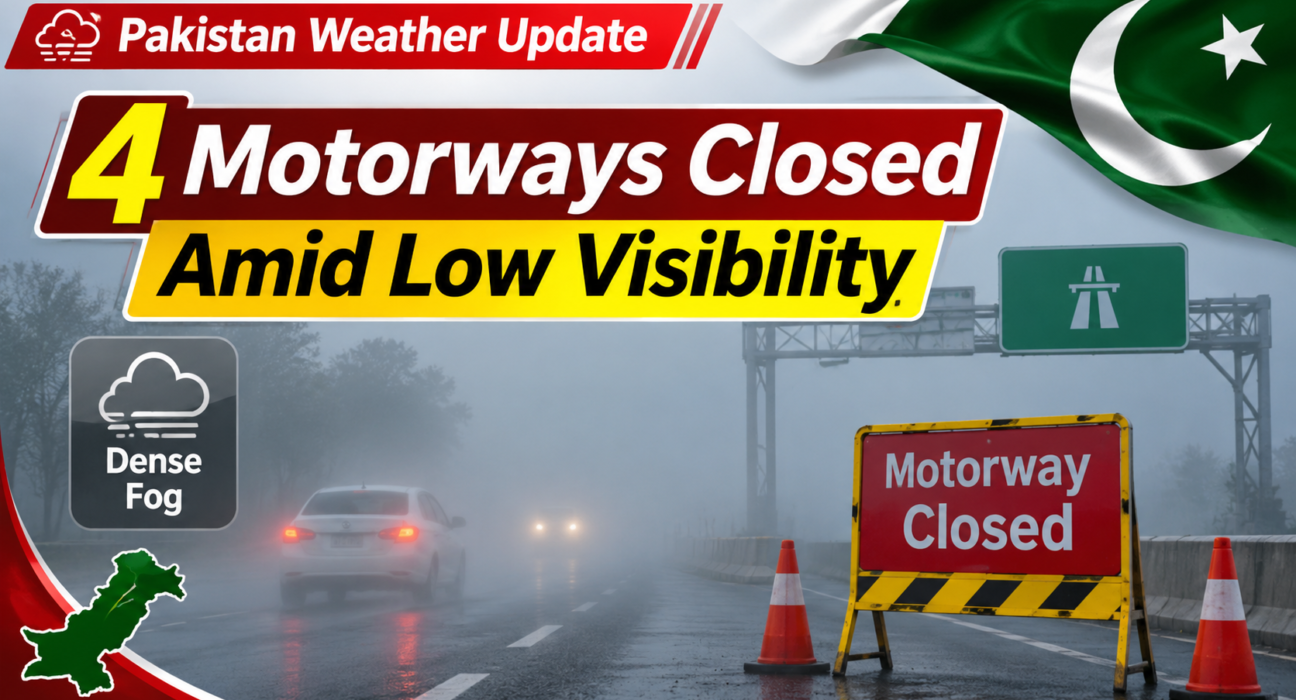
Pakistan Weather Update: 4 Motorways Closed Amid Low Visibility
Let’s start with the big picture. When dense fog rolls in, the National Highways and Motorway Police (NHMP) closes the sections where you can’t see far enough to drive safely. Usually that means four or five motorway stretches at the same time, often on the M-2, M-3, M-4, M-5, M-11, or M-1.
This isn’t a one-off. Earlier this month, NHMP’s Central Region reported that the M-4 was shut to all vehicles between Shamkot and Abdul Hakeem because of poor visibility. The same morning, the M-1 near Peshawar was also temporarily closed between the main toll plaza and Rashakai because of dense fog. Different routes, same cause.
Why Four Closures Matter More Than One
When one motorway closes, drivers shift to another. But when four close together, the alternatives are old highways such as the GT Road. These roads have junctions, slow vehicles, rickshaws, and tractors. In fog, that mix is dangerous. So even a “closed” motorway tells you something: the whole region is in trouble.
How Long Do Closures Usually Last
There’s no fixed answer. Fog is usually thickest from late night until mid-morning. As the sun warms the ground, visibility improves and roads reopen in stages. On bad days, though, fog can hang around until afternoon, or return by evening. I’d plan for a delay of several hours and treat anything shorter as a bonus.
Why Fog Hits Punjab So Hard in Late Autumn
You might wonder why this region gets hit so badly. It comes down to geography and weather. Punjab is flat, there’s a lot of moisture in the air from rivers and farmland, and nights get cold fast in November and December.
Cold Nights and Moist Air
On clear, calm nights, the ground loses heat quickly. The air near the surface cools down and can’t hold as much moisture. The extra water turns into tiny droplets floating just above the ground. That’s fog. Light winds mean nothing blows it away, so it simply sits there.
The Smog Factor
Fog isn’t the only problem. Smog usually starts in late October, peaks between November and January, and can last into February. Smoke from vehicles, factories, and crop burning mixes with fog and makes the air thick and dirty. That mix can cut visibility down to just a few meters. It also irritates your eyes and throat, which makes driving even harder.
Why Motorways Are Especially Risky
Motorways are built for speed. Cars travel at 100 km/h or more, which leaves very little time to react. In fog, you might not see a stopped truck until you’re nearly on top of it. One slow vehicle, one sudden brake, and you can get a chain-reaction pileup involving dozens of cars. That’s why the police prefer closing a road to risking a crash like that.
Which Motorways Get Closed Most Often
Over the past few fog seasons, the same routes show up again and again in NHMP alerts. Here’s a simple overview based on recent advisories.
| Motorway | Route | Commonly Affected Sections |
| M-1 | Islamabad to Peshawar | Peshawar toll plaza to Rashakai |
| M-2 | Lahore to Islamabad | Thokar Niaz Baig to Kot Momin or Chakri |
| M-3 | Faizpur to Abdul Hakeem | Faizpur to Darkhana or Rajana |
| M-4 | Faisalabad to Multan | Pindi Bhattian to Abdul Hakeem, Shorkot and Shamkot |
| M-5 | Multan to Sukkur | Multan to Dera Ismail Khan, Rahim Yar Khan to Rohri |
| M-11 | Lahore to Sialkot | Lahore to Sambrial |
These sections are the ones reported in recent fog advisories, and which ones close on any given day depends on the weather that morning.
M-2 and M-3: The Busiest Corridors
The M-2 carries heavy traffic between Lahore and Islamabad. The M-3 serves traffic heading toward Faisalabad. Both are busy with trucks and buses, and both pass through areas where fog gathers thickly. When these roads close, you’ll feel it in delivery times and ticket prices.
M-4 and M-11: Frequent Trouble Spots
The M-4 is often the first to close and the last to reopen, especially for heavy traffic. Authorities have also kept the M-4 closed to heavy traffic from Pindi Bhattian to Abdul Hakeem because of dense fog. The M-11 around Lahore and Sialkot sometimes stays shut through the evening, even after other routes reopen.
How NHMP Decides to Close a Motorway
It may seem like closing a road is a simple on-off switch. It’s actually a careful decision made by officers on the ground.
What Officers Look At
Patrol teams drive the route and check visibility at several points. If they can’t see far enough ahead to stop safely, the section gets flagged. They also watch weather reports, traffic volume, and any crash reports. A road doesn’t have to be fully “white” to be closed. If conditions look likely to worsen, officers may close it early.
Full Closure vs. Heavy Traffic Ban
You’ll notice two kinds of closure in the news. A full closure stops all vehicles. A heavy traffic ban stops trucks, buses, and other large vehicles but lets cars through, usually when visibility is poor but not terrible. The reason is simple: big vehicles take much longer to stop, and a jackknifed truck can block an entire carriageway.
Helpline 130
If you’re unsure about a route, you can call the Motorway Police helpline at 130. Officers there can tell you which sections are open and give guidance if you’re already on the road. Save the number in your phone before your trip, not after you’re stuck.
Best Time to Travel During Fog Season
If you have flexibility, the clock matters more than almost anything else. The police have been clear on this point. The NHMP has advised that traveling in daylight, especially between 10am and 6pm, can help drivers avoid some of the risks of reduced visibility.
Why Late Morning Works Better
By 10 am, the sun has usually burned off the thickest fog. Roads have had time to dry, and patrol teams have had time to clear any problems. You can see farther, other drivers can see you, and if something goes wrong, help arrives faster in daylight.
Why Night Travel Is the Riskiest
At night, fog is at its worst, the temperature is lowest, and drivers are tired. Headlights bounce off the fog and glare back at you. Add sleepy drivers and fast traffic, and you get the perfect recipe for a crash. If your trip can wait until morning, let it wait. Arriving late is far better than not arriving.
Plan Around the Weather, Not Just the Map
Before you set off, check the forecast for your whole route, not just your start and end points. Fog can be thick in Sheikhupura and clear in Lahore. If your route crosses several districts, look at all of them.
Safe Driving Tips in Low Visibility
Sometimes you can’t avoid driving in fog. Maybe you’re already on the road when it thickens, or maybe you’re heading to the airport at dawn. Here’s how to stay safe.
Use the Right Lights
Switch on your low beam headlights and fog lights. Never use high beams, because they reflect off the fog and blind you. Keep your tail lights and hazard lights in good working order too, since they help the drivers behind you see where you are. Dirty lights are weak lights, so wipe them before you leave.
Slow Down and Leave Space
Authorities have repeatedly told drivers to keep their speed low and maintain a safe distance from the vehicle ahead. A good rule: you should always be able to stop within the distance you can see. If you can only see 30 meters, you shouldn’t be going faster than you can stop in 30 meters. In practice, that means well below the usual motorway speed.
Stay in Your Lane
Lane discipline saves lives in fog. Don’t switch lanes without a clear reason, and avoid overtaking. Officials have asked drivers to stay in their lanes and avoid unnecessary overtaking and sudden braking. Use the road markings and reflectors as your guide, and if you must stop, move to the shoulder far away from traffic.
Never Stop in a Live Lane
If your car breaks down, get it off the road. Turn on your hazard lights, step out on the side away from traffic, and move behind the barrier if you can. Then call 130. Sitting inside a stopped car on the carriageway is one of the most dangerous things you can do in fog.
Special Advice for Heavy Vehicles, Buses, and Commuters
Fog doesn’t treat everyone the same. A truck driver faces different problems than a family in a small car.
For Truck and Bus Drivers
Your vehicle needs far more room to stop, and you carry other people’s lives or goods. Don’t push your schedule. If a heavy-traffic ban is announced, follow it. Park at a service area or rest stop and wait. Get your reflectors checked, keep your brakes serviced, and make sure your lights work. Reflective tape on the back and sides of a truck makes a big difference in fog.
For Daily Commuters
If you drive to work on a motorway, think about leaving a bit later, or shifting your hours if your boss allows. Ask whether you can work from home on the worst mornings. Carpooling also reduces the number of vehicles on the road, which helps in a small way.
For Families Traveling Together
Traveling with kids or elderly relatives adds pressure. Pack water, snacks, blankets, and any medicines before leaving. Tell someone your route and expected arrival time. If the fog gets thick, don’t be shy about stopping. Nobody ever regretted a safe rest break.
How Fog Affects Flights, Trains, and Daily Life
Fog doesn’t only hit the roads. When visibility drops, the whole transport system slows down.
Flights
Airports in Lahore, Islamabad, Multan, and nearby cities can see delays and cancellations when fog is heavy. Planes need clear visibility to take off and land safely. If you’re flying, check with your airline before leaving home, and give yourself extra time. If motorways are closed, getting to the airport may itself become a challenge.
Trains
Railways often run late in fog. Drivers need to see signals, and they slow down to stay safe. Some trains run hours behind schedule on bad days. If you’re booking a ticket, keep your plans flexible.
Business and Daily Routines
Closed motorways delay goods, fresh produce, and parcels. Shops may get stock late, and school and office start times may shift. Local administrations sometimes change school timings during heavy fog. It’s worth checking your school’s or employer’s announcements each morning.
Health and Comfort Tips for Foggy Days
Fog and smog affect your body too, not just your car. Cold, damp, polluted air can make people feel unwell, especially kids, older adults, and anyone with asthma or heart problems.
Protect Your Lungs and Eyes
Wear a good mask when you’re outside in thick smog, and keep car windows closed with the air on recirculate. If your eyes feel dry or sore, rinse them with clean water when you reach your destination. People with breathing problems should keep their medicines handy and avoid long exposure.
Stay Warm and Hydrated
It’s easy to forget water in cold weather, but you still need it. Dress in layers, keep a warm blanket in the car, and carry a flask of tea. If you’re stuck for hours on a closed road, these small things make the wait far more bearable.
Keep Your Phone Ready
Charge your phone fully before you leave and carry a power bank. Phone signal is your lifeline for calling 130 and checking updates. A dead phone on a foggy highway is a stressful place to be.
Fog Season Travel Checklist
Now let me pull the key points into one handy list. Print it, screenshot it, or just glance through before your next trip.
Quick Fog Driving Checklist
| Before You Leave | On the Road | If Something Goes Wrong |
| Check the latest NHMP update | Use low beam and fog lights | Move your car to the shoulder |
| Plan to travel between 10 am and 6 pm | Keep speed low and distance long | Turn on hazard lights |
| Fill the tank and check tyres | Stay in your lane, no overtaking | Call helpline 130 |
| Clean lights, mirrors, and windshield | Avoid sudden braking | Stand away from traffic |
| Charge your phone and carry a power bank | Take a break if you feel tired | Wait for patrol help |
Why a Checklist Works
Most fog accidents aren’t caused by bad luck. They come from small mistakes: skipping a light check, leaving too late, following too closely. A checklist takes about a minute and helps you catch those mistakes before they cost you.
Make It a Habit
If you travel often during winter, keep a small emergency kit in your car. A torch, reflective triangle, first aid box, blanket, and a few snacks don’t take much space. You’ll rarely need them, but when you do, you’ll be very glad they’re there.
Where to Get Trusted Updates
During fog season, rumors spread fast on social media. Someone posts an old photo of a closed road, and suddenly everyone thinks it’s today’s news. Stick to reliable sources.
Official and News Sources
The best source is always the NHMP itself, through its helpline 130 and official social media pages. For news coverage, established outlets share updates as they come in. If you’d like to read how recent closures were reported, you can see how fog shuts down several routes at once, check Dawn’s report on partially closed motorways.
How to Spot Fake Updates
Look at the date and time on any post before you believe it. Check whether the source is an official account or a known news outlet. If something sounds shocking and has no source, wait for confirmation. When in doubt, call 130 and ask directly.
Share Good Information
If you learn a route is closed or has reopened, tell your family and friends. A quick message can save someone from sitting in a long queue. Just make sure you’re passing along verified updates, not guesses.
Final Thoughts
Fog season is a fact of life in Pakistan, and it’s going to keep shutting down motorways from now until the weather warms up. Four closures in a single morning may sound dramatic, but it’s simply the system doing its job. The police close those roads because the alternative is far worse.
What you do matters just as much as what the authorities do. Check updates before you go. Travel in daylight when you can. Slow down, keep your distance, and use your lights properly. Keep a calm head, and keep your family’s safety above any deadline.
Remember, no meeting, wedding, or delivery is worth a crash. If the motorway is closed, take it as a sign to wait, rest, or reschedule. Fog always lifts, and the road will be there tomorrow. Stay safe, drive smart, and look out for each other out there.