

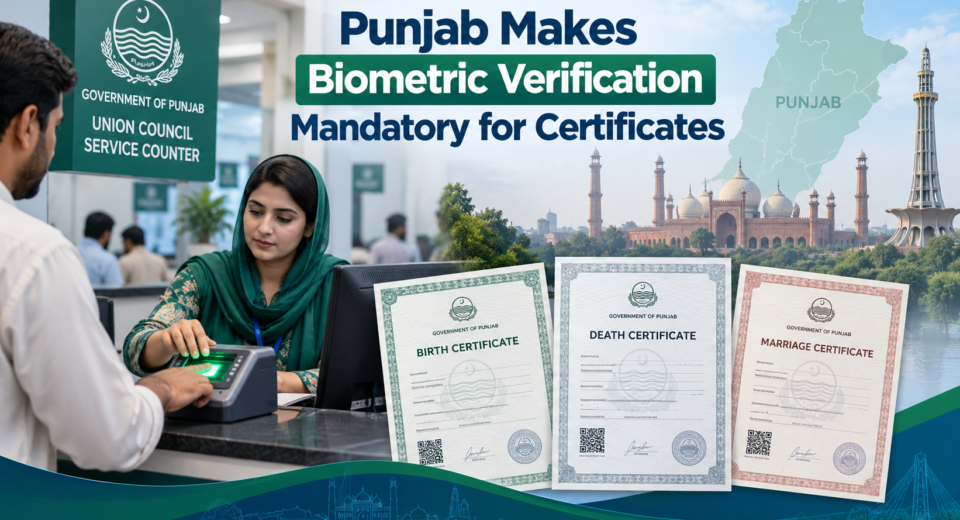
Punjab Makes Biometric Verification Mandatory for Certificates
Getting a birth, death or marriage certificate in Punjab now comes with an important new identity verification requirement. The provincial government has introduced biometric checks linked to NADRA records, aiming to make official certificates more reliable and prevent fraudulent registrations. The change affects some of the most important documents issued through union councils. From registering a newborn child to recording a marriage or a family member’s death, civil registration plays an essential role in keeping official records accurate. Punjab Local Government Minister Zeeshan Rafique formally inaugurated the biometric-enabled Civil Registration Management System (CRMS) in Sheikhupura on October 16, 2026. The initiative is part of the provincial government’s Digital Punjab, Transparent Punjab programme. Officials say it will strengthen identity verification, reduce opportunities for document fraud and improve transparency in public services. For residents, the most important questions are how biometric verification will work, which certificates are affected and when the updated system will become available in their area. Punjab’s New Biometric Certificate Rules: What Has Changed? Under the newly introduced arrangement, identity verification through the National Database and Registration Authority (NADRA) becomes an essential part of issuing certain civil registration certificates. The system connects union council registration procedures with NADRA’s identity database, allowing the relevant information to be checked before a certificate is approved. The requirement covers three categories of civil documents: These documents are regularly needed for legal, educational, family and administrative matters. By adding biometric verification, the government intends to make it more difficult for individuals to obtain certificates using false identities or inaccurate registration details. However, the authorities have announced a gradual rollout, meaning the updated procedure may not be operating at every union council immediately. Punjab Biometric Verification System: Key Details The following table summarises the main information announced about the new certificate verification requirement. Information Details Province Punjab, Pakistan Launch date October 16, 2026 Inauguration location Sheikhupura Responsible department Punjab Local Government Department Technical partner NADRA System Civil Registration Management System (CRMS) Certificates covered Birth, death and marriage Main requirement Biometric identity verification Implementation Phased rollout across Punjab The government has presented the system as a measure to strengthen public confidence in civil records while making the registration process more transparent. How Will NADRA Biometric Verification Work? The new verification system introduces an identity-checking stage into the civil registration process. Union councils will use the upgraded CRMS arrangement to verify the relevant identity information against NADRA’s database before issuing the covered certificates. The role of NADRA NADRA maintains Pakistan’s national identity database and provides technical infrastructure for civil registration systems. Its involvement helps connect local registration records with official identity information, making it easier to identify discrepancies that may require further checking. The role of union councils Union councils remain important public offices for the registration of births, deaths and marriages. Under the upgraded system, their registration processes will incorporate biometric identity verification. The detailed requirements may differ depending on the type of certificate and the applicant’s circumstances. Authorities have not yet provided a complete public explanation of who must submit biometrics in every situation. Residents should therefore confirm the current procedure with their relevant union council before applying. Why Has Punjab Introduced Mandatory Biometric Verification? A civil certificate is more than a piece of paper. It establishes information that may later be needed by schools, government departments, courts and other institutions. Errors or fraudulent entries in these records can create serious complications. The Punjab government says its new system is intended to address several important concerns. 1. Preventing fake certificates One of the main objectives is to reduce fraudulent registrations and the issuance of documents based on false information. Checking identities against NADRA’s records provides an additional layer of verification before a certificate is issued. 2. Improving the reliability of official records Accurate civil registration helps maintain consistent information across government systems. Better verification may reduce identity-related inconsistencies and make it easier for institutions to rely on officially registered details. 3. Reducing opportunities for corruption During the inauguration, Minister Zeeshan Rafique emphasised the government’s goal of making essential services accessible without citizens having to depend on personal recommendations or illegal payments. Digital checks may help make administrative procedures more accountable, although their effectiveness will depend on implementation and oversight. 4. Strengthening public service delivery The initiative also forms part of the provincial government’s wider efforts to modernise local government operations. A more reliable digital registration system could improve record management and reduce unnecessary administrative complications over time. What Does the New Requirement Mean for Punjab Residents? For citizens, the most noticeable change will be the additional identity verification required when applying for covered certificates at union councils where the system has been activated. Families may need to ensure their identity information is correct and consistent with the details already held in official records. For birth certificate applicants Parents and guardians seeking birth certificates should check that the child’s details and relevant family information are recorded correctly. Birth certificates are important for a range of administrative needs, including subsequent identity registration and school-related documentation. For marriage certificate applicants Couples applying for marriage registration certificates should ensure that the information provided matches their official identity documents. The biometric requirement is intended to improve the reliability of the registration process. For death certificate applicants Death registration is important for updating official records and handling legal or administrative matters following a family member’s death. The government has not yet publicly detailed every biometric-verification arrangement that will apply to death certificate applications, including who must provide verification in different circumstances. Applicants should obtain guidance directly from their union council. Will the New System Be Available Across All Punjab Districts? The Punjab government plans to expand the biometric-enabled registration system to union councils throughout the province. However, the rollout will take place in phases rather than through an immediate province-wide activation. The launch ceremony was held in Sheikhupura, marking the formal introduction of the system. The government has not announced a confirmed completion date for implementation across every union council.