

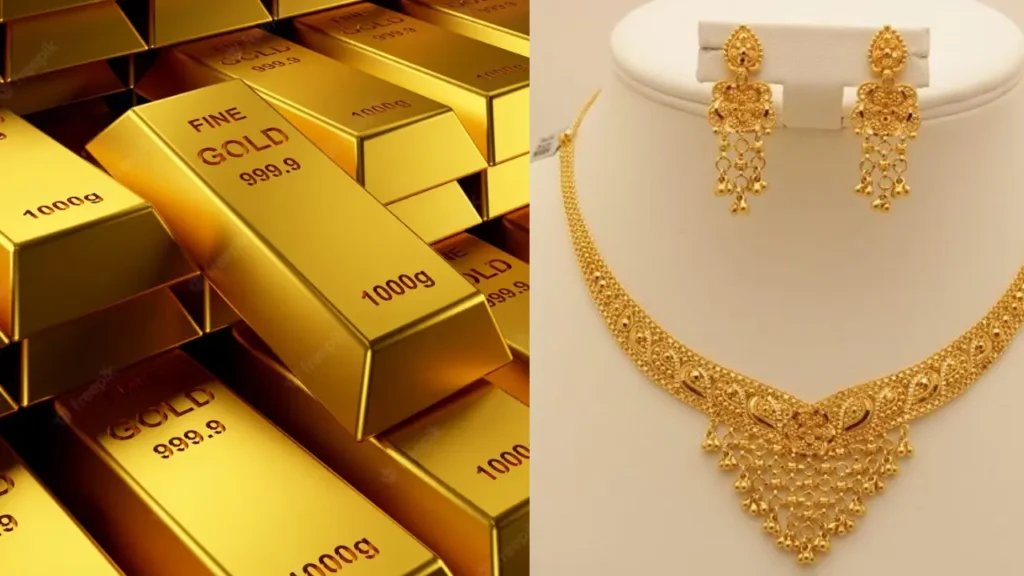
Gold Price in Pakistan Hit New Heights Daily: Why the Increase Is Happening
You might be asking, “How does a scandal in Washington D.C. affect the jewelry market in Lahore or Karachi?” It connects directly. Pakistan imports gold, and its price is linked to the international dollar rate. When the global spot price hits $4,987 per ounce—as it did recently on January 23, 2026—the local market in Pakistan reacts instantly. The rupee has to stretch much further to buy the same amount of gold. This is why we are seeing the local rates climb every single day. Traders in the local bullion markets are adjusting their rates hourly. The gap between supply and demand is widening because people aren’t selling; they are holding onto their gold because they expect it to go even higher. This hoarding mentality creates a shortage, which drives the price up even more for the average buyer. Gold Rate in Pakistan Per Tola: A Historical Shift For generations, the gold rate in Pakistan per tola has been the standard benchmark for wealth. Grandmothers track it, investors watch it, and families planning weddings live by it. In the past, a jump of a few hundred rupees was news. Today, we are seeing swings that are absolute game-changers. With the international price hovering near $5,000 an ounce, the per tola price in Pakistan has reached levels that make gold feel like an exclusive luxury asset, unreachable for many daily wage earners. The “Tola” (roughly 11.66 grams) is bearing the brunt of the global surge. Because the dollar is weak due to the Fed crisis, and the rupee remains under pressure, the multiplier effect is harsh. If you bought gold five years ago, you are likely sitting on a massive profit. If you are trying to buy now, you are facing the most expensive market in history. 10 Gram Gold Price in Pakistan: Breaking Down the Cost Not everyone buys a full tola. Many smaller investors and jewelry buyers look at the 10 gram gold price in Pakistan. This metric is often used for biscuits and smaller jewelry items. Currently, the 10-gram price is following the same parabolic trajectory as the international market. We are seeing a 1.06% daily jump and an 11.31% monthly increase in global rates. When you convert that to our local weightage, the impact is severe. If you are planning to buy, you need to be watching the market closely. The volatility is high. A price you see in the morning might be thousands of rupees higher by the time the market closes in the evening. This is known as “price discovery mode,” which is fancy financial talk for “we don’t know how high this can go, so we keep pushing it up.” 21 Carat Gold Price in Pakistan: Is Jewelry Still Affordable? Most of the gold traded for investment is 24 carat (pure gold). However, when it comes to weddings and jewelry, we usually look at the 21 carat gold price in Pakistan. 21 carat gold is mixed with other metals (like copper or silver) to give it strength so it can be molded into necklaces, rings, and bangles. Even though it is not pure gold, its price is skyrocketing too. If you are buying jewelry today, you are paying a premium that we have never seen before. It is forcing many families to opt for lighter sets or lower purity options just to keep traditions alive. Visualizing the Surge: Gold Price Graph in Pakistan If you look at any Gold Price Graph in Pakistan over the last six months, it looks like a mountain climber going straight up a cliff. Technical analysts (the people who study these charts) are looking at something called “Fibonacci extensions.” These are mathematical indicators that predict where the price might go next. Right now, those charts are pointing toward $5,000 and even $6,000 internationally. If that happens, the graph in Pakistan will continue to set new vertical records. Why Central Banks Are Ditching the Dollar One of the most fascinating parts of this story is what countries like China and Russia are doing. They are leading a movement called “de-dollarization.” Basically, these countries are tired of the US government using the dollar as a weapon through sanctions. To protect themselves, they are selling US dollars and buying gold—tons of it. This is huge. When central banks buy, they don’t buy a few ounces; they buy hundreds of tons. This creates a massive “floor” under the price of gold. Even if regular people stop buying, these countries keep buying, which keeps the price high. Comparison of Investment Factors To help you understand the difference between what drives gold versus other assets, here is a simple breakdown. Factor Effect on Stocks Effect on Gold Fed Rate Hikes Usually Bad (Stocks drop) Bad (Gold drops) Fed Rate Cuts Good (Stocks rise) Great (Gold skyrockets) Political Scandal Bad (Uncertainty hurts business) Good (Safety seeking) Inflation Mixed Good (Hedge against value loss) Different Gold Purities Explained It can be confusing to understand the difference between the types of gold available in the market. Here is a quick guide to help you spot the difference. Gold Type Purity Percentage Best Use Case 24 Karat 99.9% Pure Investment bars, coins, biscuits 22 Karat 91.6% Pure High-quality jewelry, bridal sets 21 Karat 87.5% Pure Durable jewelry, daily wear 18 Karat 75.0% Pure Stone-studded jewelry (diamonds) The Role of ETFs in Driving Prices Up You might think that only physical gold bars are driving the price, but there is a hidden giant in the room: ETFs (Exchange Traded Funds). An ETF allows investors to trade gold like a stock on the stock market. You don’t have to own the physical metal or worry about storing it in a safe. Since these ETFs have become popular, billions of dollars have flowed into gold. This “paper gold” demand adds massive pressure to the physical gold supply. When an ETF buys gold to back its shares, it takes that gold off the market, reducing supply and increasing the price for everyone else.