
If you live in southern Punjab, you know the feeling. A family day out usually means a long drive to Lahore. So when people started talking about a safari park in Pakpattan, the news spread fast. Everyone wants to know what is real, what is still an idea, and what it could mean for the district.
In this guide, I’ll walk you through it in plain words. We’ll look at the forest itself, the wider Punjab safari push, the possible benefits, and the real worries. I’ll keep it honest, because a project like this deserves clear facts, not hype.
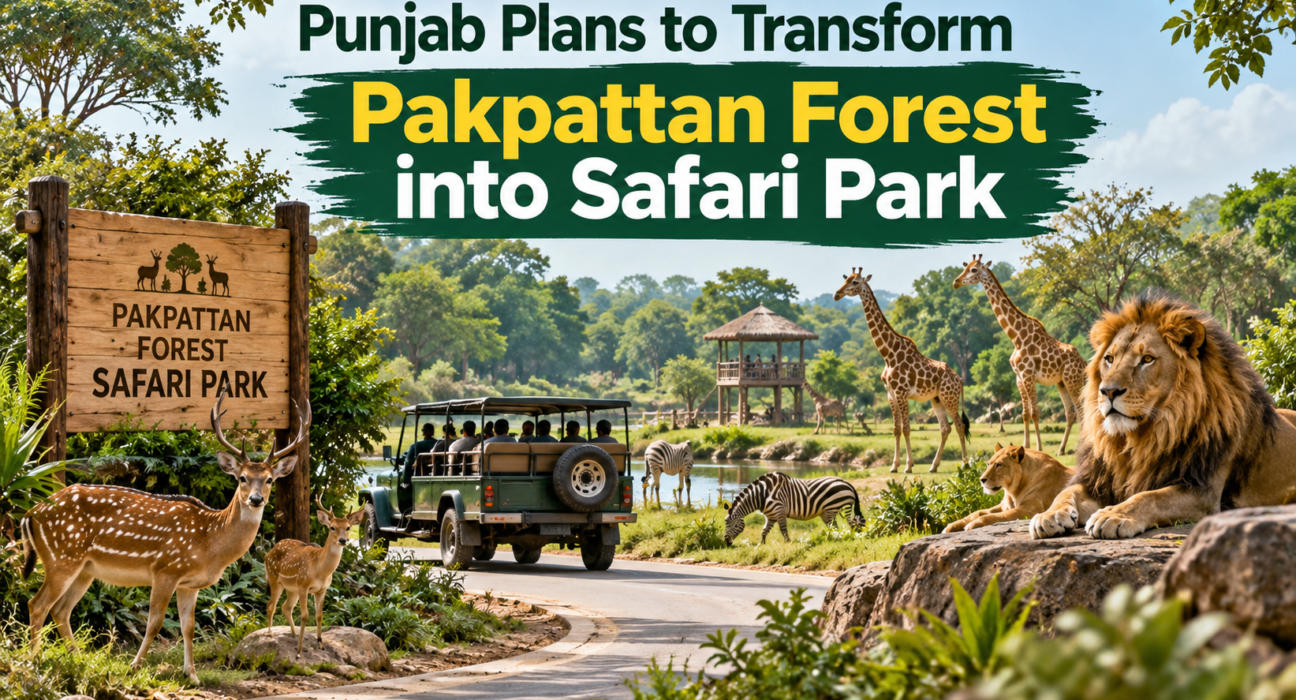
Punjab Plans to Transform Pakpattan Forest into Safari Park
Let’s start with the headline itself. The idea is simple. Punjab would take part of a forest in Pakpattan district and turn it into a safari park. Visitors would drive through open areas, spot animals in natural settings, and enjoy a day in the green.
Here is the honest part. At the time of writing, I could not find a detailed official notice with a map, budget or opening date. That is common for early-stage public projects. Plans often begin as talk, move to a proposal, and only later become approved schemes. So treat every detail you read online with care, including details in this article.
What a safari park actually means
A safari park is not a regular zoo. In a zoo, animals live in small enclosures. In a safari park, animals get big, open areas, and people travel through them in vehicles. The animals feel less stressed, and visitors see more natural behavior.
Why this idea feels believable
Punjab already runs several wildlife parks. The province has been upgrading its zoos and safari spaces. A Pakpattan project would fit that trend, which is why the story sounds believable to many people.
Understanding the Pakpattan Forest and Its Setting
Before we dream about lions and deer, we need to know the land. Pakpattan is a district in Punjab covering about 2,724 square kilometres. It has two tehsils, Pakpattan and Arifwala. It is mostly a farming area, known for crops like potatoes, chilies and onions.
The forest cover is small. According to the Punjab Development Statistics for 2018-19, the district has roughly 1,000 hectares under forest. You can read the district profile on the Pakistan Almanac page for Pakpattan. Important forests include the Arifwala Plantation and the Jamlera Plantation, both in Arifwala tehsil.
A quick look at the numbers
Here is a simple table that sums up the basics.
| Detail | What We Know |
| District area | About 2,724 sq km |
| Tehsils | Pakpattan and Arifwala |
| Forest area (2018-19 stats) | Roughly 1,000 hectares |
| Key plantations | Arifwala and Jamlera |
| Protected areas | Arifwala Reserve Forest, part of Border Belt Game Reserve |
Why the size matters
A forest of this size can support a modest safari experience. It will not be a huge African-style reserve. Think of it more like a managed green space, closer to Changa Manga or Jallo than to a giant national park. That keeps expectations realistic.
How This Fits Punjab’s Bigger Safari and Forest Push
Pakpattan would not be starting from zero. Punjab has been investing in forests and wildlife for some time. The government says it turned more than 41,000 acres of barren land into green forest through plantation drives. It also says over 40 million trees were planted across the province.
Safari parks are part of the same story. The Chief Minister has also directed an international-standard safari park for Faisalabad. And on World Animal Day, officials said Punjab had raised its wildlife ranger force to 552 members, 24 percent of them women. They also mentioned a wildlife hospital at Safari Zoo and mobile vet clinics.
What this tells us
The province is clearly in a “green and tourism” mood. A Pakpattan safari park would be one more step in that direction. It would also spread attractions beyond Lahore, which many southern districts have wanted for years.
A national example worth noting
In Islamabad, the capital authority has shared a safari park plan with many animal zones and a veterinary complex. That is a different project, but it shows how Pakistan is thinking about modern safari parks: big zones, animal care centers and visitor facilities.
The Wildlife Already Living in Pakpattan
A good safari park starts with respect for what already lives there. Pakpattan’s protected areas give shelter to hog deer, hedgehogs, jackals, jungle cats, palm squirrels and rhesus monkeys. Birds like the spotted owlet and barn owl also live in the area.
That is a strong base. Local species can be the stars of the show. Visitors often enjoy seeing native animals just as much as exotic ones, especially when a guide explains how they live.
Native first, exotic later
If planners are smart, they will protect native wildlife first. Bringing in new species is a bigger step. It needs space, food, vets and safe handling. Rushing that part is how parks end up with sick or stressed animals.
Birdwatching as a quiet bonus
Bird lovers could get a lot from this forest. Early mornings in a plantation are full of life. A simple birdwatching trail would cost little and attract nature fans all year.
Possible Benefits for Pakpattan and Nearby Areas
Now the exciting part. If done well, a safari park could change daily life for many families. Let’s break down the main gains.
Jobs and local income
A park needs drivers, guides, ticket staff, cleaners, rangers, cooks and shop owners. Local youth could fill many of these roles. Nearby farmers could also sell fruit, milk and handmade items to visitors.
Tourism that stays in the district
Right now, families from Pakpattan, Arifwala and nearby towns often travel far for leisure. A local park keeps that money and time at home. Hotels, rest houses and food stalls would feel the lift too.
Learning for children
Schools could run trips to teach kids about animals, trees and clean air. Seeing a deer in real life sticks in a child’s mind far longer than a textbook page.
A cleaner, greener neighborhood
A protected and managed forest usually gets more care. Fencing, patrols and tree planting often follow. That can help the whole area stay cooler and fresher.
The Real Concerns People Should Raise
I don’t want to sound like a brochure. Any big project has risks, and the public has every right to ask hard questions. Here are the main worries.
Will the forest be harmed?
Roads, buildings and parking lots take space. If trees are cut, the project defeats its own purpose. The best approach keeps construction light, avoids thick tree zones and replants more than it removes.
Animal welfare
Animals need shade, clean water, proper food and regular vet checks. Heat is a big issue in southern Punjab summers. Without good planning, animals can suffer.
Money and upkeep
Building a park is one task. Running it for twenty years is another. Many public parks look great on opening day and fade later. Clear budgets and a plan for ticket income matter a lot.
Local people left out
If villagers lose grazing land or access with no benefit, anger grows. Fair talks and fair jobs should come first.
Benefits and Challenges at a Glance
Sometimes a simple chart helps more than long paragraphs. Here is a quick summary.
Table 2: Safari Park Benefits and Challenges for Pakpattan
| Area | Possible Benefit | Possible Challenge |
| Jobs | Work for local youth | Jobs may go to outsiders |
| Tourism | More visitors and spending | Crowds and traffic |
| Environment | Better forest care | Tree loss during building |
| Animals | Safe habitat and breeding | Heat stress, poor care |
| Education | School trips and awareness | Needs trained guides |
| Funding | Ticket and lodge income | High running costs |
How to read this chart
Notice that every benefit has a matching risk. That is normal. The goal is not to avoid risk but to manage it with good rules and honest checks.
What Good Planning Would Look Like
If I were advising the planners, I’d keep the steps simple and practical. Good planning does not need fancy words.
Step one: study the land
Experts should map the forest, count trees, check water sources and record the wildlife already there. This baseline tells everyone what must be protected.
Step two: public talks
Hold open meetings in Pakpattan and Arifwala. Let farmers, shopkeepers, teachers and young people speak. Their ideas often catch problems that office plans miss.
Step three: build small, then grow
Start with a small zone, such as a drive-through area for hardy local species. Watch how it performs. Then add more. This slow path costs less and avoids large mistakes.
Step four: strong animal care
A modern park needs a vet clinic, a quarantine area and trained staff. Punjab has shown it can build such facilities elsewhere, so the knowledge exists.
Step five: share results
Publish yearly reports on animals, trees, visitors and spending. Open numbers build trust.
The Legal and Official Side
Wildlife and forest land in Punjab are governed by clear rules. The Punjab Wildlife and Parks Department and the Forest Department handle most of this work. The Punjab Protected Areas Act of 2020 sets out how national parks, sanctuaries and game reserves are set up and managed.
For official updates, the best place to check is the Punjab Forest, Wildlife and Fisheries Department website. It lists the province’s parks, zoos and safari spaces, and it is where formal notices usually appear.
Why official sources matter
Social media posts often mix rumors with facts. A viral picture of a “future safari park” may not even be from Pakistan. Always look for a government notice, a department statement or a trusted news report before sharing.
Approvals take time
Even a good plan must pass design reviews, funding approval and environmental checks. So if you don’t see a ground-breaking soon, that doesn’t mean the idea is dead. It may simply be in the paperwork stage.
What Visitors Could Expect One Day
Let’s imagine the best version of this park. It is a daydream, not a promise, but it helps show what good planning could deliver.
A calm entry and clear info
You arrive at a neat gate with proper parking. A visitor center explains the park, the rules and the animals. Tickets are fair and easy to buy.
A safari drive through the trees
You ride a safe vehicle along a marked track. Deer move through the shade, birds call from the branches, and a guide points out what you might miss. Windows stay closed in the wilder areas, and rules protect both people and animals.
Walking trails and picnic spots
Families could enjoy short nature walks and shaded picnic areas. Clean washrooms, prayer spaces and a small food court would make the day easy for everyone, including elders and kids.
Seasonal tips for visitors
Summer in this region is very hot, so early morning visits are smart. Winter brings pleasant weather and is likely to be the busiest season. Carry water, wear comfortable shoes and respect the wildlife.
How the Community Can Take Part
A park works best when local people feel it belongs to them. So how can ordinary residents help shape it?
Share ideas the right way
Write to local representatives, attend public meetings and speak with forest officers. Constructive feedback is far stronger than angry comments online.
Support local business
If the park opens, small shops, guides and transport owners can serve visitors. Training programs in basic tourism skills would help young people compete for those roles.
Protect the forest today
You don’t need to wait for a safari park to care for the forest. Don’t litter, don’t start fires, and report illegal cutting or hunting. A healthy forest is the foundation of any future plan.
Keep expectations balanced
Be hopeful but patient. Big projects take time, and the details may change before anything opens.
Let’s bring it all together. Punjab is clearly investing in forests, wildlife care and tourism. Pakpattan’s forests are modest in size, but they hold real native wildlife and could suit a carefully planned, smaller safari park. The chance to bring jobs, learning and leisure to the district is real.
At the same time, the risks are just as real. Forest loss, animal welfare problems and weak funding can ruin a good idea. The best path is slow, open and local: study first, talk to people, build small, and report results honestly.
I’ll say it plainly. I couldn’t confirm a final, official plan, so keep watching trusted sources. If and when the government shares a full proposal, you’ll be able to judge it with the facts in hand. Until then, enjoy the thought of a green day out close to home, and take good care of the trees that are already there.