

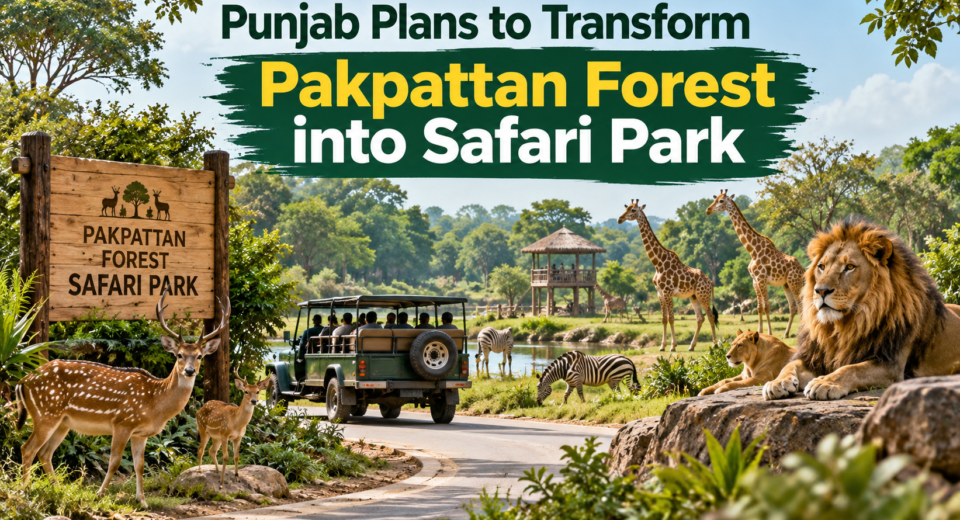
Pakpattan Forest Safari Park: A Fresh Look at Punjab’s Wildlife Tourism Plan
If you live in southern Punjab, you know the feeling. A family day out usually means a long drive to Lahore. So when people started talking about a safari park in Pakpattan, the news spread fast. Everyone wants to know what is real, what is still an idea, and what it could mean for the district. In this guide, I’ll walk you through it in plain words. We’ll look at the forest itself, the wider Punjab safari push, the possible benefits, and the real worries. I’ll keep it honest, because a project like this deserves clear facts, not hype. Punjab Plans to Transform Pakpattan Forest into Safari Park Let’s start with the headline itself. The idea is simple. Punjab would take part of a forest in Pakpattan district and turn it into a safari park. Visitors would drive through open areas, spot animals in natural settings, and enjoy a day in the green. Here is the honest part. At the time of writing, I could not find a detailed official notice with a map, budget or opening date. That is common for early-stage public projects. Plans often begin as talk, move to a proposal, and only later become approved schemes. So treat every detail you read online with care, including details in this article. What a safari park actually means A safari park is not a regular zoo. In a zoo, animals live in small enclosures. In a safari park, animals get big, open areas, and people travel through them in vehicles. The animals feel less stressed, and visitors see more natural behavior. Why this idea feels believable Punjab already runs several wildlife parks. The province has been upgrading its zoos and safari spaces. A Pakpattan project would fit that trend, which is why the story sounds believable to many people. Understanding the Pakpattan Forest and Its Setting Before we dream about lions and deer, we need to know the land. Pakpattan is a district in Punjab covering about 2,724 square kilometres. It has two tehsils, Pakpattan and Arifwala. It is mostly a farming area, known for crops like potatoes, chilies and onions. The forest cover is small. According to the Punjab Development Statistics for 2018-19, the district has roughly 1,000 hectares under forest. You can read the district profile on the Pakistan Almanac page for Pakpattan. Important forests include the Arifwala Plantation and the Jamlera Plantation, both in Arifwala tehsil. A quick look at the numbers Here is a simple table that sums up the basics. Detail What We Know District area About 2,724 sq km Tehsils Pakpattan and Arifwala Forest area (2018-19 stats) Roughly 1,000 hectares Key plantations Arifwala and Jamlera Protected areas Arifwala Reserve Forest, part of Border Belt Game Reserve Why the size matters A forest of this size can support a modest safari experience. It will not be a huge African-style reserve. Think of it more like a managed green space, closer to Changa Manga or Jallo than to a giant national park. That keeps expectations realistic. How This Fits Punjab’s Bigger Safari and Forest Push Pakpattan would not be starting from zero. Punjab has been investing in forests and wildlife for some time. The government says it turned more than 41,000 acres of barren land into green forest through plantation drives. It also says over 40 million trees were planted across the province. Safari parks are part of the same story. The Chief Minister has also directed an international-standard safari park for Faisalabad. And on World Animal Day, officials said Punjab had raised its wildlife ranger force to 552 members, 24 percent of them women. They also mentioned a wildlife hospital at Safari Zoo and mobile vet clinics. What this tells us The province is clearly in a “green and tourism” mood. A Pakpattan safari park would be one more step in that direction. It would also spread attractions beyond Lahore, which many southern districts have wanted for years. A national example worth noting In Islamabad, the capital authority has shared a safari park plan with many animal zones and a veterinary complex. That is a different project, but it shows how Pakistan is thinking about modern safari parks: big zones, animal care centers and visitor facilities. The Wildlife Already Living in Pakpattan A good safari park starts with respect for what already lives there. Pakpattan’s protected areas give shelter to hog deer, hedgehogs, jackals, jungle cats, palm squirrels and rhesus monkeys. Birds like the spotted owlet and barn owl also live in the area. That is a strong base. Local species can be the stars of the show. Visitors often enjoy seeing native animals just as much as exotic ones, especially when a guide explains how they live. Native first, exotic later If planners are smart, they will protect native wildlife first. Bringing in new species is a bigger step. It needs space, food, vets and safe handling. Rushing that part is how parks end up with sick or stressed animals. Birdwatching as a quiet bonus Bird lovers could get a lot from this forest. Early mornings in a plantation are full of life. A simple birdwatching trail would cost little and attract nature fans all year. Possible Benefits for Pakpattan and Nearby Areas Now the exciting part. If done well, a safari park could change daily life for many families. Let’s break down the main gains. Jobs and local income A park needs drivers, guides, ticket staff, cleaners, rangers, cooks and shop owners. Local youth could fill many of these roles. Nearby farmers could also sell fruit, milk and handmade items to visitors. Tourism that stays in the district Right now, families from Pakpattan, Arifwala and nearby towns often travel far for leisure. A local park keeps that money and time at home. Hotels, rest houses and food stalls would feel the lift too. Learning for children Schools could run trips to teach kids about animals, trees and clean air. Seeing a deer in real life sticks in a child’s mind