

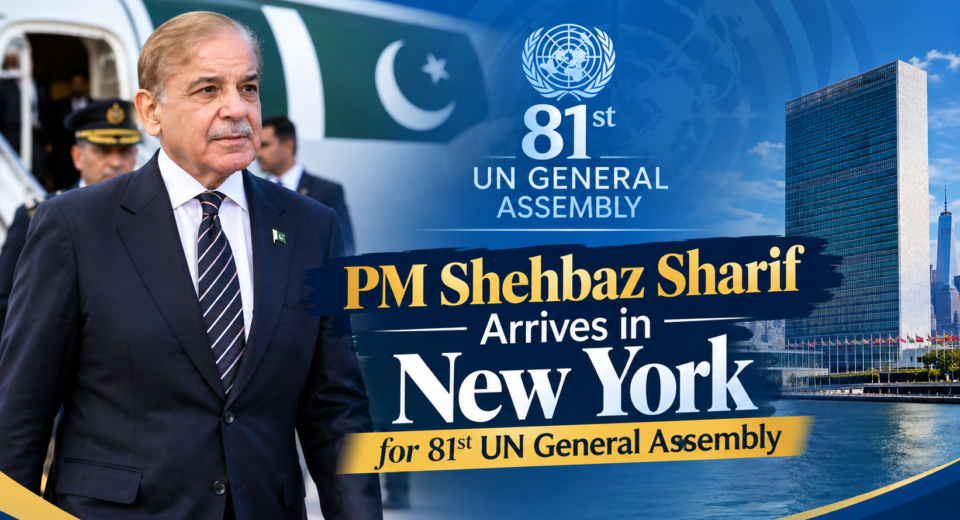
PM Shehbaz Sharif Arrives in New York for 81st UN General Assembly
Pakistan’s top leader is back in the spotlight on the world stage. Prime Minister Shehbaz Sharif landed in New York this week to take part in the 81st session of the United Nations General Assembly, and honestly, this trip comes at a pretty tense moment for global politics. Between rising tensions in the Middle East and ongoing disputes closer to home, the world will be watching closely to hear what Pakistan has to say. Let’s break down what happened, what’s coming next, and why this visit actually matters for regular people, not just diplomats in suits. Why This UN Trip Is a Big Deal You might wonder why a prime minister flying to New York is even news. Well, the UN General Assembly isn’t just another meeting. It’s the one place every year where almost every country on Earth sends its leader to speak directly to the world. Think of it as the planet’s biggest group chat, except everyone actually shows up in person. This year’s session carries a heavy theme: “Restoring Trust, Managing Transformation: A United Nations That Delivers for All.” That phrase sounds fancy, but it basically means world leaders are being asked to fix broken trust between nations and figure out how the UN can still be useful when so many countries doubt its power. For Pakistan, this is a chance to speak up on issues that matter deeply to the country, like Kashmir, Palestine, and economic struggles that hit everyday families the hardest. How PM Shehbaz Arrived and Who Came With Him PM Shehbaz Sharif touched down in New York on Monday with a noticeably small delegation. That’s not by accident. The government has been pushing austerity measures, so the team trimmed down the usual list of officials who travel for these trips. He wasn’t traveling alone, though. Deputy Prime Minister and Foreign Minister Ishaq Dar joined him, along with Special Assistant Tariq Fatemi. Pakistan’s Permanent Representative to the UN, Asim Iftikhar Ahmad, was there to receive the prime minister right at the airport, which is the usual diplomatic welcome for a leader arriving for such a major event. Here’s a quick look at the key details from the arrival: Detail Information Arrival Date Monday, September 21, 2026 Location New York City Received By Asim Iftikhar Ahmad, Pakistan’s Permanent Representative to the UN Key Delegation Members Ishaq Dar (DPM & FM), Tariq Fatemi (Special Assistant) Address Date at UNGA September 25, 2026 Small delegations like this one are becoming more common these days. Governments everywhere are under pressure to cut costs, and sending fewer officials abroad is one easy way to show that at least some belt-tightening is happening. What Happens Next: The UNGA Schedule So when does the prime minister actually speak? Mark your calendar for September 25. That’s the day he steps up to the podium to deliver Pakistan’s official address to the General Assembly. The full high-level debate for this year’s session runs from September 22 through September 26, with one final sitting wrapping things up on September 28. During that window, dozens of world leaders take turns addressing the assembly, one after another, each getting their moment to lay out their country’s priorities and concerns. Take a look at the session’s basic framework below. Session Overview Item Details Session Number 81st UN General Assembly Official Theme Restoring Trust, Managing Transformation: A United Nations That Delivers for All High-Level Debate Dates September 22 to September 26, 2026 Final Sitting September 28, 2026 Pakistan’s Address September 25, 2026 What Pakistan Plans to Talk About Now, here’s the part that really matters. What will PM Shehbaz actually say once he’s up there? Based on statements from Pakistan’s Foreign Office, the speech is expected to cover a wide mix of topics. First up is regional and global security. The prime minister plans to stress the value of dialogue and diplomacy over conflict, which makes sense given how much tension is brewing in the Middle East right now. Fighting between other nations in the region has already stirred fears about wider instability, especially around key routes like the Strait of Hormuz. Beyond security, PM Shehbaz is also expected to bring up two issues that Pakistan has raised for decades: Kashmir and Palestine. He’s likely to speak about what Pakistan calls the ongoing occupation in Jammu and Kashmir and push for the right to self-determination there. He’s also expected to voice support for Palestinians and their long struggle for statehood. And that’s not all. The speech is also set to touch on: That’s a lot to squeeze into one speech, but this is basically Pakistan’s yearly chance to put its concerns in front of the entire world at once. Meetings Behind the Scenes The public speech is only part of the story. A huge chunk of what actually gets done at the UN happens away from the main stage, in smaller rooms with just a handful of people. PM Shehbaz is expected to hold several bilateral meetings with other world leaders during his stay. These one-on-one conversations often turn out to be more important than the big speeches because that’s where actual deals, agreements, and understandings get worked out. He’s also expected to meet with the UN Secretary-General to discuss Pakistan’s ongoing role in supporting multilateral cooperation and upholding the UN Charter. On top of that, the prime minister plans to join several high-level side events focused on climate action and development. These smaller gatherings let leaders dig deeper into specific problems instead of giving broad speeches to a packed hall. The Bigger Picture: Why Timing Matters Here’s something worth noting. This year’s General Assembly isn’t happening in a calm, quiet moment. There’s active conflict overshadowing much of the agenda, and many expect that tension to dominate hallway conversations even more than the official theme does. For Pakistan, that creates both a challenge and an opportunity. On one hand, global attention is stretched thin because so much focus is on other crises. On the other hand, a