
Pakistan has waited a long time for this moment. On Tuesday, November 24, 2026, China named the Pakistani astronaut who would fly to its Tiangong space station. A day later, he lifted off. For a country whose space program has mostly worked with satellites, this is a clear change of direction.
This article covers what has happened, who the astronaut is, what he will do in orbit and why the mission matters. It also looks at the questions that remain open. The information comes from reports published on November 24 and 25, 2026, and some details may change as the mission continues.
Pakistan’s Space Program Takes Major Step With First Astronaut Announcement
The key announcement came from the China Manned Space Agency (CMSA) at a press conference at the Jiuquan Satellite Launch Centre. The agency confirmed that Pakistani astronaut Muhammad Zeeshan Ali would join the Shenzhou-24 crew as a payload specialist. He would become the first foreign astronaut to visit China’s Tiangong space station.
Until that press conference, the public did not know which of two candidates would fly. Pakistan had trained two people, Zeeshan Ali and Khurram Daud. Chinese missions usually keep final crew names quiet until the day before launch, so the name came out late. Once it did, Pakistani officials and media treated it as a national milestone.
The launch followed on Wednesday, November 25. According to Dawn’s report on the liftoff, the Shenzhou-24 spacecraft rose from Jiuquan with the three-member crew. An official at the launch centre later said the spacecraft had entered its planned orbit and called the launch a complete success. Ali, who is 40, became the first Pakistani to reach orbit.
One point needs care. Ali becomes the first foreign national to board Tiangong only after the spacecraft docks with the station. The reports reviewed for this article described the launch and orbit insertion, but did not yet confirm docking. Readers should check official updates for the docking result.
A Quick Timeline of the Journey
The announcement on November 24 was the end of a long road. The table below shows the main steps, from early plans to launch day.
| Date | Milestone | Why It Matters |
| 1961 | SUPARCO is established | Starts Pakistan’s national space effort |
| 2011 | First Pakistani communication satellite launched with Chinese help | Builds the base for China-Pakistan space work |
| 2019 | Pakistan says it aims to send an astronaut by 2022 | Early goal that did not happen on time |
| February 2025 | SUPARCO and CMSA sign a cooperation agreement | Opens the door to a Pakistani astronaut on a Chinese station |
| October 2025 | CMSA confirms plans and later announces two reserve astronauts | Names Zeeshan Ali and Khurram Daud for training |
| October 18, 2026 | Minister Ahsan Iqbal says the flight will happen on November 25 | Gives the public a firm date |
| November 24, 2026 | CMSA names Ali to the Shenzhou-24 crew | Ends the wait over who will fly |
| November 25, 2026 | Shenzhou-24 lifts off from Jiuquan | Pakistan’s first astronaut reaches orbit |
Who Is Muhammad Zeeshan Ali
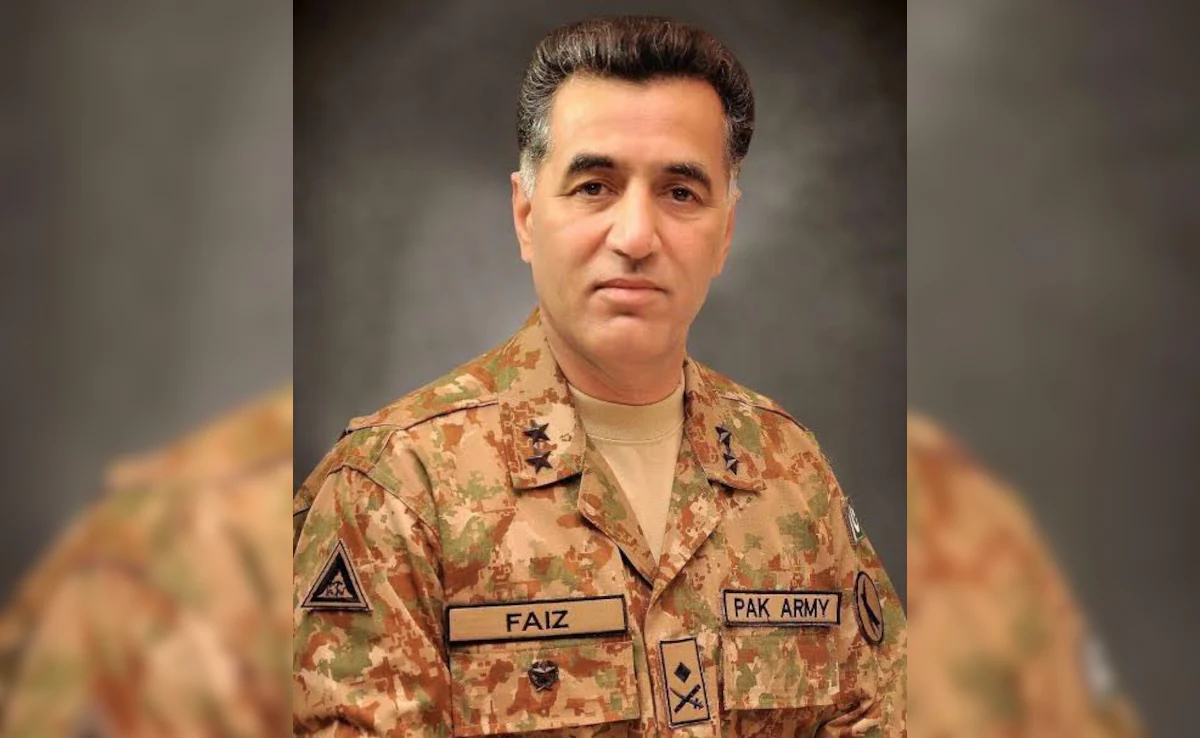
Muhammad Zeeshan Ali is a former Pakistan Air Force pilot. Several outlets describe him as a fighter pilot. He is 40 years old. Reports from Dawn and others say he flies as a payload specialist, which means his main job is to carry out experiments rather than to fly the spacecraft.
Pilots make strong astronaut candidates for a clear reason. They are trained to work under pressure, follow strict procedures and stay calm in complex machines. Many early astronauts around the world came from air forces for the same reason. Ali’s background fits that long tradition.
Ali was picked after a careful process. According to Chinese reports carried by Daily Sabah, he and Khurram Daud were chosen as reserve astronauts after three rounds of selection and assessment. Both then entered China’s astronaut training program. Training took place at China’s Astronaut Centre, and the final flight choice came after training and evaluations.
Ahead of the mission, Ali spoke about the bond between the two countries. As quoted by The National, he said the friendship between China and Pakistan is as vast as outer space. The Express Tribune reported that he said he carries the hopes of 250 million people and that the mission is a launchpad rather than a finish line. These are his own words as reported, and they show how he sees the role.
What About Khurram Daud
Khurram Daud was the second candidate. He trained alongside Ali, and the two were announced together as Pakistan’s first international astronaut candidates for the Chinese program. His role did not end on the launch pad. In spaceflight programs, the backup often keeps training and may fly on a later mission. Officials have not said whether Daud will fly in the future, so that remains an open point.
The Shenzhou-24 Mission and Crew
Shenzhou-24 is the 41st flight mission of China’s crewed space program. It launched aboard a Long March-2F rocket at 8:18 a.m. local time. Its main purpose is a regular crew rotation at Tiangong. That means it brings a new crew to the station and takes an older crew home.
The mission has three crew members. Tang Hongbo is the commander. He has flown before on Shenzhou-12 and Shenzhou-17, and with this flight he becomes the first astronaut to visit Tiangong three times. Wu Yi is the flight engineer, and this is his first spaceflight. Zeeshan Ali is the payload specialist.
The arrangement is unusual in one way. China’s long-duration crews normally stay about six months. Ali will not. He is expected to stay about a week. After that, he will return to Earth aboard the Shenzhou-23 spacecraft with two of its crew, Zhang Zhiyuan and Lai Ka-ying. According to Space.com, the third Shenzhou-23 crew member, Zhu Yangzhu, will stay behind on the station. Shenzhou-23 launched on May 24, 2026.
This short-visit design lets China fit a guest astronaut into a normal crew swap. It also keeps the risk and cost lower than a full six-month stay for a first-time foreign visitor.
Key Facts About the Mission
The second table gathers the main facts in one place.
Shenzhou-24 Mission Snapshot
| Item | Detail |
| Spacecraft | Shenzhou-24 |
| Launch site | Jiuquan Satellite Launch Centre, China |
| Rocket | Long March-2F |
| Launch date | November 25, 2026, 8:18 a.m. local time |
| Commander | Tang Hongbo |
| Flight engineer | Wu Yi |
| Pakistani astronaut | Muhammad Zeeshan Ali, payload specialist |
| Destination | Tiangong space station |
| Ali’s planned stay | About one week |
| Return craft for Ali | Shenzhou-23, with Zhang Zhiyuan and Lai Ka-ying |
| Experiments planned | Around 90 across the mission, according to Anadolu |
What Zeeshan Ali Will Do in Space
A payload specialist works on the science side of a mission. Ali will take part in routine crew activities, but most of his time will go to joint experiments between Pakistan and China. Reports say the whole crew is expected to carry out roughly 90 experiments during the mission, although the number that belong to Pakistan has not been broken down in the sources reviewed.
Short-visit missions like this often focus on life science, materials and technology tests. Microgravity changes how liquids, metals, cells and plants behave. Scientists use a space station to study those changes. Even a week of work can produce samples and data that researchers study on Earth for months.
Ali’s flight is also a training mission in a quiet sense. By living and working on a station, he learns how daily life in orbit works. That includes eating, sleeping, using equipment and following safety rules. Such experience is hard to gain any other way. It can later help Pakistan design its own experiments and prepare future astronauts.
Why a Short Stay Still Counts
Some readers may think a one-week trip is too short to matter. Spaceflight history says otherwise. Many national “firsts” have been short flights. What counts is the proof that a country can select, train and fly a person safely. The first flight opens the path. Longer stays, bigger experiments and more astronauts can follow.
The China-Pakistan Space Partnership
The mission rests on a long partnership. Pakistan’s space agency, the Space and Upper Atmosphere Research Commission (SUPARCO), was set up in 1961. It launched its first communication satellite in 2011 with help from a subsidiary of the China Aerospace Science and Technology Corporation, according to Arab News. Since then, China has been a close space partner.
The human spaceflight deal is the biggest step so far. In February 2025, SUPARCO and the CMSA signed a cooperation agreement for a Pakistani astronaut to fly to China’s space station. Prime Minister Shehbaz Sharif welcomed the agreement as a historic milestone for Pakistan’s space program, and SUPARCO’s chairman encouraged professionals and researchers to join the effort.
For China, the deal has its own value. Reports describe it as the first time Chinese crewed spaceflight has included a foreign astronaut. It also supports China’s wish to widen international use of its space station. Countries that cannot afford their own launch systems or stations can take part in orbital research through such partnerships. Asiaone noted that Ali’s participation is part of cooperation under the Belt and Road Initiative.
Both countries benefit. Pakistan gains access to human spaceflight without building a full launch and station system. China gains a partner and shows that Tiangong is open to guests. This is a practical trade, and it explains why the two governments have talked about it as a sign of deep friendship.
How Pakistan’s Own Plans Fit In
Pakistan has tried to move into human spaceflight before. In 2019, the government said it hoped to send its first astronaut into space by 2022. That target passed without a flight. The Chinese partnership gave the country a workable route instead of a purely home-built one.
This history is useful context. It shows that the new mission did not come from nowhere, and that earlier plans needed outside support to become real. It also shows why officials treat the flight with so much pride after a long wait.
Reactions and Official Statements
Pakistani officials have framed the flight as a national achievement. Planning Minister Ahsan Iqbal announced the November 25 date on October 18 while speaking in Narowal. He also said resources had been arranged for what he called Pakistan’s first space museum at the University of Narowal. That detail points to a plan to turn the flight into public education.
SUPARCO’s spokesperson said the astronaut would take part as a payload specialist and would be the first foreign astronaut to visit Tiangong. After liftoff, a post on X shared by Dawn said a new era had begun for Pakistan’s space program and that the Pakistani flag had risen into orbit with the hopes of the country’s people.
Reactions from the Chinese side have stressed cooperation. The CMSA presented Ali’s selection as a major step in its international work. Chinese state media highlighted the first-ever mix of Chinese and foreign astronauts on a crewed flight.
It is worth noting what has not yet been said. Officials have given few details about the Pakistani experiments, the costs to Pakistan, or the plan for future flights. Those answers may come in later briefings. Until then, careful readers should separate confirmed facts from hopeful statements.
Why This Milestone Matters for Pakistan
The most obvious value is national pride. A first astronaut gives a country a shared story, and young people often respond strongly to such stories. Schools, universities and science groups can use the moment to draw students toward science and engineering.
The second value is skill building. A human spaceflight program needs many abilities. These include medical screening, mission planning, payload design and safety engineering. Even when a partner provides the rocket and the station, Pakistani teams must prepare experiments, work with Chinese engineers and manage data. Each task builds experience that stays in the country.
The third value is research. Microgravity experiments can be useful in fields like medicine, agriculture and materials. Pakistan has strong needs in food security and health, so even small space-based studies can raise useful questions for later work on Earth. Results will take time, and it is too early to claim specific discoveries.
The fourth value is diplomacy. The flight is a sign of trust between two close partners. For Pakistan, it also raises its profile among countries that are building space programs. For China, it supports its image as a host of international cooperation.
A Balanced View of the Limits
A fair article should also note the limits. This is a one-week visit, not a long-term mission. Pakistan relies on China for the rocket, the spacecraft and the station. That is a practical choice, but it means Pakistan does not yet have its own human spaceflight capability. Real independence would need large investment over many years.
There is also a question of follow-through. Space programs gain value when a first flight leads to a steady plan. Whether Pakistan funds future flights, trains more astronauts and builds research programs around the mission will decide how lasting the benefit is. These points are not yet answered in public reports.
What Comes Next
Several things are worth watching in the coming days and months.
The first is docking. Once Shenzhou-24 links up with Tiangong, Ali becomes the first foreign national aboard. That moment will complete the “first” the mission is built around. Official updates from the CMSA and SUPARCO will confirm it.
The second is the week on the station. Ali and the crew will work through their experiments, and agencies may release photos and short reports. After about a week, he is due to return aboard Shenzhou-23 with Zhang Zhiyuan and Lai Ka-ying.
The third is the science. Pakistani researchers will want to study the samples and data once they return. Updates on which experiments flew, and what the first results show, would add real substance to the story.
The fourth is future plans. Officials may say whether Khurram Daud will fly later, whether more Pakistani astronauts will be trained, and what role the planned space museum will play. Clear plans would show that the first flight is the start of a program rather than a single event.
Key Takeaways
Pakistan’s first astronaut flight is real, historic and still unfolding. China named Muhammad Zeeshan Ali, a 40-year-old former Pakistan Air Force pilot, to the Shenzhou-24 crew on November 24, 2026. The spacecraft lifted off from Jiuquan on November 25 and reached its planned orbit. Ali is flying as a payload specialist with commander Tang Hongbo and flight engineer Wu Yi.
He is expected to spend about a week at Tiangong, work on joint experiments, and return aboard Shenzhou-23. The mission follows the 2025 agreement between SUPARCO and the CMSA and builds on a partnership that began with satellites. It gives Pakistan pride, experience and a doorway into human spaceflight, while also showing its reliance on Chinese infrastructure.
For readers who want to follow the story, the most useful steps are simple. Watch for the docking confirmation, read official updates on the experiments, and look for statements about what Pakistan plans after this first flight. For a detailed background on how the mission came together, see Space.com’s report on the Shenzhou-24 launch.