
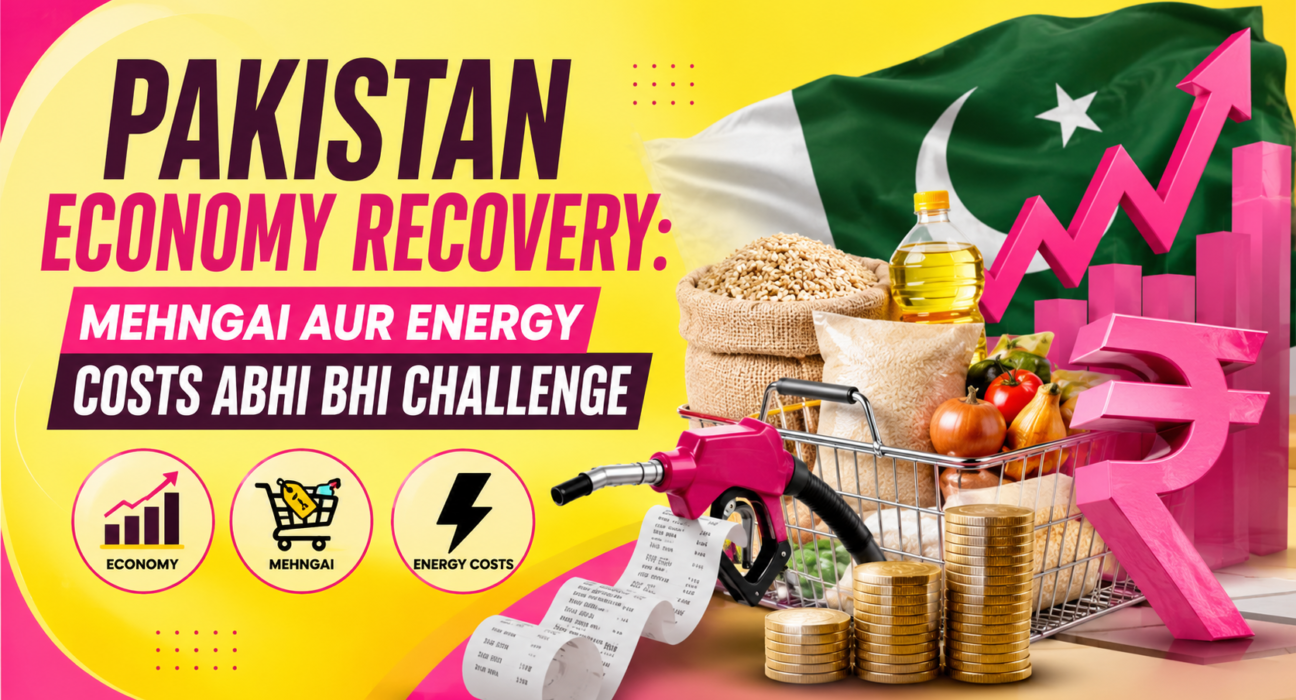
If you’ve been following Pakistan’s economic news lately, you’ve probably noticed a strange mix of headlines. On one hand, officials keep saying the economy is stabilizing. On the other, your grocery bill and electricity bill tell a completely different story. I’ve been digging into the numbers, and honestly, both sides have a point — it’s complicated, but not hopeless.
Where Does Pakistan’s Economy Actually Stand Right Now?
Let’s start with the good news, because there is some. Pakistan’s GDP growth is expected to pick up to around 3.7% this year, a meaningful improvement over the sluggish years right after the 2022-23 crisis. Macroeconomic indicators like the current account and reserves have also shown more discipline compared to the panic days of shortage headlines and default fears.
But here’s the catch — growth on paper doesn’t always translate into relief on the street. That’s where mehngai (inflation) and energy costs come in, and they’re still the two things ordinary Pakistanis feel every single day.
Inflation actually cooled significantly last year compared to the brutal highs of 2023, giving families a bit of breathing room. But this year has been bumpier. <cite index=”1-1″>Average consumer price index inflation stood at 6.2% during July-April FY 2026, compared with 4.7% in the same period a year earlier</cite>. Then things got worse — <cite index=”5-1″>Pakistan’s inflation accelerated to a two-year high as conflict in the Middle East drove up energy import costs</cite>, with <cite index=”5-1″>the consumer price index rising 11.7% in May from a year earlier</cite>. More recently, there’s been some relief again, with <cite index=”6-1″>inflation easing to 9.2% in July, though policymakers remain wary that higher energy costs could reignite price pressures</cite>.
Why Energy Costs Keep Dragging the Recovery Down
This is really the heart of the problem. Pakistan imports most of its oil and gas, so when global energy markets get shaky, we feel it almost immediately. <cite index=”8-1″>A huge increase in Pakistan’s fuel import bill from $300 million to $800 million</cite> during the regional conflict earlier this year put massive pressure on the budget and the exchange rate. Analysts have pointed out that <cite index=”2-1″>energy inflation has been the main contributor to stubborn price levels, with year-on-year energy costs nearing 30 percent</cite> at points this year.
Here’s a quick snapshot of how things have moved recently:
| Month (2026) | CPI Inflation (YoY) | Key Driver |
|---|---|---|
| April | 10.9% | Rising fuel & transport costs |
| May | 11.7% | Middle East conflict, energy imports |
| June | 11.07% | Continued energy pass-through |
| July | 9.2% | Slight cooling, energy risk remains |
The bigger issue is structural. Even when global oil prices ease, Pakistan’s energy sector carries baggage — circular debt, transmission losses, and limited room for subsidies. That means fuel and electricity price hikes get passed straight to consumers, whether it’s a good month or a bad one.
What This Means for the Average Household
Cost Pressure Areas Still Affecting Families
| Sector | Current Challenge |
|---|---|
| Fuel & Transport | Volatile due to global oil prices and import costs |
| Electricity & Gas | Structural inefficiencies limit relief despite subsidies |
| Food Prices | Indirectly pushed up via logistics and distribution costs |
| Core Inflation | Wage adjustments and exchange rate pass-through keep it sticky |
For a household in Lahore or Karachi, this translates into a simple reality: transport to work costs more, cooking gas costs more, and even vegetables cost more because trucks need fuel too. Recovery on a macro chart doesn’t always show up on a kitchen table.
The Road Ahead
I’ll be honest with you — Pakistan’s economy isn’t in crisis mode the way it was a couple of years ago, and that’s genuinely worth acknowledging. But calling it “recovered” would be premature. Until energy costs stabilize structurally, and not just because of a temporary dip in global oil prices, mehngai will keep resurfacing every time there’s a global shock. Real recovery will mean energy security and inflation control working together, not one masking the other.