

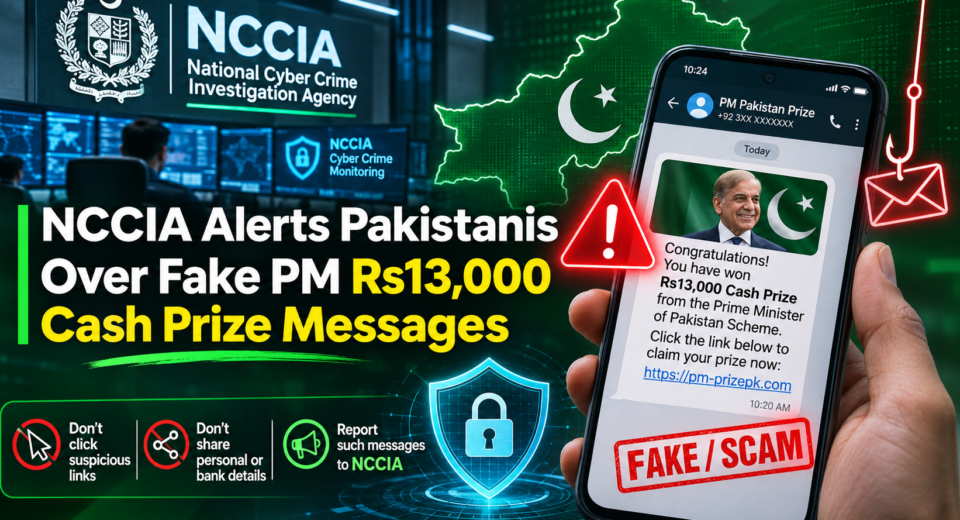
NCCIA Alerts Pakistanis Over Fake PM Rs13,000 Cash Prize Messages
The National Cyber Crime Investigation Agency (NCCIA) has issued an important warning to Pakistanis about fake PM Rs13,000 cash prize messages circulating online. Fraudsters are using Prime Minister Shehbaz Sharif’s name to attract people with false promises of financial rewards. The agency warned on November 9, 2026, that these messages may contain dangerous links designed to steal personal information and banking details. Some messages reportedly present the cash offer as a special Iqbal Day reward. However, the advertised prize is fraudulent, and citizens should not trust these claims. The NCCIA has urged everyone to avoid suspicious links, protect their financial information, and report online scams immediately. Here is what Pakistani citizens need to know about the warning, how these scams work, and what they should do to stay safe. NCCIA Issues Warning Against Fake Rs13,000 Cash Prize Messages The NCCIA confirmed that cybercriminals are spreading fraudulent messages claiming that Prime Minister Shehbaz Sharif is distributing Rs13,000 to citizens. These messages falsely suggest that people can receive the money by following instructions or visiting an online page. According to the NCCIA spokesperson, scammers may use suspicious links to collect sensitive information, including bank account details and other personal data. Director General NCCIA Syed Ali Nasir Rizvi also stressed the agency’s zero-tolerance approach toward cyber fraud. He encouraged citizens to report suspicious activity rather than becoming victims of online deception. The warning is particularly important for people who regularly receive financial assistance announcements through mobile phones and social media. The main message is clear: the viral Rs13,000 cash prize offer in the Prime Minister’s name is fake. What Is the Fake PM Rs13,000 Cash Prize Scam? The fake PM Rs13,000 cash prize scam is a form of online fraud in which criminals pretend to represent the government or the Prime Minister. Their goal is to make recipients believe they qualify for a financial reward. Scammers often take advantage of people’s trust in government assistance programmes and their need for financial support. A message may include an attractive offer, an urgent deadline, or a request to confirm eligibility. Instead of providing money, the linked page may attempt to collect private information. This type of fraud is commonly known as phishing, a technique used to trick people into revealing confidential details. The NCCIA warning confirms the fraudulent Rs13,000 offer, although the exact wording and appearance of individual scam messages may vary. How Do Fake Government Cash Prize Scams Work? Understanding how these scams operate can help people recognise suspicious messages before taking action. 1. Scammers Create an Attractive Cash Offer Fraudsters begin with a message promising money. They may mention a government official, national celebration, or financial assistance scheme to make the offer sound believable. The Rs13,000 amount is attractive enough to encourage recipients to investigate. 2. They Use Government Names and Images A fraudulent message may display the Prime Minister’s name, photographs, official-looking colours, or government symbols. These details can create a false sense of authority. However, a government logo or photograph does not prove that a message is genuine. 3. Victims Are Encouraged to Open a Link The message may instruct recipients to visit a website to claim their reward. The website could resemble an official registration portal. Some fraudulent pages may also create urgency by claiming that registration will close soon. 4. Personal Information Is Requested Once someone opens the page, scammers may ask for information such as: Providing these details to criminals may lead to identity theft or financial fraud. 5. Criminals Attempt to Misuse the Information Depending on the information collected, scammers may try to access financial accounts, impersonate victims, or conduct further fraudulent activity. Not every suspicious link works the same way, but sharing confidential information can increase the danger. Why Are Scammers Using the Prime Minister’s Name? Public figures and government institutions are often trusted by citizens. Fraudsters exploit this trust by creating messages that appear to come from an official source. In Pakistan, financial assistance announcements can attract considerable public attention, particularly when families are facing rising living costs. Scammers understand that an unexpected cash offer may encourage people to respond quickly. They may also use national occasions to make the message appear timely. Reports surrounding this particular scam have linked some fraudulent claims to Iqbal Day, observed on November 9. The strategy relies on creating excitement before recipients take time to verify the information. Warning Signs of Fake Rs13,000 Cash Prize Messages Not every suspicious message is easy to recognise. However, several warning signs can help identify a possible scam. Unverified Government Announcements Be careful when a message claims to announce a government reward without confirmation from official government channels. Unknown Website Links A message containing an unfamiliar or shortened website address deserves extra caution. Scammers sometimes use misleading addresses that resemble genuine websites. Requests for Banking Information A message asking for banking passwords, ATM PINs, or one-time passwords is a serious warning sign. Never reveal these details to claim an unexpected reward. Pressure to Act Immediately Fraudsters may create artificial deadlines to prevent people from checking the facts. Requests to Forward the Message Some scams encourage recipients to share the offer with friends or family members. This helps fraudulent messages reach more potential victims. Poorly Written or Inconsistent Information Spelling mistakes, unusual wording, and conflicting instructions can indicate fraud. However, professionally written messages can also be fake. Remember: A message does not become trustworthy simply because it looks official or was forwarded by someone you know. What Are the Risks of Clicking Suspicious Cash Prize Links? The NCCIA has specifically warned that fraudulent reward links could expose citizens to financial crimes. Possible risks include: Identity theft: Criminals may misuse personal information to impersonate another person. Financial fraud: Exposed banking details or verification codes could help criminals attempt unauthorised transactions. Account compromise: Fake login pages may collect passwords and other account credentials. Malicious downloads: Some fraudulent websites may encourage users to install unsafe applications. Further scam attempts: Information collected from one scam may be