

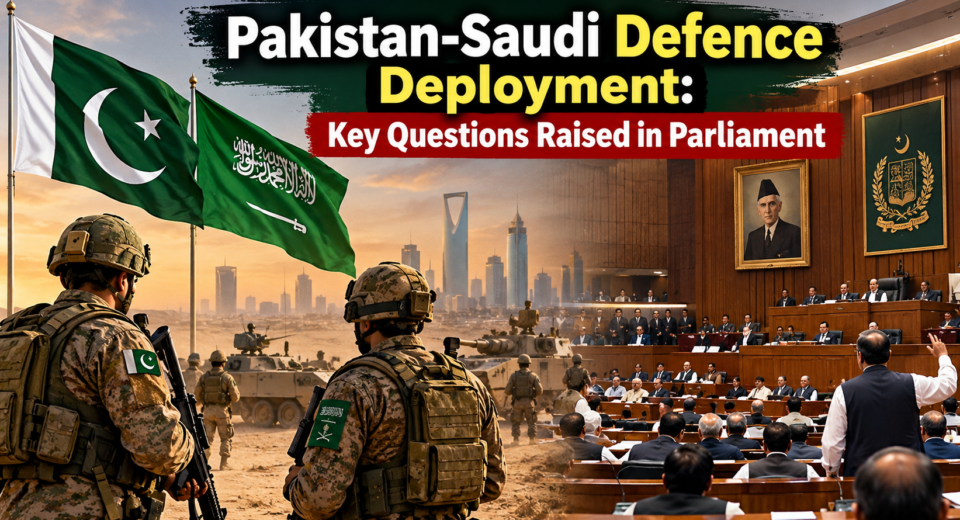
Pakistan-Saudi Defence Deployment: Key Questions Raised in Parliament
Pakistan is sending more military forces to Saudi Arabia, and many people want to know who approved it. If you have been following the news this week, you have probably seen the same debate everywhere. Is the decision legal? Is it wise? Why was parliament left out? In this article I will walk you through what we know, what we don’t, and what lawmakers are being pushed to ask. I will keep things simple and stick to the facts. Where the facts are thin, I will say so. Why Pakistan-Saudi Defence Deployment: Key Questions Raised in Parliament Matter Right Now Sending soldiers abroad is one of the biggest choices any country makes. It puts lives at risk. It costs money. It can change how neighbours and allies see you for years. That is why democracies usually want their elected members to have a say. This week, Islamabad agreed to rapidly deploy more forces to Saudi Arabia without a parliamentary vote. The timing makes the move even more noticeable. It comes eleven years after parliament voted to keep Pakistan out of a Saudi-led intervention in Yemen. So the debate is not only about troops. It is about who decides when Pakistan goes to defend a friend. It is also about whether public debate still matters when the stakes are this high. A Decision That Touches Every Citizen You might think foreign deployments only affect soldiers and their families. In reality, they affect everyone. Defence spending comes from the national budget. Security threats can follow troops back home. Energy prices, remittances from workers in the Gulf, and trade ties can all shift depending on how a deployment goes. Millions of Pakistanis work in Saudi Arabia, so the stakes feel personal to many families. That is one reason the public is paying such close attention. What Has Actually Been Announced So Far Let’s start with the basics. The public information is limited, and a lot of online chatter goes beyond it. Here is what has been reported by major news outlets. The Riyadh Meeting and the Pact A defence pact Pakistan signed with Saudi Arabia and Turkey in August was invoked for the first time on Monday. This came as the kingdom faces growing attacks from Yemen’s Iran-backed Houthis. After an emergency meeting in Riyadh, which Field Marshal Asim Munir attended along with Saudi and Turkish counterparts, the three countries condemned attempted attacks on Mecca and Medina. They also promised to provide the agreed forces and to make sure of their rapid deployment. One key phrase deserves attention. They said this would happen in line with each country’s “national legislation.” That wording matters a lot, and I will come back to it. Some reports also call the pact the Makkah Joint Defence Agreement. Because details are scarce, it is best to treat the exact name and terms with care until official texts are public. The Government’s Response Pakistan’s information ministry said the alliance “has gone through all necessary government procedures”. However, it did not say whether the cabinet or parliament was involved. It also described the deployment details as a matter of operational confidentiality. In plain words, the government says everything was done properly, but it has not shown how. For lawmakers, that gap is the heart of the issue. A Quick Timeline of the Saudi-Pakistan Defence Relationship Pakistan and Saudi Arabia are not new partners. Their military ties go back decades, and troops from Pakistan have served in the kingdom for a long time. The table below pulls together the key moments mentioned in this article. Table 1: Key Moments in the Pakistan-Saudi Defence Story Year What Happened 2015 Parliament unanimously voted to stay neutral in the Saudi-led Yemen campaign, while promising to defend the kingdom’s territory and holy sites 2018 Pakistan’s defence minister told the Senate that about 1,000 troops would go to Saudi Arabia for training and advising, not combat May 2025 Reports suggested a long-standing Pakistani presence of roughly 8,000 troops, along with fighter jets and air defence systems July 2026 The Houthis announced a ban on Saudi shipping and later struck tankers and oil facilities August 2026 Pakistan, Saudi Arabia and Turkey signed a defence pact October 2026 The pact was invoked for the first time, and Pakistan agreed to rapidly deploy more forces The 2025 troop figure comes from secondary reporting, so treat it as an estimate rather than an official number. Looking at this list, you can see a pattern. Cooperation has grown step by step. What is new is the speed, and the fact that parliament was not asked. The 2015 Precedent That Lawmakers Keep Pointing To When people argue about this deployment, they almost always go back to 2015. That year gave Pakistan a clear example of how parliament can shape foreign policy. What Parliament Decided Back Then In 2015, Saudi Arabia asked Pakistan for troops, warplanes and ships for its campaign in Yemen. The then-government did not simply say yes. It put the request to parliament, which unanimously resolved to stay neutral, while still promising to defend the kingdom’s territory and holy sites. That vote was a big deal. It showed that Pakistan could support a friend without joining a war it did not choose. It also showed that parties from across the aisle could agree on a hard issue. The 2018 Training Mission Three years later, the question came up again. Then-defence minister Khurram Dastgir told the Senate that a planned deployment of 1,000 troops did not violate the parliamentary resolution, because the troops would train and advise Saudi forces rather than fight. You can read the Associated Press report on that Senate statement for the full background. Notice what happened there. Even when the government believed it was within the rules, it still went to parliament and explained itself. That habit of explaining is what many people feel is missing today. The Constitutional Question: Who Should Approve Troop Deployment Now to the legal side. I am not a lawyer, so