

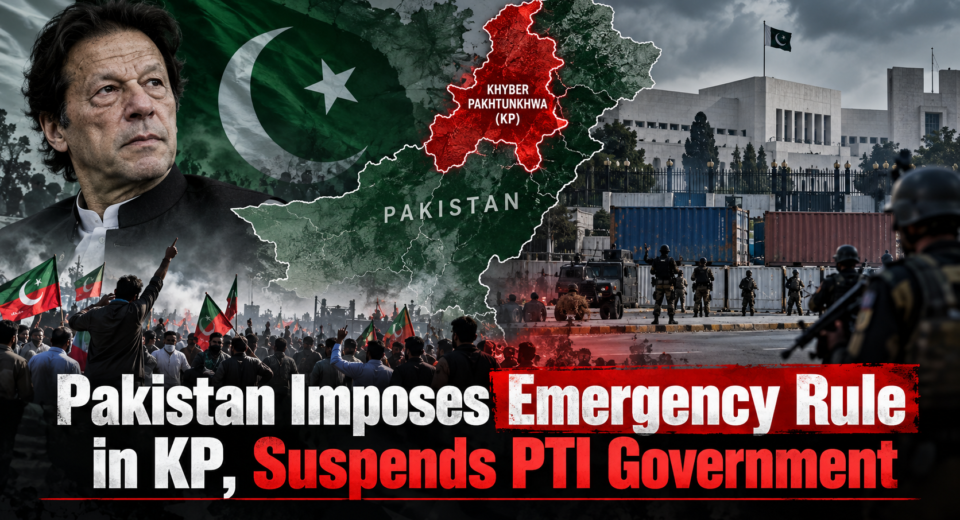
Pakistan Imposes Emergency Rule in KP, Suspends PTI Government
Big political news has hit Pakistan, and it is spreading fast. On Sunday, the President imposed an emergency and governor’s rule in Khyber Pakhtunkhwa (KP), suspending the provincial government led by Imran Khan’s PTI. The decision has stirred debate across the country and beyond. In this article, I break the story down in plain words. I explain what happened, why the federal government says it acted, how PTI is responding, and what it may mean for people living in KP. Facts are still coming in, so I stick to what trusted news outlets have reported so far. Pakistan Imposes Emergency Rule in KP, Suspends PTI Government: The Quick Story Here is the short version. President Asif Ali Zardari declared a state of emergency in Khyber Pakhtunkhwa and suspended the provincial government led by PTI, the party of jailed former Prime Minister Imran Khan. The move came as tensions between the federal government in Islamabad and PTI were already very high. The timing matters a lot. It came days before PTI supporters were set to march on Islamabad to demand Khan’s release. So the story is about more than law and order. It is also about power, politics, and street protest. You can read a detailed news report on the suspension at Al Jazeera, which covered the story as it broke. Key Facts at a Glance What Emergency Rule and Governor’s Rule Actually Mean Many readers hear these terms and feel lost, so let me keep it simple. In Pakistan, provinces are run by an elected chief minister and a cabinet. The governor is a federal appointee, and the role is mostly ceremonial. Under governor’s rule, this changes. How Power Shifts During Emergency Rule Executive authority passes to the governor, who acts for the federal government. In everyday words, the elected team in Peshawar steps aside, and the federal system steers the province instead. The provincial cabinet cannot make key decisions while the order stays in force. What the Constitution Says Pakistan’s constitution allows federal authorities to take over some or all functions of a provincial government during an emergency. So the tool exists in law. The real argument is whether it was needed here, and whether it was used fairly. How Long Will It Last Reports say the emergency rule is meant to run for an initial six months. Such orders can often be reviewed or changed, so the timeline may shift. Watch for official updates, because this part of the story can move quickly. Timeline of Events: How We Got Here Big decisions rarely come out of nowhere. This one followed months of friction. Reports say the dispute built up over counterterrorism operations, security policy, and engagement with Afghanistan. Table 1: Simple Timeline of the KP Emergency Stage What Happened Months before Friction grew between Islamabad and the PTI-led KP government over security policy Before the order The federal Cabinet accused the province of “deliberate disengagement from the fight against terrorism” and recommended emergency rule Sunday The President declared the emergency and suspended the provincial government Hours later Reports said the chief minister and a PTI provincial leader were taken into custody Coming days PTI supporters plan a march on Islamabad This timeline will keep growing. I recommend checking live news before you share any detail as final. Why the Federal Government Says It Acted Islamabad has given its reasons. The language is strong, so I want to explain it carefully and fairly. These are claims by the federal side, and PTI rejects them. The Counterterrorism Argument The federal government cited the provincial administration’s alleged failure to tackle Islamist militancy in the province. KP has faced serious violence for years because of its location and history. Federal leaders say a stronger and more united response is needed. The Law and Order Claim Islamabad says law and order has worsened in the province and that the provincial government failed to act against terrorism. The government also pointed to talks that did not work out. In its view, the elected team in Peshawar was not playing its part. The Information Minister’s Statement Information Minister Attaullah Tarar defended the move and accused the PTI-led provincial government of maintaining links with terrorist groups. That is a very serious charge. It is important to remember that PTI denies it. Both PTI and Afghanistan’s Taliban government have rejected the federal accusations about sympathizing with or sheltering militants linked to the TTP. Army Support for Civil Authorities The federal government also authorised the deployment of Pakistan Army troops and assets in KP to assist civilian authorities. The government presents this as part of its security response. Critics, however, worry about the growing role of security forces in politics. How PTI Is Responding PTI did not accept the decision quietly. The party calls it a political move, not a security one. PTI says the step is political. The Mandate Argument PTI leaders say the party won a real public mandate. One PTI voice claimed the KP government was the only administration with a genuine popular mandate after the February 2024 parliamentary elections, which PTI alleges were rigged. That is PTI’s view, and it is part of why the emergency feels so heated. The “Undemocratic” Label PTI has called the measure undemocratic. The party argues that voters chose its team, so a federal order should not remove it. For many supporters, this feels personal, and that feeling is driving the plan to protest. The Reported Detentions: Sohail Afridi and Others One of the most talked-about parts of the story is the reported arrest of the chief minister. Soon after the emergency was announced, reports said Chief Minister Sohail Afridi and PTI provincial president Junaid Akbar were taken into custody. The KP Information Minister, Shafi Jan, claimed the chief minister had been taken into custody. Because details come from different sides, I treat this as a “reported” matter. Please wait for official confirmation before you repeat it as settled fact. For a second trusted report with more background,