

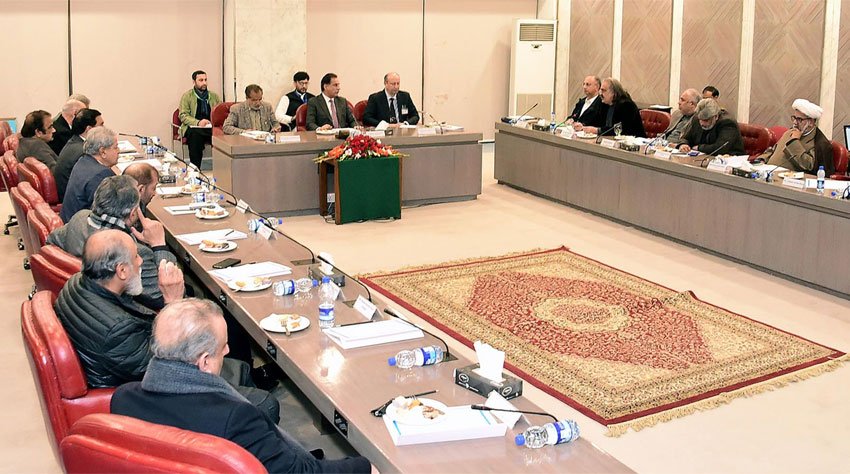
Govt-PTI First Round of Talks: What Happened Before the October 4 March
Ahead of October 4 March Pakistan’s politics got a little busier this week. The government and the opposition finally sat down together, and the first round of talks is now over. There is no deal yet, but there is also no walkout. Both sides said they would meet again. In this article, I’ll walk you through what happened, who was in the room, what each side wants, and what could happen next. I’ll keep it simple, so you can follow even if you don’t read political news every day. I wrote this on October 2, 2026. This story moves fast, so please check a trusted news source for the newest updates. What Does It Mean When Govt-PTI First Round of Talks Ends Ahead of October 4 March? Let’s start with the basics. The government and the opposition ended their first round of talks on Friday without announcing an agreement, and they planned to meet again at 2 p.m. on Saturday. That is the short version. Think of it like two neighbors arguing over a fence. The first chat doesn’t fix the problem. But if they agree to talk again tomorrow, that is a good sign. Nobody slammed the door. The talks matter because of the date on the calendar. The opposition party Pakistan Tehreek-e-Insaf (PTI) is due to begin a march demanding the release of jailed former prime minister Imran Khan. The government wants to stop the march from turning into a showdown. PTI wants its demands heard first. So this meeting was really about timing. Where and How Long The first round was held in the National Assembly speaker’s chamber and lasted a little over an hour. Using the speaker’s chamber was a deliberate choice. It sits inside Parliament House, which gives the meeting a formal, official feel. It says, “This is politics, not a street fight.” The Mood in the Room PTI chairman Gohar Ali Khan said the talks took place in a cordial atmosphere. That word, cordial, matters. In a tense moment like this, a calm tone is a small win. It doesn’t solve anything by itself. But it keeps the door open for round two. Who Sat at the Table Talks are only as strong as the people in them. So let’s look at who showed up. The Government Team The government side included Interior Minister Mohsin Naqvi, Rana Sanaullah (the Prime Minister’s adviser on political affairs), Minister of State for Interior Talal Chaudhry, and Pakistan Peoples Party (PPP) Senator Sherry Rehman. Notice the mix. You have the interior minister, who deals with security. You have Rana Sanaullah, who is known as a hands-on political negotiator. And you have a PPP senator, which shows that the ruling coalition is speaking with more than one voice. The PTI Team The six-member opposition team included PTI chairman Barrister Gohar Ali Khan, Senate Opposition Leader Allama Raja Nasir Abbas, and PTI leaders Asad Qaiser, Salman Akram Raja, Amir Dogar and Haleem Adil Sheikh. That is a mix of party insiders, former parliament figures and lawyers. These are people who know how to speak in a formal setting. The Achakzai Twist Here is a part many people missed. PTI had to reconstitute its delegation after Mahmood Khan Achakzai, chief of the Tehreek-e-Tahafuz-e-Ayin-e-Pakistan (TTAP), refused to attend at the speaker’s chamber and said he would join if the talks were held at a neutral location. So even before the first handshake, there was a small disagreement about the venue. PTI chose to move ahead with a new team. Later, opposition leaders met Achakzai at his residence to review the first round and plan their next steps. That tells us the opposition is trying to stay connected, even with some differences inside it. What PTI Is Asking For PTI went into the room with a list. Let’s break it down in plain words. Imran Khan’s Release This is the headline demand. The PTI delegation called for the release of party founder Imran Khan, along with a medical examination and other relief measures. The march itself is built around this demand. For PTI supporters, nothing else is as important. Release of Other Leaders PTI also asked for the release of Imran Khan’s sisters and of arrested members of the provincial and national assemblies. This widens the ask from one person to many. It shows PTI is trying to frame the issue as a bigger political problem, not just one jailed leader. “Our Demands Are Very Simple” PTI leaders have said their demands are simple. Whether the government agrees is another story. To one side, a demand can sound simple. To the other, it can sound impossible. Court cases, jail rules and political deals all get tangled together, and that is what makes the next steps so tricky. What the Government Wants Now let’s flip the table and see what the government brought. Call Off the March The government side urged PTI to withdraw its call for the October 4 march. That is its main goal. It wants the talks to replace the protest, not run alongside it. The PPP has taken an even firmer line. A PPP leader said party chairman Bilawal Bhutto-Zardari had made the party’s position clear: PTI should call off the march unconditionally, not just postpone it. The word “unconditionally” is the sticking point. PTI has already postponed once, and it does not want to give up its main pressure tool for free. The Security Angle Security is a big part of the government’s argument. Interior Minister Mohsin Naqvi briefed the participants on the security and terrorism situation in Khyber Pakhtunkhwa. The government’s message is simple: with militant violence on the rise, a huge march is risky. Reuters-style reports describe the same tension. The talks come amid heightened political tensions over the march, governance, and worsening militant violence in Khyber Pakhtunkhwa, the province PTI governs. Why the Talks Ended Without a Deal So why didn’t they finish in one day? Honestly, that was never likely. One meeting of an