

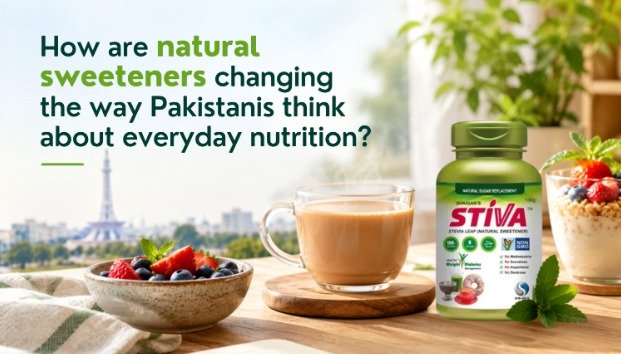
How are natural sweeteners changing the way Pakistanis think about everyday nutrition?
Do you know how much sugar you put in your tea and coffee every day? The number is higher than expected when every cup is added up. We most probably start the day with morning chai. Then we keep on drinking tea and coffee at work to keep our energy levels up and stay focused throughout the day. The WHO and the Government of Pakistan have announced that 34.5 million individuals in Pakistan are suffering from diabetes. This means that one in three adults in Pakistan has diabetes. However, despite this increased concern for health, people’s perception of their regular food choices is also shifting. The new generation is becoming more health-conscious. They have greater access to information. This is encouraging them to look more closely at what goes into their everyday meal. They are also becoming more interested in natural and healthier alternatives. It’s no longer just about keeping energy levels up but also about making healthier choices for everyday meals. This shift pushes them to move beyond conventional sugar and consider natural sweeteners. It also encourages them to integrate sweetness in our normal activities that fit better within a balanced daily diet. What Are Natural Sweeteners? When we hear the word natural sweeteners, it sounds straightforward. Sweeteners that are derived from natural sources and are a healthier alternative to normal sugar. But once we start looking at products in the market, things become vague. Many products are labelled as natural, plant-based, low-calorie, and also sugar-free. But the main issue is that some of them add artificial additives. This is where the confusion starts. If a product says “natural,” does that automatically mean the sweetener itself is natural? So, what exactly is a natural sweetener? In simple terms, natural sweeteners are sweetening ingredients that come from natural sources such as plants and other naturally occurring sources. These sweeteners have little or no calories. So they don’t impact blood sugar levels and fulfil the craving without compromising health. Stevia is one of the most common examples. It is a natural sweetener that comes from the leaves of the plant Stevia rebaudiana. Why are natural sweeteners becoming part of our everyday nutrition? Natural sweeteners have evolved beyond being only an alternative choice for health-conscious customers. They are a part of the thinking of everyday nutrition across the world, including Pakistan. This is more than a simple sugar substitution. It also reflects changing consumer values, scientific progress, and cultural change. Calories and Energy Balance Calories are one of the clearest differences between traditional sugar and many alternative natural sweeteners. Table sugar provides approximately 4 calories per gram. For instance, if a person drinks 2–3 cups of tea or coffee each day and adds 1–2 teaspoons of sugar per cup. This contributes a surprisingly large amount of extra energy over time. With 3 cups a day, that’s around 96 calories from sugar alone, which is nearly 100 extra calories daily. That adds up to around 700 extra calories each week. So, if you don’t burn them through physical activity and adjust your diet, this leads to severe health problems. The Psychology of Sugar Sugar is not just calories. The brain’s reward system responds to sweet sensations over time, shaping our choices for food. Therefore, daily habits such as drinking sweetened chai, eating midday snacks, and eating desserts reinforce a liking for sweetness. Chai is very much related to social and family traditions in Pakistan. So cutting down on sugar is not only a nutritional choice; it is a change in a familiar behaviour. We need a healthier sweetener alternative like Stevia. Biochemical Benefits Beyond Sweetness Stevia extract comes from the leaves of the plant Stevia rebaudiana. It has sweet substances called steviol glycosides. These molecules are intensely sweet, yet contain relatively little energy and have less influence on blood glucose than sucrose. They are more sweeter than sugar, so you only need small amounts to get the same level of sweetness. This makes stevia one of the best sugar alternatives. But it should be treated as one dietary option rather than a treatment for diabetes and other health conditions. Glycemic Control and Diabetes Management Unlike sugar, steviol glycosides provide very few calories at the levels normally used for sweetness. So they have little effect on glucose intake. This makes stevia significant for the reduction of added sugar in the diet, particularly for those who need to regulate their carbohydrate consumption and blood glucose. There has been several clinical studies on stevia for postprandial blood glucose, insulin response, and HbA1c with evidence of possible advantages for some measures of blood sugar. However, stevia is a sweetener, not a diabetes treatment, and its role is best understood as part of a broader approach to glycemic management. How does Stiva fit into daily life? Changing everyday eating habits does not always mean giving up on your favourite foods and drinks. Sweetness is part of everyday routines. Choosing an authentic natural sweetener is one small change that you can fit into your life. Therefore, Shaigan launched Stiva. It is a stevia-based, zero-calorie sweetener from Shaigan Healthcare. It is an alternative to conventional table sugar. It is made without artificial additives such as maltodextrin, sucralose, aspartame, and dextrose. This gives consumers an option for reducing regular sugar while still adding sweetness to everyday drinks and recipes. One of the main advantages of Stiva is that it has zero calories and convenient formats. Unlike products available in only one form. Stiva comes in sachets, jars and tablets. This allows consumers to choose according to how they use sweeteners. The sachets are useful for individual cups of tea or coffee and are easy to carry to work or while travelling. The 130g jar is more suitable for regular household use, including drinks and homemade recipes, while the 100-tablet dispenser provides a compact option for daily beverages. Conclusion For the younger generation, sweetness is not only about gratifying a hunger. They are also paying more attention to how much sugar