

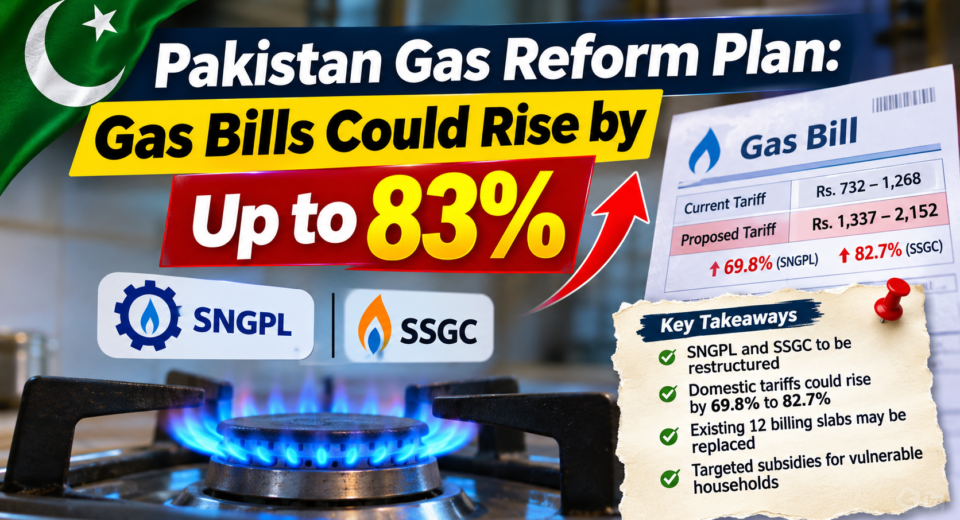
Pakistan Gas Reform Plan: Gas Bills Could Rise by Up to 83%
The federal government has prepared a major Pakistan Gas Company Reform Plan that could change the country’s natural gas supply and pricing system. Under the proposed framework, the government plans to divide the two existing Sui gas companies into six to eight smaller entities. The reform aims to improve gas distribution, encourage market competition, reduce financial losses and attract new investment. However, millions of domestic consumers could face higher gas tariffs if the government implements the proposed pricing changes. The Petroleum Division has submitted the framework to Prime Minister Shehbaz Sharif for initial approval. What Is the Pakistan Gas Company Reform Plan? The government wants to restructure Pakistan’s two major natural gas companies: Currently, these companies perform several functions within the gas supply system. The proposed reform would divide these responsibilities among separate businesses. The new companies would handle gas transportation, distribution and sales independently. This separation could make it easier for other suppliers to enter the market. The government hopes that a more competitive system will improve operational efficiency and strengthen the country’s energy sector. Why Is Pakistan Restructuring Its Gas Companies? Pakistan’s natural gas sector faces several financial and operational challenges. These problems place pressure on both energy companies and consumers. The major challenges include accumulated debt, gas losses, ageing infrastructure, supply shortages and financial pressure on residential gas services. Separating different business operations could help the government identify where losses occur and determine the actual cost of providing gas to different consumers. However, restructuring alone may not resolve every problem. The success of the reforms will depend on effective management, fair pricing and strong regulatory oversight. How Much Could Gas Prices Increase in Pakistan? Household gas prices are among the biggest concerns surrounding the proposed reforms. According to financial projections based on FY2025 accounts, residential gas supply businesses may require significant tariff increases to cover their costs. Proposed domestic gas tariff increases Projected average tariffs in rupees per thousand cubic feet (MCF) Source: Financial projections reported on November 24, 2026. These are not approved consumer tariffs. Gas company Existing average tariff Projected tariff Increase SNGPL Rs. 1,268 Rs. 2,152 69.8% SSGC Rs. 732 Rs. 1,337 82.7% These figures represent estimated average tariff changes required to cover residential supply costs. They do not mean that every household will experience the same percentage increase in its monthly gas bill. The proposed gas price increases have not received final approval. Government Plans to Replace Existing Gas Billing Slabs Another important part of the reform is the proposed removal of the existing 12 domestic gas tariff slabs. The government is considering a single tariff structure for residential consumers. It also proposes financial assistance for vulnerable households through targeted subsidies. A single tariff could simplify gas pricing. However, its impact would depend on the final rate and how the government distributes financial assistance. Families currently benefiting from lower consumption-based rates may face additional financial pressure without adequate subsidies. The government has not yet announced the final eligibility requirements for such assistance. Pakistan’s Gas Circular Debt Exceeds Rs. 3 Trillion The country’s growing gas circular debt is another major reason behind the restructuring proposal. The government plans to transfer more than Rs. 3 trillion in accumulated gas sector debt to a separate financial entity known as a Special Purpose Vehicle (SPV). Under the proposed arrangement, a surcharge on gas tariffs would help finance debt repayments. For consumers, this could create an additional cost on future gas bills. Managing circular debt is important because unpaid financial obligations can limit investment in infrastructure and affect the ability of energy companies to maintain reliable services. What Does the Gas Reform Plan Mean for Pakistani Households? The proposed gas sector reforms could affect household budgets in several ways. Higher Monthly Gas Bills An increase in domestic gas tariffs could raise the cost of cooking, heating water and using gas heaters. Families with limited incomes may find it difficult to manage these additional expenses alongside electricity bills, food prices and transportation costs. Changes in Protected Consumer Benefits Consumers who currently receive lower gas rates could experience changes under the proposed billing structure. The financial impact would depend on the final subsidy policy. Possible Improvements in Gas Supply Separating gas transportation and distribution responsibilities could improve accountability and encourage investment in infrastructure. However, the restructuring proposal does not guarantee an immediate end to gas shortages, low pressure or winter supply interruptions. Changes in Billing and Customer Services Consumers may eventually experience changes in billing systems, complaint procedures and customer support if new gas companies take over residential services. The authorities have not yet announced detailed customer transition arrangements. Could Industrial and Commercial Gas Prices Decrease? While domestic consumers could face higher tariffs, businesses may benefit from greater competition. Financial projections suggest that competitive gas prices could decline by around 5.4% for SNGPL and 7.4% for SSGC under the proposed framework. Lower energy costs could help manufacturers reduce production expenses and improve business competitiveness. Small businesses, restaurants and industrial units could also benefit if the new system provides more affordable and reliable gas. However, these potential reductions remain projections rather than confirmed price cuts. When Will Pakistan Implement the Gas Company Reform Plan? The government is targeting the fourth quarter of 2027 to begin implementation of the proposed gas restructuring framework. Before implementation, the authorities must address legal, financial, constitutional and regulatory matters. The final structure of the new companies, future tariff rates and consumer protection measures may change during the approval process. Therefore, households should not assume that the proposed gas price increases will appear on their next monthly bills. How Can Consumers Reduce Their Monthly Gas Bills? Although consumers cannot control government gas prices, they can reduce unnecessary consumption through simple everyday practices. These practices can help families manage energy expenses, particularly during the winter months. Frequently Asked Questions Has the government increased gas prices in Pakistan today? The restructuring proposal reported on November 24, 2026, does not itself introduce an approved gas price increase. Consumers should