
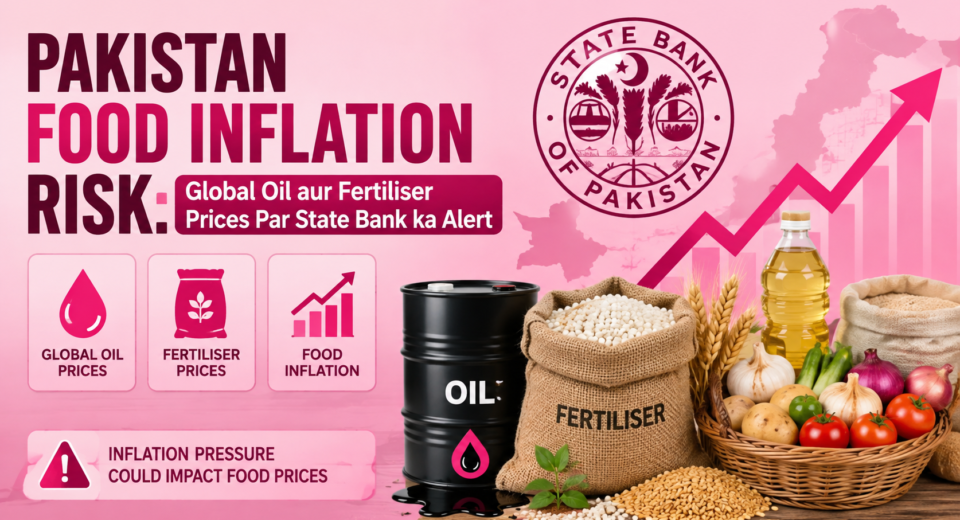
Pakistan Food Inflation Risk: Global Oil aur Fertiliser Prices Par State Bank ka Alert
Agar aap bhi grocery bag utha kar ghar aate waqt sochte hain ke “yaar pichle mahine se yeh sab mehnga kaise ho gaya,” to aap akele nahi hain. State Bank of Pakistan (SBP) ne recently ek warning jari ki hai jo seedha aap aur mere kitchen budget se juri hui hai. Bank ki biannual Monetary Policy Report ke mutabiq, global food prices ke aane wale mahinon mein expected se zyada barhne ka khatra hai, jiski wajah higher energy aur fertiliser costs, supply disruptions aur El Niño ka barhta hua risk hai. Yeh sirf ek economic term nahi, balke seedha rozana ki roti, sabzi aur cooking oil ke bill par asar dalne wali baat hai. Asal Masla Kya Hai? Baat simple hai lekin connections thora tangled hain. Jab international market mein crude oil mehnga hota hai, to uska direct asar fertiliser production par parta hai, kyunke natural gas aur oil dono hi fertiliser banane ke bunyadi ingredients hain. SBP ki report ke mutabiq, higher oil prices ne fertiliser prices ko upar dhakel diya hai, jisne agricultural sector ko seedha nuksan pohnchaya hai. Aur jab kissan ko fertiliser mehnga milega, to natural si baat hai wo apni crop ki cost recover karne ke liye price barhayega — aur yeh burden aakhir kaar aam consumer tak pohnchta hai. Sabse fiqar wali baat yeh hai ke Pakistan pehle hi is pressure mein hai. Report kehti hai ke taqreeban 46 fisad aabadi pehle hi hunger-like conditions ka samna kar rahi hai, aur ispar agar food inflation aur barh jaye to situation aur bigar sakti hai. SBP ne yeh bhi khadsha zahir kiya ke agriculture commodity prices FY 2026-27 ki pehli half mein elevated reh sakti hain, jiski wajah gas prices ka barhna aur El Niño ka risk hai. Global Growth Bhi Slow Ho Rahi Hai Yeh sirf Pakistan ka masla nahi. SBP ne apni report mein yeh bhi kaha ke global economic outlook January ke baad se aur uncertain ho gaya hai, aur IMF ne 2026 ke liye global GDP growth ka projection neeche kar diya hai. Yeh downward revision zyada tar un mulkon ki wajah se hai jo energy import karte hain, jahan higher energy prices ne real incomes ko kam kiya aur economic activity ko dheema kiya hai. Kuch Numbers Jo Tasveer Saaf Karte Hain SBP ke Recent Projections – Ek Nazar Mein Indicator SBP Projection / Data Average Inflation FY27 5.5% – 7.5% Real GDP Growth FY27 3.5% – 4.5% Current Account Deficit FY27 0% – 1% of GDP Population Facing Hunger-like Conditions ~46% Yeh numbers batate hain ke SBP overall cautiously optimistic hai, lekin food aur energy prices ka risk factor abhi bhi table par hai. Woh Factors Jo Food Inflation Ko Hawa De Rahe Hain Risk Factor Asar Global Oil Prices Transport aur fertiliser production cost barhati hain Fertiliser Costs Agricultural input expensive ho jate hain El Niño Risk Crop yield par negative asar, supply kam hoti hai Middle East Tensions Freight aur insurance costs elevated rehte hain Water Scarcity Purani irrigation system, technology ki kami Ab Aage Kya? SBP ne khud maana hai ke agar global fuel prices normalize hote hain aur domestic demand moderate rehti hai, to inflation gradually target range ke qareeb aa sakti hai. Lekin abhi ke liye, consumers ko thora cautious rehna chahiye — especially jab baat food budgeting ki ho. Policy makers ke liye bhi yeh ek reminder hai ke sirf monetary tools kaafi nahi, balke agriculture sector mein structural reforms — jaise behtar irrigation aur fertiliser subsidy planning — bhi utni hi zaroori hain. End mein, yeh alert humein yeh yaad dilata hai ke Pakistan ki economy global commodity cycles se kitni closely juri hui hai. Oil ka barrel kahin door kisi market mein mehnga hota hai, aur uska asar seedha humare ghar ke chulhe tak pohnch jata hai. Is liye agle kuch mahinon mein grocery prices par nazar rakhna aur apna budget thora flexible rakhna samajhdari hogi.