
Punjab Extends Teacher Interns' Service Education

Punjab Extends Teacher Interns’ Service Until May 2027, Supporting 45,000 Educators

If you’ve been following education news in Punjab, you’ve probably heard the buzz. The Punjab government just made a big move that affects thousands of teachers across the province. School Teacher Interns, often called STIs, will now keep their jobs until May 31, 2027. This decision brings relief to a huge number of educators who help keep classrooms running every single day. Let’s break down what this means, why it matters, and how it affects everyone involved. What’s Really Happening in Punjab’s Schools The Punjab School Education Department made an official announcement in late September 2026. According to the notification, the government has decided to continue the services of already engaged School Teacher Interns through fresh agreements, effective from August 24, 2026, to May 31, 2027. This isn’t just a small tweak. It’s a full extension that gives thousands of teachers job security for the next several months. On top of that, the department has also ordered the recruitment of new interns against vacant positions, so schools that need more staff will finally get help too. You might wonder why this matters so much. Well, think about it this way. Schools depend on consistent staffing. When contracts expire without a plan, students lose teachers mid-session, and that hurts learning. This extension avoids that mess entirely. Why This Extension Matters So Much Teaching interns aren’t just filling gaps. They’re often the backbone of daily classroom instruction, especially in areas where full-time teacher positions remain unfilled. Losing them suddenly would create chaos in schools that are already stretched thin. By extending their service, the Punjab government protects continuity. Kids stay with teachers they already know. Schools don’t scramble to find replacements. And the interns themselves get some breathing room instead of worrying about their next paycheck. There’s also a financial upside for interns. The government has approved an additional monthly allowance of Rs15,000, which is a solid boost considering how much the cost of living has climbed recently. This extra support shows that officials recognize the hard work these educators put in every day. Key Dates You Need to Know Timelines can get confusing when different reports mention slightly different start dates. Here’s a simple breakdown to keep things clear. Detail Information New service period August 24, 2026 to May 31, 2027 Alternate reported start date September 16, 2026 Interns covered Phase One and Phase Two STIs Program name School Teacher Internship (STI) Program, 2024 Notification issued September 25, 2026 As you can see, the extension covers a long stretch of the academic year. That gives both teachers and schools enough time to plan ahead without worrying about sudden changes. A Fresh Deal With Better Pay Table 2: New Benefits for School Teacher Interns Benefit Details Monthly allowance increase Rs15,000 additional payment Eligibility Interns whose contracts weren’t terminated Exclusion Those who resigned or left before May 31, 2026 Contract type Fresh agreements issued by district authorities This table makes it pretty clear. Not every intern automatically qualifies. If someone left their post early or resigned before the cutoff date, they miss out on the extension. It’s a fair system that rewards those who stayed committed to their schools. Who Actually Qualifies So who gets to enjoy this extension? Based on the official notifications, interns already appointed under Phase One and Phase Two can continue their internships, and those whose previous period ended on May 31, 2026, will receive new contracts. However, there’s a catch. Interns who resigned or left their positions before May 31, 2026, won’t qualify for the extension. This rule makes sense when you think about it. The government wants to reward interns who stuck around and kept doing their jobs, not those who already moved on. If you’re an intern reading this and wondering about your own status, the safest move is to check directly with your District Education Authority. They’re the ones handling the paperwork and issuing fresh contracts on the ground. New Hiring Opens Doors for More Educators This announcement isn’t only about extending old contracts. It also opens the door for new teachers to join the program. District authorities have been directed to start the recruitment process for new interns against vacant slots, following the STI Program criteria and district-wise allocations. This is great news if you’re someone hoping to break into teaching. Vacant seats mean fresh opportunities, especially in districts that need more staff. The government seems serious about filling every gap rather than leaving schools understaffed. Officials have also asked Chief Executive Officers of District Education Authorities to provide updated records of currently serving interns, which should help keep the whole process transparent and organized. What This Means for Students At the end of the day, all these policy details boil down to one simple thing: better outcomes for students. When teachers stay in their positions longer, students build stronger relationships with them. Lessons flow more smoothly. Nobody has to adjust to a brand-new teacher halfway through the year. Plus, with new hiring underway, understaffed schools should start seeing relief soon. That means smaller class sizes in some areas and more attention for each student. It’s a win for everyone involved, from the youngest first-grader to the most experienced school administrator. Challenges That Still Need Attention Of course, no policy is perfect. Extending contracts is a great short-term fix, but it doesn’t solve the bigger question of permanent teaching positions. Many interns still work without the same job security or benefits that full-time teachers enjoy. There’s also the matter of consistency across reports. Some sources mention a start date of August 24, while others say September 16. This kind of confusion can create uncertainty for interns trying to understand their exact status. Clear, unified communication from the department would go a long way in easing these worries. Another point worth watching is how the recruitment for vacant slots plays out. Announcing new hiring is one thing, but actually filling those seats quickly and fairly is another challenge altogether. Parents and students will be


Meta's Muse AI Agent and Smart Glasses: Inside Mark Zuckerberg's Big Bet on Personal AI Tech

Meta’s Muse AI Agent and Smart Glasses: Inside Mark Zuckerberg’s Big Bet on Personal AI

Imagine wearing a pair of glasses that not only look stylish but also think, plan, and act for you. That is the future Meta wants to build. At its yearly Connect event, held on September 23, 2026, Meta made its Muse AI agent the star of the show, alongside new AI glasses and a small gadget called Muse Charm. This wasn’t just another product launch. It was a clear sign of where Mark Zuckerberg wants to take his company next: from social media and the metaverse to personal AI that lives with you all day long. In this article, we’ll break down what Meta Muse is, how it connects to AI glasses, what Muse Charm does, and why this matters for anyone interested in the future of wearable AI technology. What Is Meta Muse? Meta Muse is a personal AI assistant built to help you manage daily tasks. It can use the internet, book travel, make phone calls, send emails, and even complete purchases for you. Before doing anything sensitive, like spending money, Muse asks for your permission first. Right now, you can use Muse through its own app on iPhone, Android, and Mac, or inside WhatsApp chats. Since its release earlier this month, the app quickly climbed to the number one spot on both the Apple App Store and Google Play Store, showing just how much interest people already have in this kind of personal AI assistant. Muse is not meant to be a simple chatbot. It is built to act like a digital helper who works in the background while you go about your day. Meta Connect 2026: The Big Announcement At Meta Connect 2026, held in Menlo Park, California, Meta’s leadership team focused almost entirely on Muse. Mark Zuckerberg and Meta’s Chief AI Officer, Alexandr Wang, explained that Muse should be able to run a small business for you or finish work tasks even after you step away from your computer. This event also introduced several new products built around the same idea: making AI a constant part of daily life, not something you only open occasionally. The main announcements included: Together, these products show Meta trying to build an entire ecosystem around one idea: an AI agent that follows you everywhere, whether you are at your desk, walking outside, or relaxing at home. Muse Charm: A Tiny Gadget With Big Ambitions One of the most talked-about announcements was Muse Charm, a palm-sized device designed only for talking to Muse. It has a small OLED touchscreen, about two inches wide, showing a customizable character that represents your personal AI agent. You can change how this character looks, what it wears, and even how its voice sounds. According to reports, the device was created by Meta’s new design lab, led by Alan Dye, who was previously Apple’s interface design chief. This detail alone shows how seriously Meta is taking the design and feel of this product, not just its technology. Mark Zuckerberg described the Charm as the fastest way to talk to Muse when you are not wearing your glasses. It is small enough to carry on a keychain, making it easy to pull out whenever you need quick help. Meta plans to start shipping Muse Charm before the end of the year, positioning it as an entry point into the larger world of Meta’s personal AI assistant products. How Muse Will Work on AI Glasses The most exciting part of this announcement, at least for wearable AI technology fans, is Meta’s plan to bring Muse directly into its AI glasses. According to Meta, this will let people talk to their glasses hands-free, simply by saying their agent’s name out loud. Some of the everyday use cases Meta has shared include: Meta also introduced upgrades like Dolby Atmos audio capture for glasses, along with improved visual understanding, so your glasses can give richer answers about whatever you are looking at in real time. This is where Zuckerberg’s long-term thinking becomes clear. He does not see AI as something that lives only inside a phone screen. He sees it as something that should follow your eyes, your ears, and your daily movements, almost becoming an invisible layer over your everyday life. Mark Zuckerberg’s Vision Behind Muse To understand why Meta is investing so heavily in Muse, it helps to look at how Zuckerberg has framed this shift. For years, Meta’s biggest bet was the metaverse and virtual reality. Now, the company’s main focus has clearly moved toward AI agents that can act on your behalf. Zuckerberg has described this new direction as building AI that works quietly in the background, handling tasks so you don’t have to think about them one by one. Instead of opening five different apps to do five different things, the idea is that one AI agent, reachable through your voice, your glasses, or a small pocket device, can manage most of it for you. This vision fits into a bigger pattern happening across the tech industry right now. Companies like OpenAI and Anthropic are also building AI agents that can complete tasks independently. Zuckerberg’s approach stands out because he is connecting this idea directly to hardware, glasses, a keychain gadget, and even VR headsets, rather than keeping it limited to an app or website. Privacy and Trust: The Big Question Whenever a company asks you to trust an AI agent with your calendar, your messages, and even your payments, privacy becomes a major concern. Meta seems aware of this. The company announced a new feature called Private Processing, designed to let AI experiences run on your glasses without anyone, including Meta itself, seeing your personal data. However, many details are still unclear. It is not fully explained which features this privacy protection covers, or how it applies when outside companies are involved in completing a task. This matters because Muse depends on partnerships with other services, such as retailers and payment platforms, to actually complete real-world actions like shopping or paying bills. In

Pakistan petrol price today News

Petrol Price in Pakistan Rises by Rs2.02 Per Litre | New Fuel Prices

If you filled up your tank this week, you probably noticed the price ticked up a bit. Yes, it’s true. The government has raised the petrol price in Pakistan by Rs2.02 per litre, and if you’re wondering what this means for your wallet, your bike, or your daily commute, you’re in the right place. Let’s break it all down in simple terms. What Changed This Time The Oil and Gas Regulatory Authority, known as OGRA, announced fresh fuel prices for the period from September 26 to September 28, 2026. Under this update, petrol has gone up by Rs2.02 per litre. The new price now stands at Rs391.30 per litre, compared to the earlier rate of Rs389.28. It’s not a huge jump, but every rupee counts when you’re filling a full tank every week. Here’s the interesting part. While petrol went up, diesel actually went down. High-speed diesel, or HSD, dropped by Rs3.59 per litre, bringing it to Rs408.53 per litre from its previous price of Rs412.12. So this update is a mixed bag. Bike riders and car owners feel a small pinch, while truck owners and diesel users get a bit of breathing room. Why Petrol Went Up While Diesel Went Down You might be asking yourself, how can one fuel rise and the other fall at the same time? The answer lies in international oil markets. Pakistan doesn’t produce enough oil on its own, so it depends heavily on imports. The price we pay is closely tied to global oil rates, shipping costs, and currency movements. According to reports, the import premium and freight charges for petrol went up, climbing to around USD 16.36 per barrel from the earlier USD 14.12. This pushed the petrol price higher. On the flip side, the average international price of diesel dropped during the same week, which is why diesel became cheaper for us. OGRA now calculates these prices based on a seven-day rolling average of international rates. This system was introduced to make pricing more responsive to what’s happening in the global market. Since July, Pakistan has shifted from weekly price reviews to daily ones, mainly because oil markets have been unstable due to ongoing tension between the United States and Iran. A Quick Look at the Numbers Sometimes numbers make more sense in a simple table. Here’s a quick summary of the latest fuel price changes. Fuel Type Old Price (Rs/litre) New Price (Rs/litre) Change Petrol 389.28 391.30 +Rs2.02 High-Speed Diesel 412.12 408.53 -Rs3.59 These prices are valid from September 26 to September 28, 2026, and they can change again once this window closes, since OGRA now reviews rates daily. How This Affects Everyday People Petrol isn’t just fuel. It’s part of daily life for millions of Pakistanis. Motorcycles, rickshaws, and small cars mostly run on petrol, and these are the vehicles most common households and small business owners depend on. So when petrol prices rise, it directly affects people from the middle and lower-middle class the most. Let’s put it in perspective. If you buy 10 litres of petrol, you’ll now pay about Rs20.20 more than before. For a 20-litre fill-up, that adds up to around Rs40.40 extra. It doesn’t sound like a lot at first glance, but if you fill your tank a few times a month, it slowly adds to your monthly budget. Diesel, on the other hand, powers buses, trucks, tractors, and heavy machinery. It’s the backbone of transport and agriculture in Pakistan. Since diesel prices went down this time, it might slightly ease transport costs and the price of goods that get moved across the country, though the impact usually takes a little time to show up in the market. The Petrol Relief Scheme Explained Here’s some good news for certain groups of people. The government has a Petrol Relief Scheme in place to help ease the burden of rising fuel costs. Under this scheme, owners of motorcycles and Cingchi rickshaws get a discount of Rs100 per litre on up to 20 litres of petrol every month. Owners of small cars, specifically those with engines up to 800cc, also get a discount on up to 30 litres of petrol per month. This scheme is meant to support the people who rely most on two-wheelers and small vehicles for their everyday travel and work. According to reports, this relief plan covers close to 11.8 million people across Pakistan. That includes around 10 million two-wheeler riders and 800,000 three-wheeler owners, along with about 1 million owners of small cars. For a lot of families, this discount can genuinely help balance out the sting of a petrol price hike. The Bigger Picture Behind Fuel Pricing Why Fuel Prices Keep Changing So Often If you feel like fuel prices in Pakistan change more often these days, you’re not imagining things. Since renewed tensions broke out between the US and Iran back in February, oil markets around the world have been shaky. Pakistan’s petrol price had actually touched a peak of Rs520.35 per litre in April, before gradually coming down over the following months. To handle this kind of volatility better, the government moved away from the old weekly pricing model. Now, OGRA publishes updated prices daily, which means consumers can see market changes reflected faster, whether prices go up or down. It’s a more transparent system, even if it means more frequent changes to keep track of. Along with pricing changes, the government also brought back some austerity measures earlier in September. These include shorter market hours, with businesses required to close by 9pm, and a 50 percent cut in fuel allocation for official government vehicles for the next three months. These steps are aimed at reducing overall fuel consumption during a period of high global oil prices. What This Means for Your Monthly Budget Fuel prices touch almost every part of daily spending, even things that seem unrelated to petrol or diesel. When fuel becomes costlier, transport fares often rise, and that pushes up the cost of moving

Petrol Price in Pakistan Today – Latest Petrol & Diesel Rates September 26, 2026 News

Petrol Price in Pakistan Today – Latest Petrol & Diesel Rates September 26, 2026

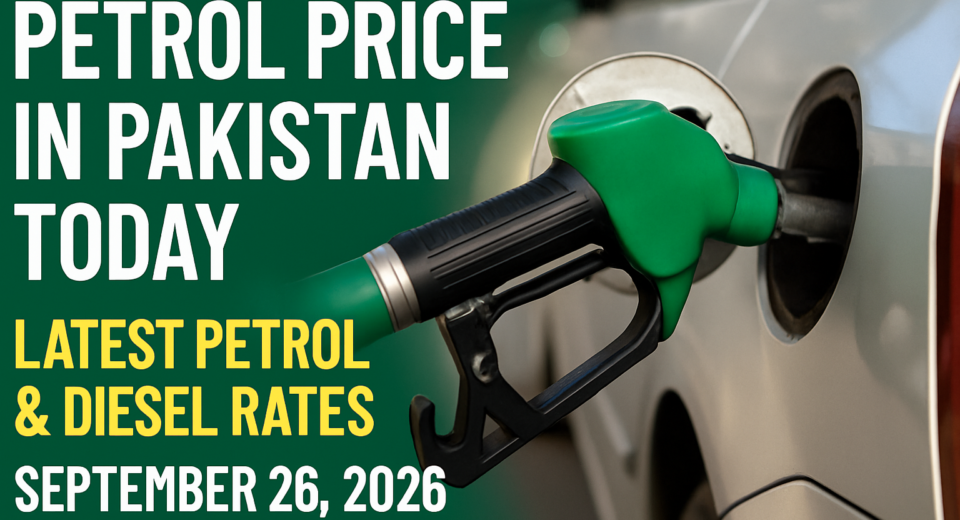
The petrol price in Pakistan today stands at Rs. 391.30 per litre, following a fresh increase announced by the government’s Petroleum Division. According to a press release issued by the Petroleum Division, the price of petrol has been increased by 2.02 rupees per litre and now stands at 391.30 rupees per litre. At the same time, the price of High Speed Diesel has been decreased by 3.59 rupees per litre to set it at 408.53 rupees per litre. These new rates took effect on September 26, 2026, and apply to petrol pumps across the country. This update matters for daily commuters, motorcycle riders, transporters, and businesses that depend on fuel for their operations. Even small changes in the petrol price today in Pakistan can affect transport fares, delivery costs, and household budgets over time. New Petrol and Diesel Prices Here is a quick summary of the latest petrol and diesel prices in Pakistan, effective from September 26, 2026: Product Previous Price (Rs/litre) New Price (Rs/litre) Change Petrol (Motor Spirit) 389.28 391.30 +2.02 High-Speed Diesel (HSD) 412.12 408.53 −3.59 These new rates apply from September 26 to September 28, since Pakistan now revises fuel prices daily, with Friday’s notified rates carrying over through the weekend. How Much Has the Petrol Price Changed? The new petrol price in Pakistan reflects a Rs 2.02 per litre increase compared to the previous rate. This is a relatively small adjustment compared to some earlier revisions this year. Diesel, on the other hand, moved in the opposite direction, becoming cheaper by Rs 3.59 per litre. This kind of split movement — petrol up, diesel down — is possible under the current pricing formula because petrol and diesel are priced separately, based on their own international benchmark costs, freight, and exchange-rate calculations. Looking at the bigger picture, petrol has risen from Rs266.17 per litre in March to over Rs390 per litre in September, an increase of nearly Rs124 per litre, or roughly 46.6%. This longer-term trend shows how much fuel costs have moved this year, largely tied to global oil markets and regional tensions. When Did the New Petrol Prices Take Effect? The revised rates came into force from September 26, 2026. Under Pakistan’s current pricing system, prices are reviewed daily, but Ogra will publish daily Platts reference prices from July 1, 2026, and rates notified on a Friday remain unchanged through Saturday and Sunday. That is why this update is described as covering September 26 to September 28. Why Did Petrol Prices Change in Pakistan? Fuel price revisions in Pakistan are tied to a formula that factors in several elements: Petroleum Minister Ali Pervaiz Malik has said the daily prices are calculated using a seven-day average of international market prices, in line with international practices. A slight increase in this rolling average for petrol, alongside a softer trend for diesel, explains why the two products moved in different directions this time. It’s worth noting that the petroleum levy cannot exceed the limit approved by the federal cabinet, and any change in the levy rate requires approval from the Finance Division, so levy changes are not an automatic or hidden factor — they follow a separate approval process. How Pakistan’s Petrol Pricing System Works Pakistan’s fuel pricing mechanism has changed more than once in 2026. The federal government announced in July 2026 that petroleum product prices would be determined daily, following renewed regional tensions after an exchange of strikes involving the United States and Iran. Since early 2026, the government had already been revising petroleum prices weekly, moving away from the earlier fortnightly system. Under the revised framework: This is why some readers may notice that the “new petrol price in Pakistan” for a Saturday is the same as the rate set the previous Friday. Role of OGRA and the Petroleum Division Two government bodies are central to how petrol rates are set and announced in Pakistan: Oil and Gas Regulatory Authority (OGRA): OGRA calculates ex-depot fuel prices using the pricing formula and publishes them. Petroleum Minister Ali Pervaiz Malik has said that the cabinet decided OGRA would determine petroleum prices on a daily basis, and that OGRA would publish the revised prices on its website every day. Petroleum Division (Ministry of Energy): The Petroleum Division issues the official notification confirming the new rates to the public, as seen in today’s announcement of the Rs 2.02 petrol increase and Rs 3.59 diesel cut. The government has stated that the new daily mechanism is part of a broader plan to gradually deregulate Pakistan’s petroleum sector, and officials have said the change is meant to make pricing more transparent and closely tied to real-time global market movements rather than to reduce or increase the public’s overall fuel burden. Impact of Petrol Prices on Transport and Consumers Fuel costs are a major input for transporters, and changes in the petrol price in Pakistan today can influence: The actual effect on transport fares and prices of goods depends on decisions made by transport unions, provincial transport authorities, and individual businesses, not on the fuel price change alone. Petrol Prices and Inflation in Pakistan Fuel costs are closely linked to inflation because petrol and diesel affect the cost of transporting goods, running machinery, and commuting to work. When fuel prices rise, transport and production costs can rise too, which sometimes feeds into the prices of everyday goods. Since diesel dropped this cycle while petrol rose only modestly, the overall inflationary pressure from this particular price update is likely to be limited compared to earlier, larger increases seen in 2026. However, the broader year-to-date rise in petrol prices remains a relevant factor when looking at transport and household cost trends. Readers wanting precise inflation figures should check official releases from the Pakistan Bureau of Statistics and the State Bank of Pakistan. Previous vs Current Petrol Prices Period Petrol (Rs/litre) HSD (Rs/litre) Previous rate (before Sept 26, 2026) 389.28 412.12 Current rate (from Sept 26, 2026) 391.30 408.53 Change +2.02 −3.59 The highest

Lahore Expands Citywide Greenery Landscaping

Lahore Expands Citywide Greenery and Landscaping Projects

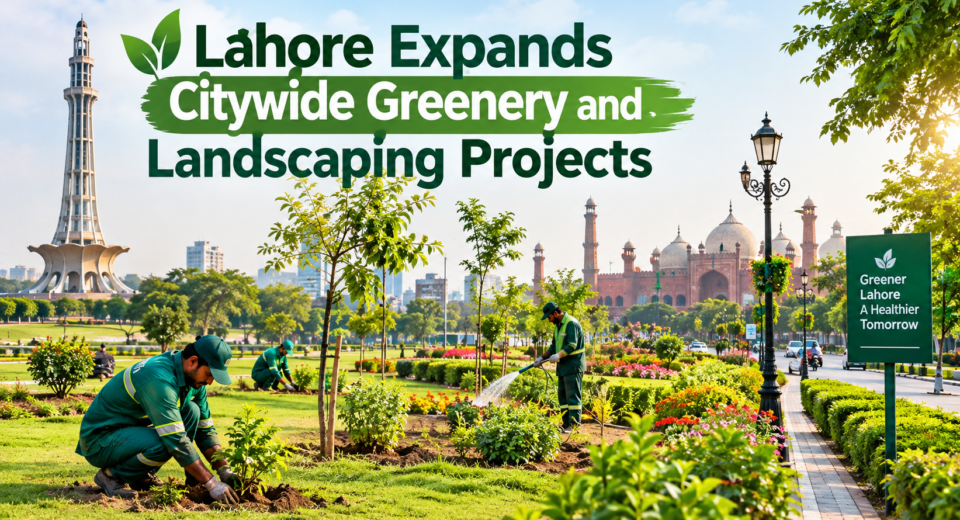
If you have driven around Lahore lately, you have probably noticed something new. Fresh saplings are lining the roads, flower beds are brightening the green belts, and old parks are getting a clean-up. This is not a coincidence. The city is pushing a big green plan, and it is moving fast. In this article, I walk you through what is happening, why it matters, and how you can be part of it. Why Lahore Needs More Green Space Right Now Lahore is one of the biggest cities in Pakistan, and it keeps growing. More people mean more homes, more cars, and more concrete. Trees and open ground have lost space for years. The result is easy to feel. Summers are hotter, the air gets heavy in winter, and smog has become a yearly worry. The Smog and Heat Problem Every winter, thick smog covers the city. Traffic fumes, factory smoke, and crop burning all add to it. Trees do not fix everything, but they help. Leaves catch dust, shade cools the ground, and roots hold the soil. Officials have said that planting trees is one of the most lasting ways to fight pollution. Most experts agree with that view. The Urban Heat Island Effect Concrete and asphalt soak up the sun all day and release heat at night. Scientists call this the urban heat island effect. A street with big trees can feel several degrees cooler than a bare one. Greener neighborhoods also use less electricity for cooling, which saves families real money. That is why greenery is now treated as basic city infrastructure, not just decoration. Lahore Expands Citywide Greenery and Landscaping Projects: What Is Changing on the Ground So what does the expansion actually look like? It is a mix of big forest-style plantations, road-side flower planting, park upgrades, and community drives. The Parks and Horticulture Authority, known as PHA, leads most of this work. It runs under a plan called the Green Lahore Vision, which was announced by the Punjab government. The idea is simple: more trees, better parks, and a cleaner look in every zone of the city. A Citywide Approach, Not a Single Project What I like about this effort is that it is spread out. Work is happening in many zones instead of one showpiece area. Raiwind Road, Canal Road, the drains in Shadman and Gulberg, and the Ravi riverbank all have active work. When green projects reach different parts of a city, more people benefit, not just those in rich areas. Planting Plus Maintenance Planting a tree takes one afternoon. Keeping it alive takes years. PHA has said it is giving equal attention to upkeep, such as watering, trimming, and protecting young plants. This matters because many past drives failed when saplings dried out in the summer. Good care is what turns a photo-op into a real forest. The Lungs of Lahore Project Along the Ravi One of the biggest efforts is the Lungs of Lahore project. As the name suggests, the aim is to give the city a large breathing space. The plan was reported to cover 450,000 plants, and PHA leaders have checked progress on site along the Ravi River. The work spreads across roughly 800 acres on both sides of the river. Why the Ravi Riverbank Makes Sense The riverbank has open land, easy access to water, and few buildings. That makes it a good spot for dense tree planting. Over time, a thick belt of trees here can filter dust, cool nearby areas, and give birds and small animals a home. It can also stop the land from being taken over by illegal building. Native Trees and Fast Growers Officials have said they are choosing native species that suit Punjab’s climate. This is smart. Local trees need less water, handle heat better, and fit the local wildlife. Fast-growing varieties are also in the mix, so the area can look like a young forest in just a few years rather than decades. Ring Road Forestation and Green Corridors Roads can be green too. The Ring Road Forestation Project is planned to cover about 112 kilometers around the city. Picture a long ribbon of trees wrapping the outer edge of Lahore. That ribbon can trap dust from heavy traffic, cut noise, and give drivers a calmer view. What a Green Corridor Does A green corridor is a strip of trees and plants along a road, canal, or rail line. It does three jobs at once. It cleans the air a little, it cools the surface, and it connects wildlife habitats that roads would otherwise cut apart. PHA leaders have also talked about planting along the Shahdara to Raiwind railway track, which would extend the same idea to rail routes. Earlier Plans Laid the Groundwork Talk of a green Ring Road is not brand new. An earlier plan to plant 100,000 trees along it was discussed in previous years, with talk of a public-private partnership and an outside audit. The latest push builds on that history and aims to go further. Lahore has seen big promises before, so steady follow-through will be the real test. Canal Road, Drains, and Roadside Beautification Not every project is a forest. Some are about making the city look better where people walk and drive every day. These smaller jobs add up and are easy for everyone to see. Flowering Plants on Canal Road In April 2026, PHA started a plantation drive along Canal Road. The plan covers about 10,000 flowering plants and trees from Thokar Niaz Baig to Jallo. Canal Road is one of the most loved drives in Lahore, so extra color there is a welcome change. Flowers also attract bees and butterflies, which helps the local ecosystem. Planting Along Shadman and Gulberg Drains Drains are often ugly, smelly, and ignored. Planting along the Shadman and Gulberg drains turns a neglected edge into a useful green strip. Officials said at the launch that this work is meant to help fight pollution and smog and

PTI protest postponement Politics

PTI Long March Update: September 27 Islamabad Protest Faces Possible Postponement

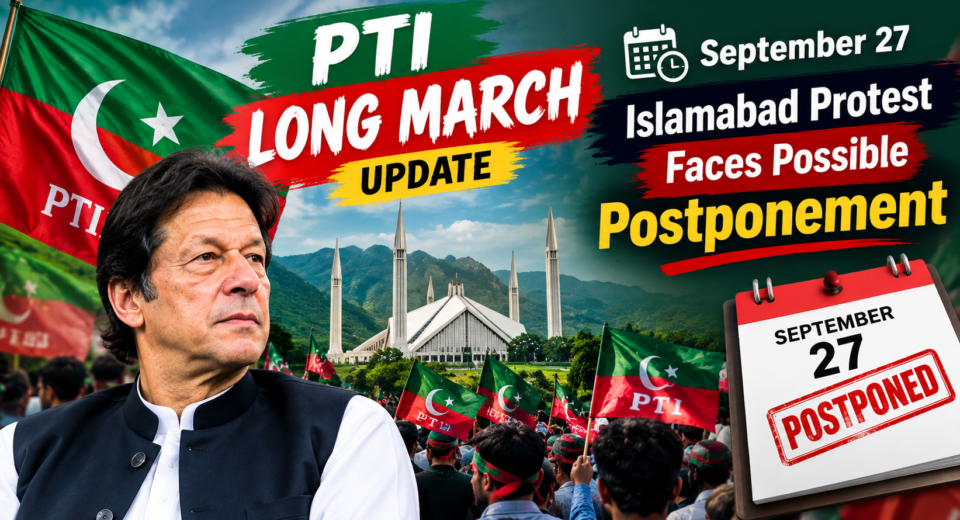
If you’ve been following Pakistani politics this week, you already know things are moving fast. The PTI long march, which was supposed to hit the streets of Islamabad on September 27, is now hanging in the balance. What started as a firm date has turned into a moving target, with party leaders, government officials, and thousands of workers all watching closely to see what happens next. Let me walk you through what’s actually going on, why the date keeps shifting, and what it means for you if you live in or near the capital. What’s Really Happening With PTI’s Big March Pakistan Tehreek-e-Insaf had big plans. The party announced weeks ago that it would march on Islamabad on September 27, and the goal was clear: press for the release of party founder Imran Khan, who remains behind bars at Adiala jail in Rawalpindi. Workers were told to gather supplies, bring food and water, and prepare for what could be a multi-day protest. But as the date got closer, things got complicated. The federal government tightened security across the capital, blocked major roads, and made it harder for large groups to move freely. That pushed PTI’s leadership into a tough spot. Do they stick to the original plan, or do they wait it out? From September 27 to October 4: The Sudden Shift Here’s the twist. On Friday, PTI’s political committee made the call to delay the march. Instead of September 27, the new plan has the march starting from Peshawar on October 4. Khyber Pakhtunkhwa Chief Minister Sohail Afridi is expected to make the formal announcement soon, since he’s been leading the charge on this from the KP side. One senior party leader explained the thinking behind the delay in a pretty blunt way. He said the goal was partly to wear down the federal government and law enforcement, since they had already spent so much money and effort sealing off the capital. In his words, PTI had already gotten something out of the standoff simply by forcing the government to react. So why not let them keep spending on security while PTI regroups? That said, not everyone in the party agrees this was the right move. Reports suggest that a majority of PTI leaders actually wanted to march on the original date. It took real internal debate before the committee settled on pushing things back. Why Imran Khan’s Release Sits at the Heart of This Protest You can’t talk about this march without talking about Imran Khan. His continued detention is the driving force behind almost everything PTI is doing right now. The party has framed the entire campaign around demanding his release, along with broader arguments about constitutional rights and political fairness. This isn’t just about one man, though. PTI has tied the march to a wider message about how the party and its supporters have been treated since Khan’s imprisonment. That’s why the protest has attracted so much attention, not just from PTI’s base but from other opposition groups too. Islamabad Turns Into a Fortress While PTI debated dates, the government wasn’t sitting still. Authorities ramped up security across Islamabad and much of Punjab. Rangers have been deployed, and that deployment has reportedly been authorized through October 5, which lines up almost exactly with PTI’s new timeline. Major routes leading into the capital have been blocked or restricted. There have even been reports of nails placed on roads near the KP border, a move that Chief Minister Afridi publicly criticized. He argued it raised serious questions about whether KP was effectively being cut off from the rest of the country. For everyday residents, this means longer commutes, unpredictable road closures, and a generally tense atmosphere in the capital. If you’re planning to travel through Islamabad or Rawalpindi in the coming days, it’s worth checking local news before you head out. Inside PTI’s Internal Tug of War Here’s something interesting. Not everyone in PTI is on the same page about the postponement. While party sources confirmed the political committee’s decision to delay, other voices inside PTI pushed back hard. PTI Information Secretary Sheikh Waqas Akram maintained that no decision to delay had been made and insisted preparations for the September 27 mobilization were still moving forward. Meanwhile, KP Information Secretary Shaukat Yousafzai also stood by the original date, at least publicly. This kind of mixed messaging isn’t unusual in high-stakes political moments. It shows just how much pressure the party is under, both from its own workers who want action and from the practical reality of trying to move thousands of people past a heavily guarded capital. The Government’s Side of the Story The federal government hasn’t just been building barricades. There’s also been talk of dialogue. Minister of State for Interior Talal Chaudhry said he hoped the political standoff could be resolved before September 27, and he encouraged both sides to keep the door open for negotiation rather than confrontation. A meeting of senior officials, led by Federal Law Minister Azam Nazeer Tarar and Chaudhry himself, reviewed the overall security situation. One notable detail from that meeting was a request from the Punjab government to suspend internet services in certain areas, a step authorities sometimes take during large protests to limit coordination among demonstrators. Below is a quick snapshot of how the timeline has evolved over the past few days. Date Development Mid-September PTI announces September 27 march to demand Imran Khan’s release Sept 24 Reports emerge of internal PTI discussions to delay the march Sept 25 Political committee agrees to postpone; new date set for October 4 Sept 25 KP CM Sohail Afridi expected to formally announce the delay Oct 4 (planned) March to begin from Peshawar A Peaceful March, PTI Insists Despite all the back and forth, PTI has repeatedly stressed that its protest will remain peaceful. Workers have been told not to carry sticks, slingshots, or any kind of weapon. Shaukat Yousafzai even warned that anyone showing up with such items wouldn’t be

Pakistan Textile and Clothing Fashion

Pakistan Textile and Clothing Exports Show Strong Growth

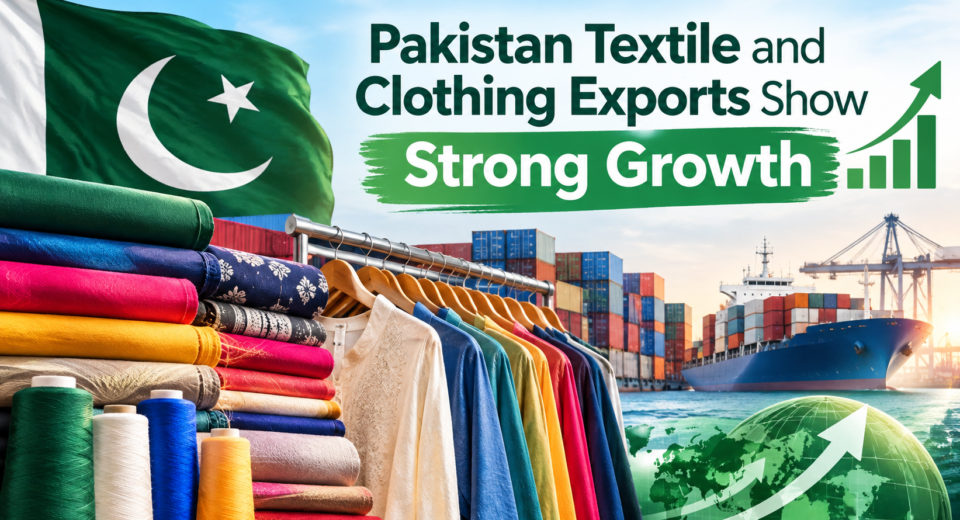
Pakistan’s textile and clothing sector is having a moment. After years of slow and steady numbers, the industry is finally showing signs of real momentum. If you follow Pakistan’s economy even a little, you already know that textiles are the backbone of the country’s export earnings. This sector doesn’t just bring in foreign exchange. It also gives millions of people jobs, from cotton farmers in Punjab to garment workers in Karachi and Faisalabad. In this article, we’ll break down what’s happening with Pakistan’s textile exports, why the growth is picking up, and what it means for the future. We’ll keep things simple and easy to follow, so you don’t need an economics degree to understand it. A Quick Look at Pakistan’s Textile Export Growth Let’s start with the big picture. Pakistan’s textile and apparel exports touched around $18 billion in the fiscal year that ended in June 2026. That’s a new high point for the sector, even though the growth rate itself was modest at first glance. What’s more exciting is the recent monthly performance. Textile exports jumped sharply in July 2026, climbing well above 40% compared to the previous month and showing solid year-on-year gains too. This kind of jump doesn’t happen by accident. It usually points to stronger orders from buyers overseas, better production capacity, or a mix of both. And when you look closer at the numbers, you can see exactly where this growth is coming from. Value-added products are leading the charge. Things like readymade garments, knitwear, and home textiles are doing better than raw cotton or yarn exports. This shift matters a lot. It means Pakistan is finally moving up the value chain instead of just shipping out raw materials for other countries to turn into finished products. Why Value-Added Exports Matter So Much Here’s a simple way to think about it. If Pakistan sells raw cotton, it earns a certain amount per unit. But if that same cotton gets spun into yarn, woven into fabric, and stitched into a shirt before it leaves the country, Pakistan earns far more money from the exact same raw material. Every extra step adds jobs and profit inside the country instead of sending that value somewhere else. Readymade garments hit a record high in the last fiscal year, growing by more than 5% compared to the year before. This category has more than doubled over the past decade, which shows a real, lasting shift toward higher-value manufacturing rather than a short-term spike. Breaking Down the Numbers To make this easier to digest, here’s a table showing how different textile categories performed in the fiscal year 2025-26. Textile Category Export Value (FY2025-26) Change vs Previous Year Total Textile & Apparel Exports $18.0 billion +0.3% Value-Added Products (Garments, Made-ups) $14.98 billion +1.1% Non-Knit Apparel $4.295 billion +3.9% Home Textiles & Made-ups $5.705 billion +0.6% Knitwear $4.979 billion -0.7% Raw Materials & Intermediate Goods $3.026 billion -3.4% As you can see, the story isn’t the same across every category. Garments and home textiles are growing, while raw material exports like cotton and man-made fibers are shrinking. This confirms what we said earlier: Pakistan’s growth is coming from finished, higher-value products, not raw exports. Now let’s look at the more recent monthly snapshot, which shows just how strong the momentum has become heading into the new fiscal year. Monthly Export Performance (July 2026) Product Category July 2026 Export Value Month-on-Month Growth Total Textile Exports $1.81 billion +43.13% Knitwear $533.84 million +46.60% Readymade Garments $459.99 million +45.87% Bedwear / Home Textiles $308.50 million +47.13% That kind of jump in a single month is hard to ignore. It suggests buyers are placing bigger orders and factories are ramping up production to keep pace with demand. What’s Driving This Growth So, what’s actually causing this uptick? A few factors are working together here. First, global demand for clothing and home textiles has been recovering. Retailers around the world went through a rough patch with excess inventory, but that phase seems to be easing. As stock levels normalize, buyers start placing fresh orders again, and Pakistan is well positioned to catch that demand. Second, Pakistan has been investing more in value-added manufacturing. Instead of just growing cotton and exporting it, mills and factories are focused on turning that cotton into finished garments and home textile products. This shift takes time, but it’s clearly starting to show results. Third, currency and cost factors play a role too. When the rupee is competitive against the dollar, Pakistani products become more attractive to international buyers on price. This isn’t the whole story, but it definitely helps exporters stay competitive against rivals like Bangladesh, India, and Vietnam. Finally, trade policy and government support matter. Export-focused policies, energy subsidies for the textile sector, and efforts to explore new markets all add up over time. None of these alone would create this kind of jump, but together, they create the right conditions for growth. The Challenges Still Standing in the Way It’s not all smooth sailing, though. Even with this growth, Pakistan’s textile sector faces some real challenges. Raw material exports are falling. Cotton, man-made fibers, and yarn are all seeing declines. This tells us that Pakistan still relies on other countries for some raw materials, and that raw cotton production at home isn’t keeping pace with what the industry needs. Overall export growth for the whole fiscal year was fairly small, even though certain months and certain products performed really well. This means the growth isn’t spread evenly. Some parts of the industry are thriving, while others are struggling to keep up. Energy costs remain a headache for manufacturers. Textile production uses a lot of electricity and gas, and when energy prices rise, it eats into profit margins fast. This makes it harder for smaller manufacturers to compete on price with international rivals. There’s also stiff competition from other textile-exporting countries. Bangladesh, Vietnam, and India are all fighting for the same buyers, and each of them has their own cost

Severe Toothache Health

Severe Toothache: Does It Mean You Need a Root Canal?

Toothache can affect one’s ability to eat, sleep, perform work, and focus on any other daily activity. People tend to look for toothache cure or tooth pain relief immediately in order to alleviate the pain. However, the persistent or severe tooth pain might indicate an existing dental issue that requires immediate attention. A frequently asked question concerns the need for a root canal in cases of severe toothache. The answer to this question is negative. There are many factors that might cause tooth pain. The reasons may include tooth decay, issues with the gums, cracked teeth, sensitivity, tooth trauma, and infection of the pulp inside a tooth. In order to decide on the procedure, a dental check and X-rays are required. What Causes a Severe Toothache? The definition of a toothache involves the irritation or inflammation of the nerve and tissue structures surrounding the tooth. It may be caused by tooth decay. As the process continues, it penetrates deeper into the structure until it reaches the pulp of the tooth, which contains nerves and blood vessels. When the pulp becomes infected or inflamed, then you may experience toothache. Some other causes may be a broken tooth, gum disease, abscess, exposed tooth roots, loose fillings and trauma to the tooth. Toothaches may sometimes occur due to problems with the wisdom teeth. This is why it should not be an automatic assumption that a severe toothache is always a root canal problem. Tooth Pain When Biting: What Could It Mean? Pain while biting and chewing is one of the vital symptoms that must not be overlooked. Pain from applying pressure on a certain tooth may be caused by decay, inflammation of the area around the tooth roots, a crack in the tooth, an infection, or issues with a dental restoration. The sharp pain when biting or lasting after biting is the reason to have yourself examined by a dentist. In some cases, such a symptom may arise due to inflammation of the tissues around the root in case of infection or damage of the pulp. The tooth can be inspected, its reaction to various stimuli observed, and an X-ray used if needed. Such an examination will help find out whether the issue can be solved using a filling or other methods or if root canal therapy will be required. Does Severe Toothache Mean You Need a Root Canal? Not necessarily. Root canals are performed when the pulp in the tooth has an irreversible inflammation or infection due to the above reasons.  Among the indicators that there might be an issue related to the dental pulp are continuous toothache, long-lasting sensitivity to hot and cold, discomfort in chewing, swelling in the area of the tooth, tenderness, and abscess in the gum tissue. Still, the above symptoms alone do not mean that a root canal is needed. A consultation by a dentist is needed to identify the reason for the pain. Home Remedies for Toothache: Can They Help? However, while there is no possibility to seek treatment at once, people start looking for home-based solutions for toothache pain relief. Though the following methods could bring some relief and allow people to survive until the necessary treatment is found, they will not solve the problem of tooth decay, infection, or abscess. First of all, one can rinse his/her mouth with warm salt water. One can maintain proper oral hygiene and thoroughly clean the place around the tooth causing the pain. Cold compresses can be applied to the outside part of the cheek to decrease swelling and pain. There is also an option to take OTC medications for pain. However, the use of medications is possible for adults only if there are no contradictions to it. In case the patient suffers from some medical conditions, allergies, is pregnant, or uses certain medications, he/she must consult a physician before using any medication. It is necessary to remember that a home remedy for toothache cannot heal a tooth or cure infections in case they become the cause of pain. Toothache Remedy: When Should You See a Dentist? In case of toothache which persists for a long time, recurs regularly, and increases in intensity, dental examination is advised. Other indications for seeking dental help include swelling, fever, pain while chewing, a bad taste in your mouth, a broken tooth, and sensitivity which does not go away even after removing the source of stimulation, which in most cases is hot or cold food and beverages. Swelling in the area of face or jaw is a key indication, and in case it is severe and causes difficulty in breathing or swallowing, immediate help from a medical or emergency facility is needed. What Happens During Root Canal Treatment? If the dentist finds out that the pulp is either infected or permanently damaged, root canal therapy will be suggested to save the natural tooth. The patient will be anesthetized using local anesthesia, as part of the process. A hole will be created in the tooth to allow the removal of the damaged pulp. The cleaning and disinfection of the tooth’s root canals will then follow before filling and sealing the tooth. Current dental procedures and the use of local anesthesia will be applied to control the pain during the treatment process. There will likely be some tenderness after the procedure, but it will eventually improve with time. Can You Avoid a Root Canal? Prompt dental treatment might assist in avoiding complications associated with the dental problem. Routine dental examination helps detect cavities or other problems that do not develop deep inside the tooth. Good oral care is essential as well. Daily brushing of teeth twice a day with the use of fluoride toothpaste, flossing, eating less frequent sugar-rich foods and beverages, and visiting a dentist on a regular basis promote good oral health. But if the dental pulp becomes irreversibly affected or infected, then no remedy for tooth pain will return the pulp to normal. The evaluation and subsequent treatment should be

Tech

Punjab CM E-Bike SchemeEnters New Phase, 100,000 Electric Bikes for Students

If you’re a student in Punjab, you’ve probably heard your friends talking about free or cheap electric bikes lately. It’s not just chatter. The Punjab government has rolled out a brand-new phase of its e-bike scheme, and this time it’s bigger, easier to join, and open to way more students than before. Let’s break down what’s actually happening, who can apply, and what it will cost you. What Is the CM Punjab E-Bike Scheme? The CM Punjab E-Bike Scheme is a government program that helps students buy electric scooters on easy monthly payments. Chief Minister Maryam Nawaz relaunched applications for the 2026 cycle, opening the portal to the public on September 5, 2026. The whole idea is simple. Fuel prices keep climbing, and getting to class every day shouldn’t cost a fortune. So the government stepped in to make electric bikes affordable for students who need a reliable ride.  This isn’t the program’s first run. When it first started, the scheme offered 1,000 e-bikes in Phase 1, split between 700 for male students and 300 for female students. Back then, Phase 1 only covered degree college and university students in five cities: Faisalabad, Multan, Bahawalpur, Rawalpindi, and Lahore. Even with that small area, the response was huge. Over 800,000 students across the province had a shot at getting a bike during that first round. That kind of demand told the government it needed to think bigger.  Phase 2: 100,000 E-Bikes for Students Now comes the part everyone’s talking about. The Punjab government has opened applications for Phase 2 of the CM Punjab E-Bike Scheme, offering 100,000 electric scooters to students across the province. This new phase is a huge jump from the original pilot, and it fixes a lot of the limits that held back the first round.  For starters, location no longer matters. Eligibility has now been extended to students across all districts of Punjab, not just the original five cities. So if you missed out earlier because your district wasn’t included, that door is now wide open. The government plans to distribute the bikes to students studying across more than 33,000 public and private educational institutions in Punjab, covering schools, colleges, and universities.  There’s also been talk of the scheme growing even further down the line. The government has given preliminary approval to gradually expand the program to government employees, public-sector departments, and delivery riders. That’s a sign this isn’t just a one-time giveaway. It looks like the start of a much bigger push toward electric transport in the province.  Who Can Apply? Eligibility Rules Before you rush to fill out the form, it helps to know exactly who qualifies. The rules for Phase 2 are more relaxed than before, which is good news if you were too young or in the wrong city last time. Here’s a quick look at the main eligibility points: Requirement Details Institution type Students from public and private educational institutions across Punjab Minimum age 16 years at the time of application submission, lower than Phase 1’s requirement of 18 and above Guarantor A parent or legal guardian must serve as guarantor Coverage area Students across all districts of Punjab, not just select cities Application method Online applications submitted through the official Punjab E-Bikes portal Notice how the age limit dropped. That change alone opens the scheme to a lot more high school and early college students who couldn’t apply under the older rules. And because private school and college students are now included too, the pool of eligible applicants has grown massively. How Much Will It Cost You? This is probably the question on everyone’s mind. Is this bike really free, or do you still have to pay something? The honest answer is that it’s not a free giveaway. It’s a subsidized loan with very friendly terms. The CM Punjab Electric Bike Scheme is a subsidized financing program, not a free giveaway.  Here’s how the numbers break down under the current Phase 2 terms. Payment and Subsidy Breakdown Item Amount / Detail Bike price PKR 199,000 Government subsidy Rs. 90,000 government subsidy Down payment No down payment required Interest rate 0% interest rate Financing period 3-year financing period Monthly installment Approximately Rs. 3,000 per month Extra costs covered by government Insurance, registration and token tax costs That’s a pretty solid deal when you compare it to buying a regular motorbike on a private loan. You skip the down payment, you don’t pay any interest, and the government even covers your insurance and registration paperwork. All you’re really responsible for is that steady Rs. 3,000 monthly payment for three years. One thing worth mentioning: earlier versions of the scheme had different numbers floating around online. Students may find older information about the Punjab e-bike program online, including different down-payment and installment figures, and these older figures should not be mixed with the current Phase-2 information. So if you’re researching this on your own, always double-check the details against the official portal instead of trusting random posts you find online.  How to Apply Online  Applying for the scheme is meant to be simple, and most of it happens through your phone or laptop. Here’s the general process you’ll follow. First, head over to the official portal at bikes.punjab.gov.pk. This is the only place you should be applying through. Avoid random links shared on social media, since scams tend to pop up whenever a popular government scheme goes viral. Next, get your documents ready before you start. You’ll typically need your CNIC or B-Form, proof of enrollment at your institution, and your learner’s permit or driving license if you have one. Since a guardian needs to act as guarantor for younger applicants, have their documents on hand too. Then, fill out the online application form carefully. Double-check your institution details and personal information, since mistakes here can delay or disqualify your application. Finally, keep an eye on the deadline. The application deadline for CM Punjab E-Bike Scheme Phase 2 is October 4, 2026, and

Abrar Ahmed ICC T20I Rankings Sports

Abrar Ahmed Becomes No. 1 T20I Bowler in Latest ICC Rankings 2026

Abrar Ahmed Becomes No. 1 T20I Bowler in Latest ICC Rankings 2026 Pakistan cricket fans have a reason to smile today. Leg-spinner Abrar Ahmed has climbed to the top of the ICC men’s T20I bowling rankings. It is a big moment for him, and a proud one for a country that has always loved its spinners. Let’s walk through how it happened, what the numbers say, and why it matters. A Big Day for Pakistan Cricket The ICC announced the update on Wednesday, and the news spread fast. Abrar became the fifth Pakistani bowler to lead the T20I bowling table, taking the spot from Afghanistan’s Rashid Khan. The margin was tiny, but a No. 1 rank is a No. 1 rank.  Think about that for a second. Pakistan has produced fast bowlers who made the world nervous, and spinners who confused the best batters. Now another name joins that list. For a player who only broke into the national side in late 2022, the rise has been quick. The Numbers Behind the Top Spot Let’s talk points, because this race was close. Abrar reached the summit with 736 rating points, pushing Rashid Khan down to second place. One report puts Rashid at 735, just a single point behind. That is about as tight as a ranking battle gets. Rashid had held the top position for six months before this change. So Abrar did not just get lucky. He kept collecting wickets and kept his economy under control, and the points added up. Rankings reward steady, match-winning work, and that is what he has delivered.  Abrar Ahmed’s Career Snapshot Format Wickets Bowling Average Tests 46 34.34 ODIs 35 21.51 T20Is 52 17.36 These figures come from ESPNcricinfo data listed as of mid-August 2026. Look at that T20I average. An average of 17.36 means he gives up very few runs for every wicket he takes. In a format where batters swing freely, that kind of control is rare.  From Test Debut to World No. 1 Abrar’s story did not begin with T20 cricket. He got his first national call-up in December 2022 for the home Test series against England. That series made people notice a young leg-spinner who was not afraid to attack.  Since then he has kept growing. He made his ODI debut in November 2024 against Zimbabwe, taking four wickets for 33 runs. That spell helped Pakistan level the series. Each step added confidence, and confidence is a spinner’s best friend.  The Spell That Made Everyone Notice Every rise has a few standout moments. For Abrar, one came at the 2025 Asia Cup. Against Sri Lanka, he bowled four overs for just eight runs and picked up a wicket, with 16 dot balls. Analysts called it the cheapest four-over return in the history of the T20 Asia Cup. Picture the batters that day. They could not find gaps, and they could not find boundaries. The pressure built ball by ball until mistakes came. That is what a great T20 spinner does. He does not need a hat-trick to win you the game. He just makes runs feel impossible to score. Why Leg-Spin Works So Well in T20 Cricket You might wonder why a spinner can dominate a format built for big hitting. The answer is variation. A good leg-spinner changes pace, flight, and turn, so batters never settle. If you guess wrong, you are either bowled, stumped, or caught in the deep. Abrar mixes these skills well. He also keeps his lines tight, which stops batters from freeing their arms. In the middle overs, that is gold. Teams that lose wickets there rarely recover, and Abrar is often the one who makes it happen. The Pakistan Spin Legends He Now Joins Here is where it gets emotional for fans. Umar Gul, Saeed Ajmal, Imad Wasim, and Shahid Afridi are the other Pakistani bowlers who have topped the T20I rankings. That is a strong group, and it mixes pace and spin.  Ajmal and Afridi were famous for their craft. Imad Wasim was the calm, clever operator. Gul was the yorker specialist. Now Abrar’s name sits beside theirs. He does not need to copy anyone. He just needs to keep doing what got him here. How the Rest of the Top Bowlers Look The table below gives you a quick view of the top of the chart. It is a snapshot from the latest update, so numbers may shift again soon. Latest T20I Bowling Rankings Snapshot Rank Bowler Country Note 1 Abrar Ahmed Pakistan 736 points 2 Rashid Khan Afghanistan About one point behind 3 Adam Zampa Australia Moved up one place 8 Mohammad Nawaz Pakistan 658 points 10 Jasprit Bumrah India 651 points Adam Zampa moved up one spot to third, while Jasprit Bumrah sits tenth. Indian spinner Varun Chakravarthy, who once led the table, has slipped to seventh. So the top of the chart is crowded with quality spinners, which makes Abrar’s climb even more impressive. Other Pakistan Players in the Update Other Pakistan Players in the Update Abrar was not the only Pakistani on the move. Mohammad Nawaz kept his eighth spot, while Salman Mirza slipped one place to 18th. Shaheen Afridi also dropped one place, to 33rd. Geo NewsGeo News There were some positives too. Usman Tariq rose two places to 57th, and Sufiyan Muqeem gained one place to reach 63rd. These are not headline moves, but they show a bowling group that is slowly filling with options. Geo News   Batting Rankings and the Wider Picture The same ICC update had plenty for batting fans. India’s Ishan Kishan stayed at No. 1 in T20I batting, with Abhishek Sharma second and Pakistan’s Sahibzada Farhan third. Farhan is holding his place among the best in the world, which is a great sign for Pakistan’s top order.  England’s Harry Brook also climbed five places to a career-best fourth after a strong home series against Sri Lanka. In ODI bowling, Rashid Khan stayed first while Abrar remained second. That tells