
Pakistan Stock Exchange Business

Pakistan Stock Exchange Today: KSE-100 Gains 233 Points

Karachi, October 16, 2026 — The Pakistan Stock Exchange (PSX) ended Friday’s trading session with a small gain, giving investors a positive finish after a day of changing market prices. The benchmark KSE-100 Index increased by 233.55 points, or 0.14%, to close at 166,419.71 points. The market opened under pressure as investors remained careful about economic conditions, rising energy costs, and regional uncertainty. However, buying in selected banking and technology shares helped the index recover its early losses. Despite the positive closing, trading remained mixed. Several companies recorded losses, showing that investors were still choosing stocks carefully rather than buying across the whole market. The latest Pakistan Stock Exchange today update shows a market that is trying to recover while facing economic and international challenges. Pakistan Stock Exchange Today: KSE-100 Gains 233 Points? Yes, the KSE-100 Index gained 233.55 points on Friday, October 16, 2026, marking its third consecutive positive closing. The index finished at 166,419.71 points, compared with 166,186.16 points in the previous session. This represented a daily increase of 0.14%. Although the gain was small, it was important because the market had experienced sharp price changes earlier in the week. The KSE-100 Index today showed that buyers were still interested in selected large companies. However, the wider market remained under pressure, with more listed symbols declining than advancing. This mixed performance suggests that investors were watching economic news closely before making major trading decisions. PSX Market Summary for October 16, 2026 The following table provides the main figures from Friday’s trading session, based on official market data. Market Indicator October 16, 2026 KSE-100 Closing Index 166,419.71 Previous Closing Index 166,186.16 Daily Point Increase +233.55 Percentage Change +0.14% Intraday Highest Level 166,708.36 Intraday Lowest Level 165,956.51 Total Exchange Trading Volume 396.90 Million Shares Total Traded Value Rs18.68 Billion Total Regular-Market Trades 266,753 Market Status Closed These figures show that the Pakistan stock market today remained active despite the limited improvement in the benchmark index. The difference between the daily high and low was 751.85 points. This shows how much the market moved during the session, even though its final increase was relatively small. How Did the KSE-100 Index Perform During Trading? Friday’s trading began with selling pressure. The index moved below its previous closing level and reached a low of 165,956.51 points. During the session, buyers returned to selected shares, helping the market recover. The index later touched 166,708.36 points before losing some of those gains. By the end of the trading day, the benchmark had settled at 166,419.71. Why Did the Market Move Up and Down? Stock prices often change during the day as investors respond to economic news, company performance, and international developments. Some traders buy shares when prices fall, while others sell after prices recover to secure profits. Friday’s movement showed both activities taking place. Investors were willing to buy selected shares, but they were not confident enough to support a strong market-wide rally. That is why the index ended higher without recording a major increase. Why Did the Pakistan Stock Exchange Close Higher? The market’s positive closing came mainly from gains in selected large companies. According to market commentary from Topline Securities, Systems Limited, United Bank Limited, MCB Bank, Bank AL Habib, and Engro Fertilizers were among the major positive contributors. Together, these five companies added about 269 points to the benchmark index. Their performance helped balance losses in other major shares and supported the positive closing. Banking and Technology Stocks Supported the Index Banking companies often have a strong influence on the KSE-100 because several large banks carry significant weight in the benchmark. When important banking shares rise, they can help the index move higher even if many smaller companies decline. Technology shares also supported Friday’s performance, with Systems Limited among the main positive contributors. However, the performance of these companies should not be treated as evidence that every banking or technology stock increased. Which Companies Put Pressure on the Market? Although the PSX closed higher, several major companies reduced the benchmark’s overall gain. According to the same market report, Oil and Gas Development Company, Lucky Cement, Meezan Bank, Pakistan Telecommunication Company, and Engro Holdings were among the negative contributors. Together, these five stocks reduced the index by approximately 223 points. The contrast between winning and losing shares explains why Friday’s trading was mixed. Investors were not simply buying everything. They were responding differently to individual companies and business sectors. This is an important part of understanding PSX latest news. A rising index does not always mean that most listed shares are increasing. PSX Trading Volume and Market Activity Trading volume provides another useful way to understand stock market activity. On October 16, total exchange trading volume reached approximately 396.90 million shares, compared with 517.60 million shares in the previous session. The value of traded shares also decreased, falling from around Rs23.57 billion to Rs18.68 billion. These figures suggest that trading activity slowed compared with Thursday. A lower trading volume does not automatically mean that the market will decline. However, it can show that fewer shares are changing hands while investors wait for clearer developments. Most Actively Traded Shares Pakistan Refinery Limited was one of Friday’s busiest stocks, with approximately 38.42 million shares traded. Cnergyico PK Limited followed with around 37.14 million shares, while K-Electric recorded approximately 27.98 million shares. These companies attracted considerable trading interest during the session. It is important to understand that high trading volume does not automatically mean a company is performing well financially. It simply means that more of its shares were bought and sold. Other Major Pakistan Stock Exchange Indices The KSE-100 was not the only market index to record changes on Friday. PSX Index Performance on October 16, 2026 Stock Market Index Closing Value Daily Change KSE-100 166,419.71 +0.14% KSE-30 49,316.65 +0.05% All Share Index 100,871.91 +0.05% KMI-30 239,907.59 -0.05% Banking Tradable Index (BKTI) 45,849.28 +0.23% Oil & Gas Tradable Index (OGTI) 33,523.01 -0.51% PSX Dividend 20 Index 76,053.59 +0.39% The figures show that different groups
Peshawar School Roof Collapse Leaves Dozens Dead News

Peshawar School Roof Collapse Leaves Dozens Dead

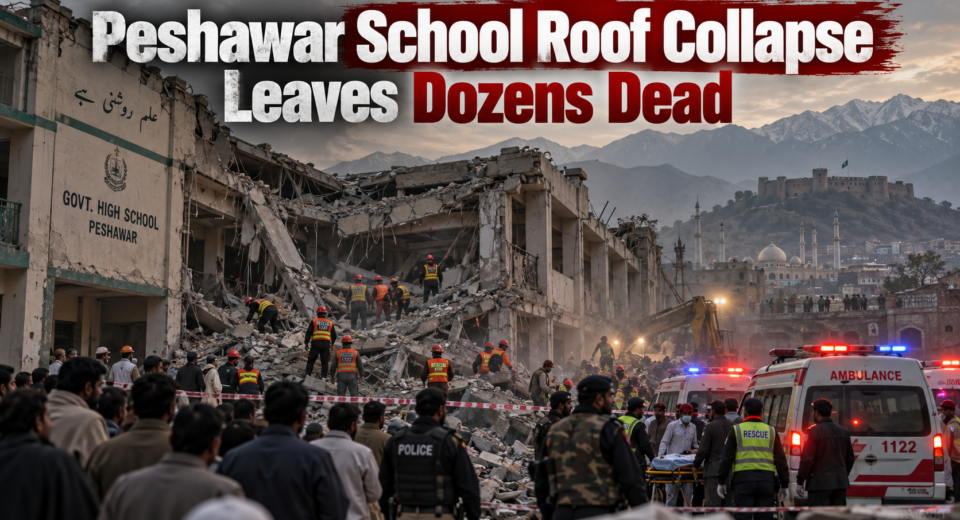
Peshawar, Pakistan — October 15, 2026: A devastating school roof collapse in Peshawar, Khyber Pakhtunkhwa, has claimed the lives of dozens of students and a female teacher, leaving families in mourning and raising serious concerns about school building safety in Pakistan. The incident took place on Thursday morning at Al-Khair Education Center, a private school in the city’s Dir Colony and Afridi Abad area. Students were attending classes when part of the building collapsed, prompting an immediate emergency response. According to an updated report published by Dawn on October 15, at least 33 people, including 32 students and one female teacher, lost their lives. The report cited officials at Lady Reading Hospital in Peshawar. Several other people were injured, and rescue teams worked to assist those affected. The tragedy has raised questions about construction standards, school inspections, and the responsibility of educational institutions to provide safe learning environments. What Happened in the Peshawar School Roof Collapse? The Peshawar school roof collapse occurred during morning classes on October 15, 2026. According to initial reports, an upper section of the school building collapsed onto classrooms below. The structural failure affected more than one level of the building. Rescue workers, police officers, medical teams, and local residents responded to the emergency. The incident involved Al-Khair Education Center, a privately operated school attended by young children. The collapse happened during normal school hours, making the situation particularly serious for students and staff inside the building. Emergency services began rescue operations, while ambulances transported injured people to nearby hospitals. Authorities subsequently launched an investigation to determine the circumstances surrounding the incident. Peshawar School Roof Collapse Death Toll: Latest Confirmed Updates Reports from October 15 show that casualty figures changed as hospitals and rescue agencies continued updating their records. According to Dawn, Lady Reading Hospital spokesperson Muhammad Asim confirmed that the death toll had reached 33, including 32 students and one female teacher. Other news organizations published different figures throughout the day as new information became available. Key Details of the School Collapse Detail Reported Information Incident School roof collapse Date October 15, 2026 City Peshawar, Pakistan Province Khyber Pakhtunkhwa School Al-Khair Education Center Area Dir Colony / Afridi Abad Reported deaths 33, according to Dawn’s updated report Victims 32 students and one female teacher Emergency response Rescue 1122, police and medical teams Major hospital Lady Reading Hospital Investigation Initiated by authorities These figures reflect reporting available on October 15 and may change following further official updates. For additional reporting, readers can consult the Dawn coverage of the Peshawar school roof collapse. Rescue 1122 Launches Emergency Operation in Peshawar Rescue 1122 personnel responded to the incident and began working at the damaged school building. The rescue operation focused on finding people affected by the collapse, providing emergency medical assistance, and transporting injured students to hospitals. Police and district officials also coordinated with rescue teams. The authorities worked to improve access for emergency vehicles as the operation continued. Emergency Teams Face Difficult Conditions Emergency operations following a building collapse can be complicated by damaged structures, limited access, and the need to protect survivors. At the Peshawar school, responders had to work carefully around the damaged sections of the building. The presence of schoolchildren made the response especially urgent. Local residents also assisted during the initial emergency, according to media reports. The work of rescue personnel and medical staff was an important part of the response to this tragedy. Lady Reading Hospital Treats Injured Students Lady Reading Hospital in Peshawar became a major center for treating people affected by the school collapse. Hospital officials declared an emergency as injured students and other victims arrived for medical care. Medical teams worked to provide treatment and assess the condition of those admitted. Some injured children were reported to be in critical condition during the initial response. Why Hospital Coordination Matters During Emergencies A major incident involving many injured people requires coordination between hospitals, ambulance services, police, and local authorities. Medical teams must assess patients and prioritize those who need urgent treatment. Reliable information is also important for families seeking updates about their children. Hospitals and emergency services play a critical role in reducing confusion and ensuring patients receive timely care. What Caused the Peshawar School Roof Collapse? The exact cause of the school roof collapse is a central question in the official investigation. Initial accounts from police and rescue officials pointed to possible structural weaknesses and excessive weight from construction on an upper level. However, these preliminary assessments should not be treated as the final findings of a technical investigation. A complete inquiry would need to examine the building’s design, construction materials, modifications, structural condition, and compliance with applicable safety requirements. Concerns Over Building Construction Standards School buildings must be able to safely support their intended use. Problems involving structural design, unauthorized modifications, poor construction, or inadequate maintenance can create serious safety risks. The Peshawar incident has brought these concerns into renewed public discussion. A reliable investigation should identify the factors involved and determine whether any safety requirements were ignored. Such findings would help authorities decide what corrective action is necessary. School Owner Arrested as Authorities Begin Investigation According to Reuters reporting on October 15, police confirmed that the school’s owner had been arrested and an investigation had been launched. The investigation is expected to examine the circumstances surrounding the collapse and whether negligence or violations of building requirements contributed to the incident. An arrest does not itself establish criminal guilt. Any legal responsibility must be determined through the appropriate investigative and judicial processes. The investigation will be particularly important for the families seeking answers about how the tragedy happened. For further information, read the Reuters report on the Peshawar school roof collapse. Government Officials Respond to the Peshawar School Tragedy The incident prompted expressions of grief from national and provincial officials. Prime Minister Shehbaz Sharif expressed sorrow over the deaths and extended condolences to the affected families. Khyber Pakhtunkhwa Governor Faisal Karim Kundi also expressed grief and called

Pakistan Railways Latest Updates News

Multan Train Derailment: Five Killed in Railway Accident

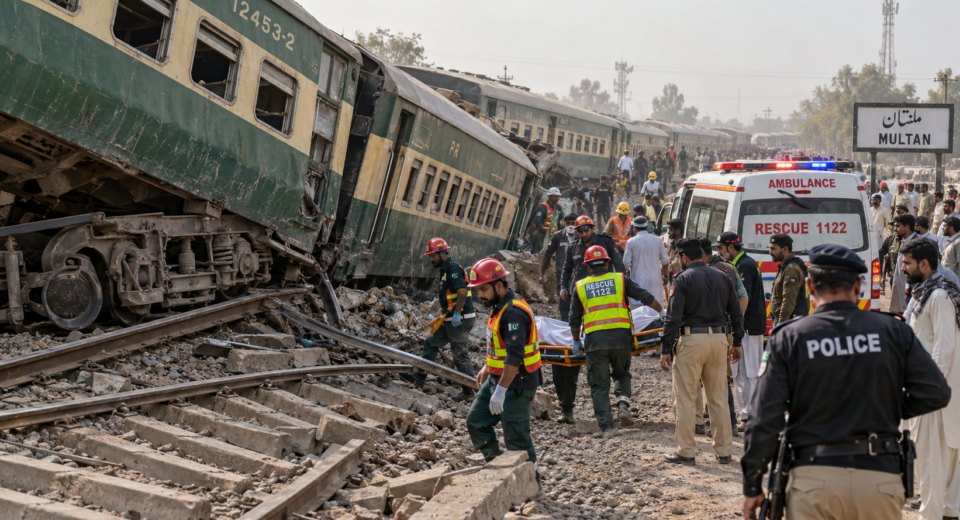
Reporting current as of October 13–14, 2026. Details are still developing, and I note below where sources disagree. Early on Tuesday morning, October 13, 2026, a passenger train left its tracks near Multan in Pakistan’s Punjab province. Families who were asleep in their seats woke up to a violent jolt, screaming, and twisted metal. Some reports say four people died and others say five or six, and the number of injured is still being updated. I’ll go through what we know, what we don’t know yet, and why this keeps happening on Pakistan’s rail network. What Happened: Multan Train Derailment: Five Killed in Railway Accident Explained The Rehman Baba Express was traveling from Karachi to Peshawar when it derailed in the early morning hours. Reports place the accident near Sher Shah railway station, in the Multan district of Punjab. Local media said it happened at around 5:15 am, and Punjab’s emergency service said it received the call at 5:21 am. Several coaches left the track and overturned. According to one report, all 14 coaches of the train derailed. Passengers were trapped inside the damaged carriages, and some had to be pulled out by rescue workers. Here is the part that confuses many readers. Early reports said four people had died. Later reports raised the number to five, and one outlet reported six. This is normal in the first hours of a disaster, because rescuers are still working and hospitals are still counting. I use “five killed” as the headline figure because several reports settled on it, but please treat the toll as provisional. The Train and Its Route The Rehman Baba Express is a long-distance passenger service that links Karachi in the south with Peshawar in the northwest. It passes through many major cities, and Multan sits near the middle of that journey. A long route like this means the train usually carries a large crowd. One report said more than 500 passengers were on board. The Moment of the Derailment The train’s driver, Rizwan Abbas, told local media that the train was moving at about 100 kilometers per hour. He said he felt a sudden jolt as the train passed through the Sher Shah station area. He then applied the emergency brakes to stop the train. Think about what that means for a moment. A heavy passenger train at that speed carries enormous force. When the wheels lose their grip on the rails, the coaches can twist, tip, and slam into each other in seconds. Rescue Operation and Emergency Response Rescue teams reached the scene quickly. Farooq Ahmed, a spokesman for Punjab’s emergency services, said 11 ambulances and 30 rescue workers were sent to the site. Local people also rushed to help, which is common in Pakistan. Neighbors, farmers, and passersby often reach a crash site before the official teams do. Pulling Passengers From the Wreckage Trained rescuers used cutting tools to open crushed doors and bent windows. Injured passengers were carried out on stretchers and loaded into ambulances. A journalist from AFP saw the body of one victim still inside a carriage, which shows how hard the early hours were. Rescue work after a derailment is slow and risky. Rescuers must avoid shifting the wreckage while they search for people still alive. In the dark, or just after dawn, this is even harder. Hospitals Take in the Injured The injured were taken to Nishtar Hospital in Multan, one of the largest hospitals in the region. Medical teams began treating people right away. Reports gave different injury figures, ranging from about 17 in the earliest reports to more than 40 later in the day. Some outlets said around 30, and one rescue worker put the figure at 25 early on. These numbers differ because they were reported at different times. As more people were brought in and counted, the figure grew. Pakistan Railways’ chief executive, Muhammad Hafeezullah, was quoted as saying more than 40 people were injured. Casualty Figures and Why the Reports Differ Many readers search for one clear number and get frustrated when each news site gives a different one. The table below shows how the reports varied on the same day. Source Type Reported Deaths Reported Injuries Early AFP report 4 17 (rescue worker said 25) Railways Minister, citing regional director 4 Not stated Geo News (via regional outlet) 6 30 Pakistan Railways CEO Not stated 40+ Later summary reports 5 41 A death toll can change for several reasons. A badly injured person may die in hospital hours later. Teams may also find another victim trapped deep inside the wreckage. Sometimes an early count is simply wrong because of the chaos at the scene. How to Read Early Reports Wisely I suggest you follow a simple rule. Trust official statements from rail authorities and hospitals first. Treat social media videos with caution, because many are old clips from earlier accidents. Check the date and the place before you share anything. Timeline of the Accident A clear timeline helps you follow the order of events. The times below come from the reports I found, and they may be adjusted as officials release more details. Timeline of Key Events on October 13, 2026 Time (Approx.) Event Around 5:15 am The Rehman Baba Express derails near Sher Shah, Multan 5:21 am Punjab emergency services receive the call Early morning Ambulances and rescue workers reach the site Morning Injured passengers reach Nishtar Hospital Later in the day The President and Prime Minister issue statements Later in the day Railways Minister orders an investigation Official Reaction and Government Response Top leaders reacted within hours. President Asif Ali Zardari expressed his concern and offered condolences to the families of the dead. He prayed for the quick recovery of the injured. He also asked officials to give affected passengers every possible facility and called for a transparent investigation into the cause. Prime Minister Shehbaz Sharif took notice of the accident as well. His office said he told the relevant authorities to

PTI Challenges KP Emergency Rule Politics

PTI Challenges Emergency Rule in Khyber Pakhtunkhwa

Pakistan’s politics just took another sharp turn. The Pakistan Tehreek-e-Insaf (PTI) has gone to court to fight the federal government’s decision to put Khyber Pakhtunkhwa (KP) under emergency and governor’s rule. If you’ve been wondering what happened, why it matters, and what could come next, this guide explains it in plain words. What Happened in Khyber Pakhtunkhwa? On October 11, 2026, the federal government imposed emergency and governor’s rule in the province, after President Asif Ali Zardari approved the step on the advice of Prime Minister Shehbaz Sharif under Articles 232 and 234 of the Constitution. That decision suspended the PTI-led provincial government, which had run KP since 2013. Here is how the main events unfolded: So the elected government is out of the picture for now, and Governor Faisal Karim Kundi has become the main administrator. Why Did the Federal Government Step In? The center says this is about security. It pointed to the PTI-led provincial government’s “deliberate disengagement” from the fight against terrorism. KP has faced serious militant violence for years, so the argument carries weight with many people. The timing, though, raised eyebrows. The emergency came about a week after supporters of jailed PTI founder Imran Khan marched through the province, asking for his release and for access to medical treatment. Talks between the two sides broke down over counterterrorism cooperation in KP and PTI’s demand for access to Imran, including a meeting with his personal doctor. There is also a twist. Interior Minister Mohsin Naqvi claimed that PTI had agreed during the talks that emergency rule should be imposed in 12 districts. PTI rejects the idea that it failed to lead the fight against terrorism. You can read more about the wider fallout in this. How Did PTI Respond? PTI moved quickly. On October 12, a separate petition was filed by Advocate Salman, arguing the measures were unconstitutional, illegal, and driven by bad intentions. Then on October 14, PTI Chairman Barrister Gohar Ali Khan filed his own petition in the Peshawar High Court (PHC) through Advocate Ali Zaman. It runs to 86 pages. The party has asked for an early hearing, and Gohar says PTI will keep up its constitutional and legal struggle. So this is not only a street fight. It is now a courtroom fight too. What Is PTI Asking the Court to Do? The ask is simple. PTI wants the PHC to declare the emergency proclamation and governor’s rule unconstitutional and bring back the elected government. In legal terms, it wants the order declared “null and void.” Think of it like this. People voted for a provincial government. PTI says the center cannot just switch it off because it dislikes how that government behaves. Only the court can say whether that view is right. The Main Arguments in PTI’s Petition The petition leans on many parts of the Constitution. It says the move violates Articles 1, 2A, 4, 9, 10, 10A, 14, 15, 16, 17, 19, 19A, 25, 130, 175(3), 232, 234 and 245. That list covers fundamental rights, fair trial, equality before the law, and the powers of the provincial government. Here are the key points in simple terms. 1. An elected government was still in place. The petition says that imposing emergency and governor’s rule is wrong when an elected democratic government was already there. 2. Balochistan is treated differently. PTI points out that no emergency has been imposed in Balochistan, despite serious security challenges there. Gohar made the same point earlier, saying that if security were the real reason, similar action should be considered in other troubled regions, including Balochistan and the Katcha areas. PTI calls this political victimization. 3. It brings back an old power. Gohar also warned that the step effectively revives Article 58(2)(b), which undermines parliamentary democracy and provincial autonomy. That old article once let presidents dismiss governments, and many Pakistanis remember how controversial it was. Other Troubling Claims PTI has raised more than constitutional points. The party voiced concern over the reported arrest of the provincial assembly speaker and alleged action against the homes of PTI lawmakers. PTI’s KP media cell also alleged that police abducted Afridi’s lawyer, Bashir Wazir, from outside the Peshawar High Court. These are PTI’s allegations, and you should treat them that way until courts or independent reports confirm them. minutemirrortribune Meanwhile, PTI Secretary General Barrister Salman Akram Raja said the party was also pursuing legal action to find out where Chief Minister Afridi is being held. What Does the Other Side Say? The federal government has the numbers in Parliament on its side for now. The National Assembly approved a resolution backing the KP emergency by majority vote, amid an uproar from the opposition. The proclamations needed Parliament’s approval, so that step matters legally. The government’s core message stays the same: the province needs firmer action against terrorism, and the emergency allows it. Supporters of the move say security must come first. Critics say the same goal could be met without removing a government that people elected. Is There Room for Talks? Maybe. PPP Chairman Bilawal Bhutto Zardari offered to approach the prime minister about ending the KP emergency, if PTI agrees to political dialogue. That is a small opening, but it shows that not everyone in the ruling camp wants a long standoff. Whether PTI will accept is another question. Its leaders have been angry, and talks already broke down once. What Happens Next? Nobody can say for sure, but a few things are likely to shape the coming days. The court’s first move. The PHC could fix an early hearing, ask the federal government to reply, or give some interim relief. Even small orders can change the mood. A bigger court? Al Jazeera noted that PTI had not said if it would also go to the Supreme Court or the Federal Constitutional Court. Cases like this often travel up the court ladder. Street pressure. PTI is good at mobilizing supporters. If the case drags on, protests could grow,

Latest Pakistani Fashion News Fashion

Karachi Fashion Show 2026: Top Designers Celebrate Pakistani Culture

Karachi never does anything quietly, and its fashion scene is no different. In 2026 the city again became a stage where tradition and new ideas share the same runway. Designers, models, photographers, buyers, and fans all came for one reason. They wanted to see how Pakistani culture looks when it is dressed up, stitched with care, and walked down a catwalk under bright lights. I have followed Pakistani fashion for years, and this season felt different. The mood was warm and proud, and the clothes had real stories behind them. In this guide, I will walk you through what happened, which ideas stood out, and what you can take away for your own wardrobe. I wrote it in simple words, so you can read it fast and enjoy every part. Why Karachi Is the Heart of Pakistani Fashion Karachi is the biggest city in Pakistan. It is also the country’s business capital, so it has money, talent, and a huge audience. Fashion needs all three. A designer can open a studio here, hire skilled workers, find fabric suppliers, and sell to customers in the same week. A City Full of Colour and Contrast Walk through Karachi and you will see old buildings next to glass towers. You will see truck art, street food stalls, sea breeze, and busy markets. This mix feeds the imagination of local designers. Many of them say the city itself is their moodboard. That is why Karachi shows often feel lively. A collection might use soft pastel tones inspired by the beach and loud, bold shades inspired by bazaars. Both feel honest because both are part of daily life here. A Strong Base for Business Fashion is also a job market. Thousands of tailors, embroiderers, pattern makers, dyers, and stylists earn their living from it. When a big show happens, work flows to all of them. Orders go up, studios get busier, and young people see that fashion can be a real career. Karachi Fashion Show 2026: Top Designers Celebrate Pakistani Culture and What Happened on the Runway Let me share what we actually know. According to the Express Tribune, <a href=”https://tribune.com.pk/story/2631750/east-west-come-together-at-kaleidoscopic-karachi”>a showcase called “Kaleidoscopic Karachi” was held as part of LAAM Fashion Week 2026</a>. The report said the collections brought the colours, culture, and changing character of the city to the runway. That description fits the bigger story of the year. Designers did not just present clothes. They presented Karachi itself, with all its moods. What Kaleidoscopic Karachi Was About A kaleidoscope is a toy with colourful pieces that make new patterns every time you turn it. The name was a smart choice for this city. Karachi has many communities, languages, foods, and traditions. Each one adds a piece to the picture. On the runway, this idea showed up as many looks that did not copy each other. Some outfits were rich and traditional. Others were light, modern, and easy to wear. Together they gave the audience a full view of the city’s style. East Meets West on One Stage The same report noted that the collections mixed eastern and western shapes. This is a big theme in Pakistani fashion today. A long kurta may be paired with a sharp blazer. A traditional shawl may sit over a modern dress. A saree can be styled with a crop top or a structured jacket. I love this trend because it matches how people really live. We go to offices, weddings, cafes, and family dinners, often in the same week. Our clothes should be able to move between those places, and many designers understood that this year. HSY and the Voice of Senior Designers Every fashion season has a few big names whose opinions carry weight. Designer Hassan Sheheryar Yasin, known as HSY, is one of them. His label started in 2000 as a bridal and formal wear house and grew into one of the most recognised names in the country. A Message of Unity HSY told the Express Tribune that he felt happy to see designers from all over Pakistan come together and watch each other’s work. He also said the show reminded him of the potential Karachi has, something he felt had not been seen for a long time. I think this point matters more than it looks. Fashion is a competitive business, and designers often work in their own circles. When they sit in the same room and clap for each other, the whole industry gets stronger. Why Platforms Like This Matter HSY also described the fashion week as an important platform for the growth of the industry. He is right. A good platform gives designers a deadline, a crowd, and a reason to finish a bold idea. It also gives buyers and media a single place to see everything at once. Without such events, many beautiful collections would never leave the studio. With them, a young designer in Karachi can be seen by someone in Lahore, Dubai, or London. Culture on the Catwalk: Fabrics and Crafts If you ask me what makes Pakistani fashion special, I will say craft. Our country has a long history of hand skills, and designers keep finding new ways to use them. Ajrak and Sindhi Heritage Ajrak is a block-printed cloth from Sindh with deep reds, blues, and geometric shapes. Karachi sits in Sindh, so this fabric is part of the city’s identity. Designers like to use it in fresh ways. You may see ajrak panels on a jacket, a border on a dress, or a pattern borrowed for prints. It is a lovely way to honour local culture without making the outfit look like a costume. Embroidery That Tells a Story Hand embroidery is another star. Techniques like zardozi, dabka, resham, and tilla work take many hours. Each stitch is placed by a person, and you can feel that effort in the finished piece. In 2026, embroidery looked a bit lighter. Instead of covering a whole outfit, designers placed it on necklines, sleeves, and hems. This

PSX Today: KSE-100 Suffers a 1,965-Point Decline Business

Pakistan Stock Market Falls 1,965 Points Amid Uncertainty

If you checked your trading app and felt your stomach drop, you’re not alone. The Pakistan Stock Exchange (PSX) took another hit, with the KSE-100 index sliding 1,965 points as uncertainty weighed on investors. For anyone with money in the market, a drop that size feels scary. But panic rarely helps. Let’s break down what is going on, why it matters, and what smart investors usually do when the market turns red. What Happened at the Pakistan Stock Exchange? The KSE-100 is the main benchmark of the PSX. It tracks 100 of the biggest and most active companies, so it works like a thermometer for the whole market. When it falls by almost 2,000 points in a single move, it tells us that sellers outnumbered buyers by a wide margin. These drops usually come in waves. A few big stocks fall first, then nervous investors rush to sell, and the slide speeds up. Sometimes the index recovers a bit before the closing bell. Other times it stays near the day’s low. This fall is also not a one-off. The market has been shaky for weeks. On 5 October 2026, the KSE-100 dropped 2,288 points, or 1.36 percent, and closed at 165,867.32. You can read the full report. A few days later, on 8 October, the index fell another 1,138.50 points to settle at 167,441.91. So the latest decline adds to a pattern of nervous trading. A Look at Recent Market Sessions Numbers tell the story better than words. Here is a quick snapshot of some recent big down days on the PSX. Date Points Lost Closing Level 14 September 2026 2,541 167,970.66 5 October 2026 2,288 165,867.32 8 October 2026 1,138 167,441.91 Notice something interesting? The index keeps hovering in the 165,000 to 168,000 zone. It falls, bounces, and falls again. That tells us investors are unsure which way to go, and uncertainty is exactly what markets hate the most. Why Is Uncertainty Hurting the Market? Stock markets run on confidence. When people feel sure about the future, they buy. When they feel unsure, they sell or sit on the sidelines. Right now, several worries are mixing together. Global Oil and Geopolitical Tension Pakistan imports a lot of oil, so energy prices matter to us. In recent weeks, news reports have pointed to supply fears in the Middle East and strikes affecting oil routes. When global oil prices jump, it can push up our import bill, strain the rupee, and raise costs for businesses. Investors dislike all three. Economic and Policy Questions Pakistan’s economy is still in a careful balancing phase. Questions about taxes, energy prices, and the IMF program keep investors alert. Even rumors can move prices. If traders think a new tax or a policy shift is coming, many prefer to book profits first and ask questions later. Profit-Taking After a Big Run Over the past couple of years, the KSE-100 has climbed a long way. To put it in perspective, back in June 2022 the index closed near 41,051 points. Today it trades above 165,000. After a climb like that, many investors simply want to lock in gains. When enough of them sell on the same day, the index drops fast. Leverage and Margin Pressure Many traders borrow money to buy shares. When prices fall, brokers ask them to add more cash or sell their holdings. That forced selling can push the market down even further. It is one reason a normal dip can turn into a sharp fall. Which Sectors Usually Feel the Pressure? When the KSE-100 loses nearly 2,000 points, it is usually because a handful of heavy stocks fell together. In Pakistan, the index leans on a few big sectors. Because a few big companies carry so much weight, a sharp fall in just those stocks can drag the whole index down, even if some smaller shares hold steady. On past big down days, the number of losing stocks has often been far larger than the gainers. On 2 September 2026, for example, 356 companies closed lower while only 113 ended higher. That shows how broad a selloff can get. How Are Investors Reacting? Reactions vary a lot. Let’s look at the three common types of investors. The Panic Sellers These investors see red numbers and rush to exit. Sadly, this is how many people lock in losses right at the bottom. Selling out of fear often feels safe in the moment, but it can hurt later if the market bounces back. The Patient Holders Long-term investors usually stay calm. They know markets go up and down. They look at company profits, dividends, and business strength rather than one day’s movement. The Bargain Hunters Some see a fall as a sale. If a strong company’s share price drops for market reasons rather than business reasons, they may buy slowly. But smart bargain hunters don’t rush in with all their money at once. They buy in small steps. Is This a Crash or Just a Correction? This is the big question. Let’s keep it simple. A correction is a normal pullback after a strong rise. It is healthy and usually short. A crash is a deep, fast collapse that often comes with a real economic crisis. Based on the data we have, the recent moves look more like a rough, choppy correction than a collapse. The index is falling by around one percent on bad days, not ten. It also keeps finding support in the same general range. That said, nobody can predict the market perfectly. If bad news piles up, such as sharper oil prices, a weaker rupee, or a policy surprise, the pressure could grow. So watch the news, but don’t assume the worst. Smart Tips for Investors During a Falling Market Here are some practical steps that experienced investors often follow. These are general ideas, not personal financial advice. 1. Don’t Panic Take a breath before you press the sell button. Ask yourself: has anything changed about the company I own,

Pakistan Politics Politics

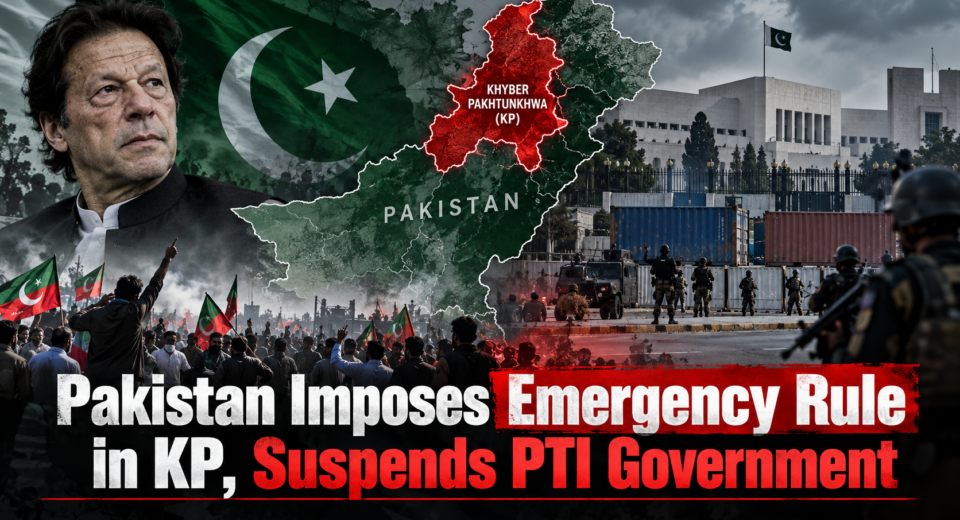
Pakistan Imposes Emergency Rule in KP, Suspends PTI Government

Big political news has hit Pakistan, and it is spreading fast. On Sunday, the President imposed an emergency and governor’s rule in Khyber Pakhtunkhwa (KP), suspending the provincial government led by Imran Khan’s PTI. The decision has stirred debate across the country and beyond. In this article, I break the story down in plain words. I explain what happened, why the federal government says it acted, how PTI is responding, and what it may mean for people living in KP. Facts are still coming in, so I stick to what trusted news outlets have reported so far. Pakistan Imposes Emergency Rule in KP, Suspends PTI Government: The Quick Story Here is the short version. President Asif Ali Zardari declared a state of emergency in Khyber Pakhtunkhwa and suspended the provincial government led by PTI, the party of jailed former Prime Minister Imran Khan. The move came as tensions between the federal government in Islamabad and PTI were already very high. The timing matters a lot. It came days before PTI supporters were set to march on Islamabad to demand Khan’s release. So the story is about more than law and order. It is also about power, politics, and street protest. You can read a detailed news report on the suspension at Al Jazeera, which covered the story as it broke. Key Facts at a Glance What Emergency Rule and Governor’s Rule Actually Mean Many readers hear these terms and feel lost, so let me keep it simple. In Pakistan, provinces are run by an elected chief minister and a cabinet. The governor is a federal appointee, and the role is mostly ceremonial. Under governor’s rule, this changes. How Power Shifts During Emergency Rule Executive authority passes to the governor, who acts for the federal government. In everyday words, the elected team in Peshawar steps aside, and the federal system steers the province instead. The provincial cabinet cannot make key decisions while the order stays in force. What the Constitution Says Pakistan’s constitution allows federal authorities to take over some or all functions of a provincial government during an emergency. So the tool exists in law. The real argument is whether it was needed here, and whether it was used fairly. How Long Will It Last Reports say the emergency rule is meant to run for an initial six months. Such orders can often be reviewed or changed, so the timeline may shift. Watch for official updates, because this part of the story can move quickly. Timeline of Events: How We Got Here Big decisions rarely come out of nowhere. This one followed months of friction. Reports say the dispute built up over counterterrorism operations, security policy, and engagement with Afghanistan. Table 1: Simple Timeline of the KP Emergency Stage What Happened Months before Friction grew between Islamabad and the PTI-led KP government over security policy Before the order The federal Cabinet accused the province of “deliberate disengagement from the fight against terrorism” and recommended emergency rule Sunday The President declared the emergency and suspended the provincial government Hours later Reports said the chief minister and a PTI provincial leader were taken into custody Coming days PTI supporters plan a march on Islamabad This timeline will keep growing. I recommend checking live news before you share any detail as final. Why the Federal Government Says It Acted Islamabad has given its reasons. The language is strong, so I want to explain it carefully and fairly. These are claims by the federal side, and PTI rejects them. The Counterterrorism Argument The federal government cited the provincial administration’s alleged failure to tackle Islamist militancy in the province. KP has faced serious violence for years because of its location and history. Federal leaders say a stronger and more united response is needed. The Law and Order Claim Islamabad says law and order has worsened in the province and that the provincial government failed to act against terrorism. The government also pointed to talks that did not work out. In its view, the elected team in Peshawar was not playing its part. The Information Minister’s Statement Information Minister Attaullah Tarar defended the move and accused the PTI-led provincial government of maintaining links with terrorist groups. That is a very serious charge. It is important to remember that PTI denies it. Both PTI and Afghanistan’s Taliban government have rejected the federal accusations about sympathizing with or sheltering militants linked to the TTP. Army Support for Civil Authorities The federal government also authorised the deployment of Pakistan Army troops and assets in KP to assist civilian authorities. The government presents this as part of its security response. Critics, however, worry about the growing role of security forces in politics. How PTI Is Responding PTI did not accept the decision quietly. The party calls it a political move, not a security one. PTI says the step is political. The Mandate Argument PTI leaders say the party won a real public mandate. One PTI voice claimed the KP government was the only administration with a genuine popular mandate after the February 2024 parliamentary elections, which PTI alleges were rigged. That is PTI’s view, and it is part of why the emergency feels so heated. The “Undemocratic” Label PTI has called the measure undemocratic. The party argues that voters chose its team, so a federal order should not remove it. For many supporters, this feels personal, and that feeling is driving the plan to protest. The Reported Detentions: Sohail Afridi and Others One of the most talked-about parts of the story is the reported arrest of the chief minister. Soon after the emergency was announced, reports said Chief Minister Sohail Afridi and PTI provincial president Junaid Akbar were taken into custody. The KP Information Minister, Shafi Jan, claimed the chief minister had been taken into custody. Because details come from different sides, I treat this as a “reported” matter. Please wait for official confirmation before you repeat it as settled fact. For a second trusted report with more background,

kistan IT Park 2026 Tech

PM Shehbaz Sharif Inaugurates IT Park to Strengthen Pakistan’s Tech Sector

Pakistan has taken another step toward developing its technology industry as Prime Minister Shehbaz Sharif inaugurated Daanish IT Park in Islamabad on October 10, 2026. The new facility, officially known as the National Technology Park, aims to support technology startups, improve digital skills, encourage innovation, and create new opportunities for young professionals. The project is part of Pakistan’s wider efforts to build a stronger digital economy. It is designed to bring technology companies, researchers, students, entrepreneurs, and industry experts together in one place. During the inauguration ceremony, the prime minister highlighted the importance of artificial intelligence, modern education, and practical IT training. He also announced plans to develop similar technology parks in other parts of Pakistan. The main question now is how this major investment in technology infrastructure will translate into jobs, successful businesses, and long-term economic growth. PM Shehbaz Sharif Inaugurates IT Park to Strengthen Pakistan’s Tech Sector: What Does It Mean for Pakistan? The inauguration of Daanish IT Park represents a new opportunity for Pakistan’s growing technology industry. The facility is intended to provide a shared environment where businesses, students, and technology experts can work on new ideas. Unlike a traditional office building, a technology park brings different parts of the IT industry together. Businesses can meet skilled workers, startups can learn from experienced professionals, and students can explore practical projects. For Pakistan, this type of environment could support innovation and help more young people enter the digital workforce. However, the park’s long-term success will depend on how effectively it operates, how many businesses use its facilities, and whether its training programs meet the needs of the industry. Key Highlights of the Daanish IT Park Inauguration The inauguration ceremony took place in Islamabad on Saturday, October 10, 2026. Government officials, technology leaders, experts, and students attended the event. Detail Information Project name Daanish IT Park Official identity National Technology Park Location Islamabad, Pakistan Inauguration date October 10, 2026 Inaugurated by Prime Minister Shehbaz Sharif Main purpose Technology innovation, business development and IT skills Target participants Startups, SMEs, students, entrepreneurs and IT companies Future plans Similar facilities proposed across Pakistan Prime Minister Shehbaz Sharif said the park should become a place where education, industry, and technology connect. He also directed the relevant authorities to invite qualified national and international technology companies to participate in a transparent bidding process for operating the facility. What Is Daanish IT Park in Islamabad? Daanish IT Park is a technology-focused facility developed to strengthen Pakistan’s information technology ecosystem. Its main goal is to support businesses and individuals working in software development, artificial intelligence, digital services, and other technology-related fields. The facility is expected to bring together incubation centers, innovation hubs, small and medium-sized enterprises, and established technology companies. A Place for Innovation and Business Growth An innovation hub gives people space to develop ideas, test solutions, and learn from others. For example, a young software developer may have an idea for a useful mobile application but lack the experience needed to turn it into a business. With access to professional guidance, training, and industry contacts, that developer may have a better chance of building a working product. This is the type of support that technology parks aim to provide. Connecting Students With Industry Experts One important feature of the project is the planned connection between education and industry. Students often learn programming, networking, and software design in classrooms but have limited experience with commercial projects. Working alongside experienced developers and technology companies could help them understand real business needs. This practical learning may also improve their preparation for future employment. How the New IT Park Could Create Jobs in Pakistan Employment opportunities are among the most important potential benefits of the National Technology Park. Pakistan has a large population of young people, including university graduates looking for suitable work. As technology businesses grow, they may need software engineers, web developers, cybersecurity professionals, data analysts, and technical support staff. The park could make it easier for companies to find skilled workers while helping graduates connect with potential employers. However, the inauguration does not mean that a specific number of jobs has already been created. Actual employment growth will depend on business activity, investment, company participation, and the availability of skilled professionals. Role of Artificial Intelligence in Pakistan’s Digital Future Artificial intelligence was a major topic during the inauguration ceremony. AI is becoming increasingly useful in business, education, healthcare, agriculture, and software development. Pakistan’s technology industry can benefit from these developments by preparing professionals to understand and use modern AI tools. AI Training and Skill Development Artificial intelligence training can help students understand machine learning, data analysis, automation, and modern software systems. These skills are becoming useful across different industries. For example, AI-powered software can help businesses study customer needs, manage information, and improve routine tasks. A well-managed technology park could provide opportunities for students and professionals to learn such skills through practical experience. Supporting Local AI Startups Pakistan also has opportunities to develop AI-based products for local and international customers. A startup might create software for schools, hospitals, online businesses, or farming operations. Access to mentors, research support, and experienced companies could help young entrepreneurs improve their products. Still, successful AI development requires reliable data, skilled teams, responsible use of technology, and continued financial support. How Technology Startups and Small Businesses May Benefit Startups and small businesses are important parts of Pakistan’s technology economy. Many begin with a small team and limited resources. Although their ideas may be promising, they often face challenges involving financing, skilled workers, marketing, and business planning. An effective technology park can help address some of these problems. Potential Support Possible Benefits for Businesses Startup incubation Guidance for developing and improving business ideas Industry networking Connections with technology experts and established companies Technical training Opportunities to improve digital and professional skills Innovation facilities A shared environment for research and product development Business mentoring Support with planning, operations and market understanding Industry collaboration Opportunities to work on commercial technology projects These

Pakistan weather forecast October News

Pakistan Weather Forecast October 10–15: Rain Alert for Lahore and Punjab

Is the heat finally gone, or is one more wet spell on the way? If you live in Lahore or anywhere in Punjab, you have probably asked that this week. October is a tricky month. The days are warm, the nights are getting cooler, and a passing cloud can turn into a sudden shower. In this guide, I’ll walk you through what to expect between October 10 and 15, how it may affect your day, and how to stay ready without any stress. Pakistan Weather Forecast October 10–15: The Big Picture October is a transition month in Pakistan. The monsoon is over, and winter is still a few weeks away. That is why the weather feels so mixed. You may see sunshine in the morning, clouds by afternoon, and a light shower at night. The main reason for rain at this time of year is a westerly wave. This is a system of moist air that travels in from the west and mostly affects the upper and central parts of the country. Punjab often gets its share, especially the northern and central districts. Here is the honest part. Weather can change fast, and no one can promise exact rain on an exact day. So think of this article as a rain watch. It tells you what is possible and how to plan, and it points you to the official source for the latest updates. What the Latest PMD Updates Tell Us Let’s look at what the weather department said just before this period began. The Pakistan Meteorological Department expected rain, windstorms and thunderstorms in upper parts of the country on October 6 and 7, with isolated hailstorms, under a westerly wave. Lahore, Kasur, Sheikhupura, Gujranwala and Faisalabad were among the Punjab districts named for scattered activity. A day later, the update was simpler. Rain and thunderstorms were likely in upper Khyber Pakhtunkhwa, Gilgit-Baltistan, Kashmir, Potohar and northeastern Punjab, while other parts of the country stayed dry. Lahore recorded about 26°C that morning. radioradio What does this tell us? The weather pattern is active. Western systems are still reaching the north of the country. That means the chance of more clouds and light rain in Punjab during October 10–15 is real, especially in the northern and central areas. Still, you should check the newest PMD advisory each morning before you make big plans. Lahore Weather: What to Expect This Week Lahore is the city everyone is asking about, so let’s start there. In the middle of October, Lahore usually sees warm days and pleasant evenings. Mornings feel cooler than they did a month ago. If a westerly wave passes nearby, you can expect cloud cover, a cooler breeze, and a short spell of light to moderate rain. Sometimes it comes with thunder or a gusty wind. Here is how the week could feel on the ground: Short rain in Lahore can still cause trouble. Roads fill with water quickly in low spots, traffic slows down, and power can trip for a while. A little planning goes a long way. Punjab Weather: Cities and Districts to Watch Punjab is a big province, so the weather is not the same everywhere. Here is a simple way to think about it. Upper Punjab Islamabad, Rawalpindi, Murree, Attock, Chakwal and Jhelum are closest to the hills. They usually get rain first and in higher amounts when a westerly wave arrives. Murree and Galiyat can also turn noticeably colder after rain. If you are planning a trip to the hills, check the road conditions first. Central Punjab Lahore, Gujranwala, Sialkot, Sheikhupura, Faisalabad and Sargodha sit in the middle. They often see scattered showers, strong gusts and cloudy skies. The rain is usually light to moderate, but a sudden storm cell can drop more water in a short time. Southern Punjab Multan, Bahawalpur and Dera Ghazi Khan usually stay drier at this time of year. You may still see clouds and dusty winds, but heavy rain is less common here. Here is a quick snapshot to keep things clear: Region Rain Chance (General Pattern) What to Expect Upper Punjab Higher Showers, cooler air, gusty winds Central Punjab Moderate Scattered light rain, cloudy evenings Southern Punjab Lower Mostly dry, some dust and clouds This table shows the usual October pattern, not a guaranteed forecast. Please confirm with PMD for each day. How Rain Affects Daily Life in October A little rain can change a lot. Let’s look at the parts of life that you may notice most. Travel and commute. Wet roads are slippery, especially after a dry spell, when oil and dust mix with water. Leave a bit earlier, keep a safe distance and slow down on motorways. Fog can also start to appear on some routes in the coming weeks, so stay alert. Health and comfort. The shift from warm days to cool nights is when many people catch a cold or a sore throat. Keep a light jacket handy and drink warm fluids. Kids and older family members need a little extra care. Air quality. Rain is good news for Lahore’s air. A good shower can wash dust out of the air and bring relief. Smog usually becomes a bigger concern later in the season, so enjoy the clean air while it lasts. Power and utilities. Storms and strong winds sometimes cause short power cuts. Charge your phone and power bank when you see dark clouds. Tips for Farmers: Rain, Sowing and Crops October matters a lot for farmers in Punjab. The Rabi season begins soon, and wheat sowing usually starts from mid-October and runs into November. The right moisture in the soil helps seeds settle well. At the same time, a heavy spell can hurt crops that are ready to be harvested, such as cotton and late rice. Here is some simple advice: Light rain before sowing can save you irrigation water, so watch the sky and plan your fields wisely. Smart Safety Tips Before the Rain Arrives You don’t need to worry

Pakistan Cricket News Sports

Pakistan vs Sri Lanka T20 Series 2026: Full Schedule, Squads and Match Timings

The first ball of the Pakistan vs Sri Lanka T20 series 2026 is only a day away. This is a rare home T20 series for Pakistan, with a new captain and a fresh-looking squad. Sri Lanka also arrive with big changes. Their captain is new, and several well-known names are missing. I put this guide together so you can find everything in one place. You’ll find dates, start times, squads, venue notes, recent form, and what to watch for in each match. I wrote it in plain words, so you can read it quickly and get back to the cricket. Quick note: team news can change close to match day because of injuries or late calls. Check the official Pakistan Cricket Board (PCB) channels before each game. Pakistan vs Sri Lanka T20 Series 2026 at a Glance Here are the basics before we go deeper. This is a short series, so there is little room for error. A team that loses the first match has to win the next two. That makes every over matter from the opening game. Why This Series Matters for Both Teams Pakistan: A Fresh Start After the Asian Games Pakistan fell short of the gold medal at the Asian Games. They now begin their 2026/27 home season with a group that looks a lot like the team they sent there. The PCB announced the squad on 5 October 2026 and named Sahibzada Farhan as captain. He led the side at the Asian Games, so the board has stuck with a leader it already trusts. Salman Ali Agha is no longer the T20I captain. Several players from the 2026 T20 World Cup squad were also left out, including Babar Azam, Shaheen Shah Afridi, Usman Tariq, Faheem Ashraf, Mohammad Nawaz and Usman Khan. Shaheen has not been dropped from the whole team. The PCB confirmed he will captain the ODI side in the tri-series that follows. For fans, this series is a good chance to see which young players can handle pressure at home. Sri Lanka: A Team in Transition Sri Lanka’s T20 side is also in a state of change. They recently lost all three T20Is in England, and Charith Asalanka, who led them in 28 T20Is, has been dropped. Kusal Mendis takes over as captain. Two other changes stand out. Vijayakanth Viyaskanth comes in for the injured Wanindu Hasaranga. Pacer Binura Fernando takes the place of Dilshan Madushanka. Sri Lanka also have more T20I cricket coming, including a tour of India early next year. So they will use this series to settle on a core group. Full Schedule: Dates, Venue and Match Timings Here is the complete T20I schedule. All three matches are at the same ground, so teams will learn the conditions quickly. Pakistan vs Sri Lanka T20I Series 2026 Schedule Match Date Venue Toss Start (Pakistan Time) 1st T20I Friday, 9 October 2026 Rawalpindi Cricket Stadium 5:30 PM 6:00 PM 2nd T20I Sunday, 11 October 2026 Rawalpindi Cricket Stadium 5:30 PM 6:00 PM 3rd T20I Tuesday, 13 October 2026 Rawalpindi Cricket Stadium 5:30 PM 6:00 PM Match Timings in Other Time Zones If you follow the series from outside Pakistan, here is a simple way to convert the 6:00 PM start: The UK is currently on summer time, so UK readers should add one hour to the GMT figure until the clocks change at the end of October. Some websites list an 8:00 PM start. The PCB-linked announcements, ESPNcricinfo’s listing and several other sports sites point to 6:00 PM local time, so I’m using that. Check the official match page on the day to be safe. What Comes After the T20Is The T20 games are only the first part of a busy home season. Right after them, Pakistan play a seven-match ODI tri-series with England and Sri Lanka. Rawalpindi hosts the first three matches. The event then moves to Lahore for the remaining league games and the final. The tour also includes red-ball cricket. Reports list a three-day warm-up in Islamabad from 4 November, a first Test in Rawalpindi from 9 to 13 November, and a second Test in Lahore from 17 to 21 November. Treat those dates as the current plan, since schedules can shift. Pakistan Squad for the Sri Lanka T20I Series The PCB named a 15-member squad. Here is the full list, with each player’s usual role. Player Role Sahibzada Farhan (captain) Opening / top-order batter Abdul Samad Middle-order batter Abrar Ahmed Leg-spin bowler Arafat Minhas All-rounder Fakhar Zaman Opening batter Hasan Nawaz Top-order batter Muhammad Imran Randhawa All-rounder Khawaja Nafay (wicketkeeper) Wicketkeeper batter Maaz Sadaqat Batting all-rounder Naseem Shah Fast bowler Razaullah Fast bowler Saim Ayub All-rounder Mohammad Salman Mirza Fast bowler Shadab Khan Leg-spin all-rounder Sufiyan Moqim Spinner The Batting Group The top order looks strong and aggressive. Farhan, Saim Ayub, Fakhar Zaman and Hasan Nawaz can all score quickly in the powerplay. Fakhar’s return brings experience and left-hand power. Maaz Sadaqat and Abdul Samad add depth in the middle, and Khawaja Nafay is the wicketkeeper option. One thing to note is that Babar Azam is not in the squad, even though there was some talk about his return. That leaves a big gap in experience, so Farhan and Fakhar will need to guide the younger batters. The Bowling Group Naseem Shah is back in the squad after his last appearance at the 2026 T20 World Cup. His pace will lead the attack. Razaullah and Mohammad Salman Mirza add more fast-bowling options. In the spin department, Abrar Ahmed, Sufiyan Moqim and Shadab Khan give the captain variety. Rawalpindi usually offers help to quick bowlers early on and to spinners later. A balanced attack like this one fits the ground well. Sri Lanka Squad for the Pakistan T20I Series Sri Lanka’s side has several changes. The list below covers the players named in the match squad and the likely lineups. Sri Lanka may add or change names before the series, so check the official team announcement for the