
News Tech

Pakistan and United States Resume Trade Talks to Strengthen Economic Partnership

Pakistan and the United States have resumed trade talks in a significant move aimed at strengthening economic cooperation and expanding bilateral commerce. The renewed dialogue comes at a time when both countries are seeking new opportunities to boost investment, improve market access, and create a more stable business environment. Officials from both sides have expressed optimism that stronger trade relations could benefit businesses, investors, and consumers alike. The revival of trade discussions reflects a broader commitment to deepening economic ties beyond traditional diplomatic cooperation. For Pakistan, stronger engagement with the United States offers the potential to increase exports, attract foreign direct investment, and create employment opportunities. For the United States, Pakistan remains an important regional partner with a growing consumer market and strategic economic importance. Why the Trade Talks Matter Trade between Pakistan and the United States has remained an important pillar of bilateral relations for many years. The United States is one of Pakistan’s largest export destinations, particularly for textile products, apparel, leather goods, surgical instruments, and sporting equipment. Resuming formal trade discussions signals that both governments are willing to address existing challenges while exploring new areas of cooperation. Business leaders believe improved trade relations could encourage greater private-sector collaboration, reduce barriers to commerce, and enhance investor confidence. As global supply chains continue to evolve, stronger economic partnerships are becoming increasingly valuable for both developing and developed economies. Key Areas Under Discussion Several important issues are expected to dominate the latest round of negotiations, including: Both countries are also expected to discuss ways to simplify trade procedures and encourage greater participation by private businesses. Economic Benefits for Pakistan Pakistan’s economy could gain significantly from stronger trade relations with the United States. Increased exports would generate valuable foreign exchange earnings while supporting local industries. Sectors such as textiles, information technology, agriculture, pharmaceuticals, and engineering products may benefit from expanded access to American markets. Foreign investment could also accelerate industrial development, introduce advanced technologies, and improve productivity. These developments may create new employment opportunities and strengthen Pakistan’s long-term economic resilience. Opportunities for American Businesses The renewed trade dialogue also presents opportunities for American companies interested in expanding operations in South Asia. Pakistan’s young population, growing digital economy, and expanding middle class make it an increasingly attractive market for investment. American businesses may find opportunities in renewable energy, information technology, healthcare, agriculture, financial services, education, and infrastructure development. Greater cooperation could also promote knowledge sharing and innovation between businesses in both countries. Challenges That Still Need Attention Despite the positive momentum, several challenges remain. Businesses continue to face concerns related to regulatory procedures, taxation, customs processes, and policy consistency. Improving transparency and creating a predictable investment environment will be essential for sustaining investor confidence. Global economic uncertainty, inflationary pressures, and regional geopolitical developments may also influence future trade negotiations. However, continued dialogue demonstrates both countries’ willingness to resolve issues through constructive engagement. Future Outlook The resumption of Pakistan-US trade talks represents a positive step toward strengthening one of the region’s important economic relationships. If negotiations produce practical agreements, businesses on both sides could benefit from increased trade opportunities, stronger investment flows, and closer commercial partnerships. Economic experts believe sustained cooperation can help diversify Pakistan’s export base while providing American businesses with access to emerging opportunities in South Asia. Continued engagement between policymakers and the private sector will be critical to turning these discussions into tangible economic outcomes. As negotiations progress, businesses and investors will closely monitor developments, hoping that renewed cooperation leads to stronger economic growth, increased trade, and long-term prosperity for both nations. Table 1: Key Highlights of the Trade Talks Aspect Details Countries Involved Pakistan and the United States Main Objective Strengthen bilateral trade and economic cooperation Focus Areas Trade, investment, technology, agriculture, manufacturing Expected Benefits Higher exports, increased investment, job creation Business Impact Improved market access and stronger investor confidence Table 2: Potential Economic Impact Sector Expected Impact Textiles Higher exports to the US market Information Technology Increased collaboration and investment Agriculture Better trade opportunities and technology transfer Manufacturing Growth through foreign investment Employment New jobs across export-oriented industries Economy Improved foreign exchange earnings and sustainable growth Conclusion The decision by Pakistan and the United States to resume trade talks marks an encouraging development in bilateral relations. By focusing on trade expansion, investment, and economic cooperation, both countries have an opportunity to build a stronger and more resilient partnership. While challenges remain, continued dialogue and practical reforms can unlock significant economic benefits, strengthen investor confidence, and create long-term opportunities for businesses and citizens in both nations.

Tech

Weather Alert Pakistan: Heavy Rain Expected in Upper Areas This Weekend

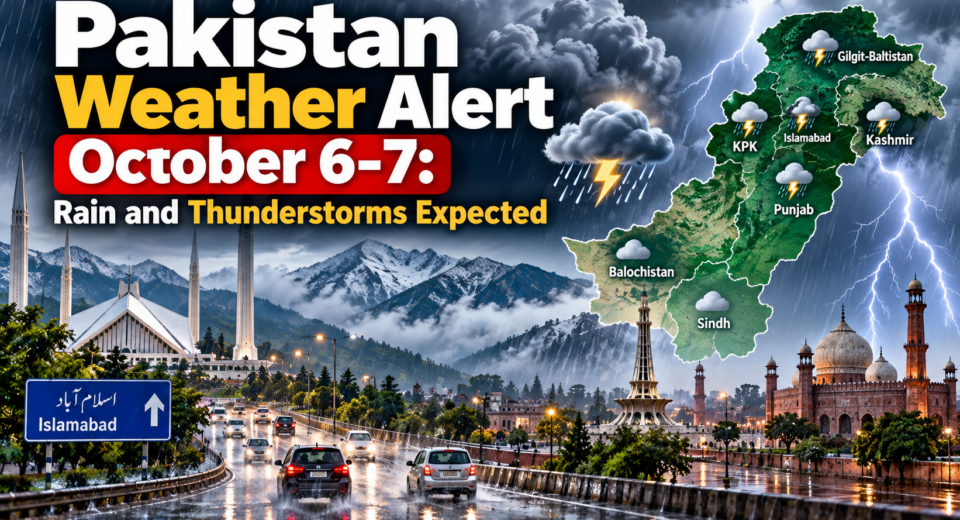
Pakistan is expected to experience another spell of wet weather as a fresh weather system moves across the northern and upper regions this weekend. According to the latest forecast from the Pakistan Meteorological Department (PMD), widespread rain, thunderstorms, and isolated heavy downpours are likely to affect several parts of the country, prompting authorities to advise residents to remain cautious. The weather system is expected to influence areas including Islamabad, Rawalpindi, Murree, Galiyat, Khyber Pakhtunkhwa, Azad Jammu and Kashmir, and Gilgit-Baltistan, where moderate to heavy rainfall may continue over the weekend. Some parts of northern Punjab could also receive showers accompanied by gusty winds and thunderstorms. The upcoming weather system is expected to provide much-needed relief from the intense summer heat that has affected many regions over the past several weeks. Cooler temperatures and cloudy conditions are likely to improve weather conditions for residents, particularly in the upper parts of the country. However, the same rainfall could also create hazardous conditions in low-lying and mountainous areas. The PMD has warned that heavy rain may trigger flash floods in streams and nullahs, urban flooding in major cities, and landslides in hilly regions, potentially disrupting transportation and daily activities. Tourists planning to visit popular destinations such as Murree, Naran, Kaghan, Hunza, and Skardu are advised to monitor official weather updates, avoid unnecessary travel during periods of heavy rainfall, and follow safety instructions issued by local authorities. Residents living in vulnerable areas should remain alert, take precautionary measures, and stay informed through reliable weather advisories throughout the weekend Weather Forecast at a Glance Region Expected Weather Risk Level Gilgit-Baltistan Heavy rain with thunderstorms High Azad Jammu & Kashmir Moderate to heavy rainfall High Murree & Galiyat Persistent rain and possible landslides High Islamabad Rain and thunderstorms Moderate Upper Khyber Pakhtunkhwa Heavy showers in several districts High Northern Punjab Light to moderate rain Moderate Bold Heading: Areas Most Likely to Receive Heavy Rainfall The strongest impact of this weather system is expected across Pakistan’s northern mountainous regions. Districts in Gilgit-Baltistan, Azad Jammu and Kashmir, upper Khyber Pakhtunkhwa, Murree, Galiyat, and surrounding hill stations could receive moderate to heavy rainfall accompanied by thunderstorms. Some locations may experience intense rain over a short period, increasing the possibility of flash flooding in streams and local rivers. Mountain roads could also become slippery, making travel conditions more challenging throughout the weekend. Possible Weather Hazards Heavy rainfall often brings more than just cooler temperatures. Weather experts warn that prolonged rain in hilly terrain can trigger landslides and block important highways connecting tourist destinations. Residents living near rivers, streams, and low-lying areas should remain alert for sudden increases in water levels. Urban centers may also experience temporary flooding where drainage systems become overwhelmed by heavy rainfall. Strong winds and thunderstorms may occasionally disrupt electricity supply, damage weak structures, and reduce visibility on roads, especially during peak rainfall periods. Travel Advisory for Weekend Visitors Many families plan trips to Murree, Nathiagali, Kaghan Valley, Swat, and other northern destinations during weekends. However, travelers should carefully monitor weather forecasts before departure. If traveling is necessary, motorists should: Tourists should also follow instructions issued by local authorities regarding road closures or weather-related advisories. How the Rain Will Affect Temperatures The arrival of rain is expected to bring a noticeable drop in daytime temperatures across northern Pakistan. Cities that have experienced hot and humid conditions over the past several days may finally receive welcome relief. Cooler weather is also expected to improve air quality in some regions by reducing dust and pollution levels. However, humidity may remain high immediately after rainfall. Advice for Residents Residents in areas likely to receive heavy rainfall should take simple precautions to minimize risks. Clearing drainage around homes, securing outdoor furniture, and avoiding unnecessary travel during thunderstorms can significantly improve safety. Parents should ensure children stay away from overflowing drains, rivers, and streams, while farmers are advised to monitor weather developments that may affect crops and livestock. Emergency kits containing drinking water, medicines, batteries, and important documents can also prove useful if weather conditions worsen unexpectedly. What to Expect This Weekend Weather conditions are expected to remain unsettled throughout much of the weekend, with periods of rain and thunderstorms affecting upper parts of Pakistan. While the rainfall will help reduce heat, residents should remain prepared for localized flooding, landslides, and temporary travel disruptions. The Pakistan Meteorological Department is expected to continue monitoring the weather system and may issue further advisories if conditions become more severe. Staying informed through official weather updates and exercising caution can help ensure everyone’s safety during this spell of wet weather. Conclusion The approaching weather system serves as an important reminder that Pakistan’s monsoon season can bring both relief and challenges. While cooler temperatures and rainfall are welcome after prolonged heat, heavy showers also carry risks that should not be ignored. Whether you are planning a weekend getaway or staying at home, keeping an eye on the latest weather forecasts and following official safety advice will help you stay prepared and protected.

News

PTI Moved from Negotiation and Court Strategies to Mass Street Politics in 2026

Pakistan’s political landscape has witnessed another major shift in 2026 as Pakistan Tehreek-e-Insaf (PTI) appears to have moved away from relying primarily on negotiations and legal battles, placing greater emphasis on public mobilization and street politics. The change reflects the party’s effort to reconnect with its supporters and maintain political relevance during a period of intense uncertainty. While negotiations and court proceedings continue to play a role, public rallies, protests, and demonstrations have increasingly become the center of PTI’s political strategy. PTI’s Earlier Focus on Negotiations and Legal Challenges Over the past few years, PTI invested considerable effort in pursuing legal remedies and political dialogue. Party leaders frequently challenged government decisions in the courts while also expressing willingness to engage in negotiations with political stakeholders. The objective was to secure political space through constitutional and institutional channels rather than prolonged public confrontations. However, the outcomes of these approaches often proved slower than many supporters had expected. Legal proceedings moved through lengthy judicial processes, while political negotiations faced repeated obstacles. As a result, pressure mounted within the party to adopt a more visible and active political campaign. Why PTI Shifted Toward Street Politics Several political developments in 2026 have contributed to PTI’s increased focus on public demonstrations. The party has argued that large public gatherings provide an opportunity to directly communicate with supporters and demonstrate its political strength. Street politics has historically played an important role in Pakistan’s democratic history. Political parties have frequently organized rallies, marches, and public meetings to highlight their positions and influence public opinion. PTI’s renewed emphasis on these methods reflects its belief that public engagement can shape the national political conversation more effectively than relying solely on courtroom proceedings. Table 1: Comparison of PTI’s Political Strategy Political Approach Earlier Strategy 2026 Strategy Primary Focus Negotiations and legal petitions Public rallies and demonstrations Public Engagement Limited public mobilization Large-scale political gatherings Legal Action Central political tool Continues alongside protests Political Messaging Institutional dialogue Direct communication with supporters Table 2: Key Factors Behind PTI’s Strategic Shift Factor Impact on Political Strategy Slow legal proceedings Encouraged greater emphasis on public mobilization. Political uncertainty Increased demand for visible political activity. Supporter expectations Created pressure for stronger grassroots engagement. Media attention Large rallies generated wider national discussion. Political competition Required PTI to maintain public visibility. Growing Public Mobilization The increase in public gatherings has become one of the defining characteristics of PTI’s political campaign during 2026. Supporters have participated in rallies across different regions, while party leadership has continued to emphasize public outreach as an essential component of its strategy. Political observers note that large demonstrations serve multiple purposes. They energize supporters, reinforce party organization, and provide opportunities for leadership to communicate policy positions directly to the public. At the same time, such activities can also increase political tensions if disagreements between political actors intensify. Challenges Facing PTI Although mass politics can strengthen public engagement, it also presents several challenges. Organizing nationwide demonstrations requires significant planning, resources, and coordination. Public gatherings may also lead to disruptions, security concerns, and heightened political polarization. In addition, PTI must balance street activism with participation in Pakistan’s constitutional and legal processes. Most political analysts agree that sustainable political progress typically requires a combination of public support, institutional engagement, and adherence to democratic principles. What This Means for Pakistan’s Political Future PTI’s strategic shift highlights the evolving nature of Pakistan’s political environment. The party appears to be placing greater emphasis on demonstrating its public support while continuing to participate in legal and political processes where appropriate. Whether this approach produces long-term political gains will depend on several factors, including public response, the broader political climate, institutional developments, and future electoral dynamics. Political strategies often evolve in response to changing circumstances, making flexibility an important factor for all major parties. Conclusion PTI’s move from negotiation and court-centered politics toward increased street mobilization marks one of the notable political developments of 2026. While legal proceedings and political dialogue remain part of the party’s overall approach, public demonstrations have become a more prominent feature of its strategy. As Pakistan’s political environment continues to evolve, the effectiveness of this shift will likely be judged by its ability to build public confidence, maintain peaceful democratic participation, and influence future political developments through constitutional means.

News

 Missing K2 Airways Cargo Plane Wreckage Discovered in Arabian Sea

The discovery of the wreckage of the missing K2 Airways cargo plane in the Arabian Sea has brought a heartbreaking development to a case that had captured public attention. After days of search operations involving rescue teams, naval units, and aviation authorities, debris believed to be from the Boeing 737 cargo aircraft was located off the coast. While the discovery answers one major question about the aircraft’s location, many important questions about what caused the crash remain unanswered. The cargo plane disappeared during a routine flight, losing contact with air traffic controllers shortly after takeoff. Aviation officials immediately launched a large-scale search and rescue operation after communication with the aircraft was lost. Search teams faced difficult weather conditions and vast areas of open sea, making the mission challenging. The discovery of the wreckage marks a significant step in the ongoing investigation. Key Information at a Glance Detail Information Aircraft Boeing 737 Cargo Plane Airline K2 Airways Location of Wreckage Arabian Sea Status Wreckage Located Investigation Ongoing Rescue Efforts Recovery operations continue Latest Search and Recovery Operations The search operation involved multiple agencies working together to locate the missing aircraft. Naval vessels, helicopters, surveillance aircraft, and specialized rescue teams scanned large sections of the Arabian Sea before finally identifying floating debris consistent with the missing cargo plane. Recovery teams are now focused on retrieving aircraft parts and any available flight recorders, commonly known as the black box. These devices are critical because they record cockpit conversations and flight data that may explain what happened during the aircraft’s final moments. Authorities have also continued efforts to recover the five crew members who were on board. Families of the crew are waiting anxiously for updates as rescue teams continue their work in difficult conditions. Investigation Focus Purpose Flight Data Recorder Analyze aircraft performance Cockpit Voice Recorder Review pilot communications Aircraft Debris Identify structural damage Weather Conditions Determine environmental factors Maintenance Records Check aircraft history What Could Have Caused the Crash? At this stage, aviation experts are cautioning against drawing conclusions. Aircraft accidents are usually caused by one or several contributing factors rather than a single issue. Investigators will examine every possible factor, including mechanical problems, engine performance, weather conditions, pilot communication, navigation systems, and maintenance records. They will also study radar data and air traffic control recordings to build a complete timeline of the flight. Until investigators recover and analyze the black boxes, the exact cause of the accident will remain unknown. Why the Black Box Is So Important The black box is one of the most valuable pieces of evidence in any aviation investigation. Despite its name, it is actually painted bright orange to make it easier to locate after an accident. The flight data recorder stores hundreds of technical measurements, including altitude, speed, engine performance, and aircraft controls. The cockpit voice recorder captures conversations between the pilots, radio communications with air traffic control, and important cockpit sounds. Together, these recordings help investigators understand exactly what happened before the aircraft disappeared. Impact on Aviation Safety Every aviation accident is carefully investigated to improve future flight safety. If investigators identify technical faults or operational issues, airlines and aviation regulators may introduce new safety procedures to prevent similar incidents. Cargo aircraft play an important role in transporting goods across the region, and maintaining public confidence in aviation safety remains a top priority. The findings from this investigation could lead to updated maintenance standards, pilot training improvements, or operational changes if needed. What Happens Next? The investigation is expected to take several months. During this time, experts will examine recovered debris, analyze flight recorder data, inspect maintenance records, and interview airline personnel. Authorities have urged the public to rely only on official statements and avoid spreading unverified information on social media. Aviation investigations require careful scientific analysis, and early reports often change as more evidence becomes available. Conclusion The discovery of the K2 Airways cargo plane wreckage in the Arabian Sea is a major breakthrough in the search operation, but it also marks the beginning of a detailed investigation into the cause of the tragedy. Recovery teams continue working to locate the remaining wreckage and recover the crew members, while aviation experts analyze every piece of available evidence. As investigators work toward finding the truth, the focus remains on supporting the affected families, understanding what went wrong, and strengthening aviation safety to help prevent similar accidents in the future.

News

Political Unrest Grows in Pakistan-Administered Kashmir as Protests Intensify

Pakistan-administered Kashmir has experienced repeated protests, strikes, and clashes as people continue to raise concerns over rising living costs, electricity prices, governance, and political rights. Over the past few years, demonstrations have drawn thousands of residents, reflecting growing public frustration over economic hardships and demands for greater accountability. The unrest highlights a wider debate about how authorities respond to public concerns while balancing security and economic challenges. For many families, everyday issues such as inflation, utility bills, and employment opportunities have become central reasons for joining peaceful demonstrations. Why Are People Protesting? Several factors have contributed to the recent wave of protests across Pakistan-administered Kashmir. Many residents argue that the increasing cost of electricity and basic necessities has placed heavy pressure on household budgets. Rising inflation has also made it difficult for families to afford food, fuel, healthcare, and education. Another key issue is the demand for better governance and transparency. Protesters have called on officials to address economic problems more effectively and ensure that public resources are managed fairly. Community leaders have also urged authorities to engage in meaningful dialogue instead of allowing tensions to grow. These concerns have united people from different backgrounds, including traders, students, transport workers, and civil society groups. Main Reasons Behind the Demonstrations Issue Public Concern High electricity prices Residents say utility bills have become difficult to afford. Inflation Rising prices of food, fuel, and daily essentials have increased financial pressure. Employment Many young people are demanding more job opportunities. Governance Protesters are seeking greater transparency and accountability from authorities. Political representation Some groups are calling for stronger public participation in decision-making. Recent Events at a Glance Event What Happened Impact Public protests Large crowds gathered in several towns to demand economic relief. Increased public attention to local grievances. Strikes Businesses and transport services temporarily shut down during demonstrations. Daily life and commercial activities were disrupted. Clashes Some protests turned violent after confrontations between demonstrators and security forces. Injuries and property damage were reported in certain areas. Government response Authorities announced discussions and measures aimed at easing public concerns. Dialogue helped reduce tensions in some locations, although challenges remain. Economic Challenges Fuel Public Anger Economic pressure remains one of the biggest reasons behind the demonstrations. Families across the region have struggled with rising prices for essential goods while incomes have remained relatively unchanged. Small business owners have also reported declining profits because consumers are spending less. Young people have voiced concerns about limited employment opportunities. Many believe that stronger investment, infrastructure projects, and support for local businesses could help create jobs and improve living standards. These financial challenges have made economic reform a top priority for many residents. Political Concerns Continue Alongside economic demands, political concerns have also played an important role. Protesters have asked for more transparency in decision-making and greater public consultation on policies that directly affect their lives. Civil society organizations have encouraged peaceful demonstrations and constructive dialogue between authorities and community representatives. Many observers believe that open communication is essential to preventing future tensions. Government officials have emphasized their commitment to maintaining public order while considering measures to address economic concerns. What Could Happen Next? The coming months will likely depend on continued discussions between the government and community representatives. If meaningful progress is made on issues such as electricity costs, inflation, employment, and governance, public tensions could ease. However, if economic hardships continue without visible improvements, demonstrations may continue as residents seek stronger action from authorities. Long-term stability will require practical economic policies, transparent governance, and peaceful engagement between all stakeholders. Conclusion The protests, strikes, and clashes in Pakistan-administered Kashmir reflect a combination of economic hardship and political concerns. Rising living costs, high electricity prices, unemployment, and calls for greater accountability have encouraged many residents to take to the streets. While authorities have taken steps to respond to public demands, lasting solutions will depend on sustained dialogue, economic reforms, and policies that improve the daily lives of ordinary people. Peaceful communication and cooperation remain the most effective path toward addressing these complex challenges and building greater public trust in the future.

News

Living with the IMF: How Pakistan’s 2026 Budget Affects Ordinary Families

Pakistan’s 2026 federal budget has become one of the most discussed topics across the country. Many families are asking the same question: How will this budget affect my daily life? The answer is closely linked to Pakistan’s ongoing agreement with the International Monetary Fund (IMF). While the government says these financial reforms are necessary to stabilize the economy, many ordinary people are worried about rising prices and shrinking household budgets. Why Is the IMF Involved? Pakistan has faced serious economic challenges over the past few years, including high inflation, a weak currency, and growing public debt. To avoid a financial crisis, the government entered an agreement with the IMF, which provides financial support in exchange for economic reforms. These reforms usually include increasing taxes, reducing government spending, and improving tax collection. While these steps may help strengthen the economy over time, they often create short-term financial pressure for citizens. What Does the 2026 Budget Mean for Families? The 2026 budget focuses on increasing government revenue while controlling spending. As a result, many households may notice changes in their monthly expenses. Here is a quick look at how different areas may be affected: Area Possible Impact on Families Utility Bills Electricity and gas prices may remain high due to reduced subsidies. Taxes More taxes on goods and services can increase shopping costs. Fuel Prices Transport expenses may stay expensive if fuel prices rise. Government Spending Reduced subsidies may affect some public services. Inflation Families may continue to face higher prices for daily essentials. Budget Changes and Their Impact on Everyday Life Household Expense How Families May Feel the Impact Grocery Shopping Higher prices for food items can increase monthly grocery bills. Transportation Fuel price adjustments may raise bus, taxi, and delivery costs. Education School fees, books, and transport expenses may become more expensive. Healthcare Medical treatment and medicines could cost more due to inflation. Savings Many families may find it harder to save money each month. Rising Cost of Living For many middle-class and low-income families, the biggest concern is the cost of living. Even small increases in electricity bills, fuel prices, or food costs can make a big difference. Families may need to adjust their budgets by cutting unnecessary expenses, delaying major purchases, or finding additional sources of income. Many people are already comparing prices more carefully before shopping and looking for discounts wherever possible. Businesses Also Feel the Pressure Small businesses are another important part of Pakistan’s economy. Higher taxes, increased operating costs, and expensive electricity can reduce profits for shopkeepers, manufacturers, and service providers. When businesses spend more to produce goods, those extra costs are often passed on to customers. This is one reason why prices continue to rise for everyday products. Are There Any Positive Signs? Although many people focus on the immediate hardships, economists believe that IMF-backed reforms can create long-term benefits if they are implemented properly. A more stable economy can help reduce financial uncertainty, improve investor confidence, and strengthen government finances. Better tax collection may also allow the government to invest more in education, healthcare, and infrastructure in the future. However, these benefits usually take time to appear, while the financial burden is felt much sooner by ordinary citizens. How Can Families Manage? Families can take practical steps to reduce financial stress during challenging economic times. Creating a monthly budget, limiting unnecessary spending, reducing electricity usage, and comparing prices before making purchases can help stretch household income. Those with savings should continue building an emergency fund whenever possible, while workers may benefit from learning new skills that increase their earning opportunities. Final Thoughts Pakistan’s 2026 budget reflects the difficult balance between meeting IMF requirements and protecting the financial well-being of its citizens. While the reforms aim to improve the country’s economic stability, many ordinary families are facing higher living costs and tighter household budgets. The coming months will show whether these policies can deliver long-term economic growth while reducing the burden on everyday Pakistanis. Until then, careful financial planning and responsible government implementation will both play an important role in helping families navigate these economic challenges.

News

Gilgit-Baltistan Elections 2026: Why Amjad Hussain’s Win Matters for Pakistan

The 2026 Gilgit-Baltistan elections have attracted attention across Pakistan, and one of the biggest stories is the victory of Amjad Hussain. His win is more than just a political success. It reflects changing public expectations, stronger democratic participation, and growing interest in the future of Gilgit-Baltistan. As the region continues to play an important role in Pakistan’s economy, tourism, and strategic planning, this election result could shape future policies for years to come. A New Political Message from the Voters The people of Gilgit-Baltistan have once again shown that they want leaders who listen to their concerns and deliver practical solutions. During the election campaign, local issues such as better roads, healthcare, education, employment, and tourism development remained at the center of public debate. Amjad Hussain’s victory suggests that many voters supported his vision for improving public services and creating new opportunities for young people. His campaign focused on addressing everyday problems instead of relying only on political slogans. This approach helped him connect with many communities across the region. Why Gilgit-Baltistan Matters Gilgit-Baltistan holds great importance for Pakistan. It is known for its breathtaking mountains, rich natural resources, and strategic location. The region also serves as an important gateway for trade and tourism. Political stability in Gilgit-Baltistan helps strengthen national development projects, attract investment, and improve infrastructure. A stable and effective local government can also promote tourism, support local businesses, and improve the quality of life for residents. Election Highlights Details Election Year 2026 Key Winner Amjad Hussain Region Gilgit-Baltistan Main Focus Development, governance, and public services Why Amjad Hussain’s Victory Matters for Pakistan Amjad Hussain’s election win carries significance beyond Gilgit-Baltistan. Pakistan benefits when its regions have capable leadership that focuses on development and transparency. His leadership may encourage stronger cooperation between the regional government and the federal government. Better coordination can help speed up infrastructure projects, improve education facilities, and expand healthcare services. The result also sends a positive message about democratic participation. Every election allows citizens to express their opinions through voting, strengthening democratic institutions across the country. Key Areas That May See Progress Potential Impact Infrastructure Better roads and connectivity Tourism More visitors and local income Education Improved schools and learning opportunities Healthcare Better medical facilities Employment New business and job opportunities Opportunities Ahead Now that the election is over, the real work begins. Residents will expect the new leadership to fulfill campaign promises and deliver measurable improvements. Tourism remains one of the biggest opportunities for Gilgit-Baltistan. Better roads, cleaner tourist sites, and improved hospitality services can create thousands of jobs while boosting the local economy. Small businesses, hotels, transport operators, and local artisans all benefit when tourism grows. Education is another important priority. Young people need quality schools, vocational training, and digital learning opportunities to compete in today’s economy. Investing in education can help prepare the next generation for future challenges. Healthcare also deserves attention. Improving hospitals, medical equipment, and access to doctors in remote areas would directly improve people’s daily lives. Challenges the New Leadership Must Face Despite the optimism surrounding the election, several challenges remain. Mountainous geography makes infrastructure development difficult and expensive. Climate-related risks, including floods and landslides, require long-term planning and investment. The new government will also need to ensure transparent governance, responsible use of public funds, and equal development across different districts. Public trust depends on visible progress and accountability. Final Thoughts The 2026 Gilgit-Baltistan elections represent another important chapter in the region’s democratic journey. Amjad Hussain’s victory reflects the hopes of many voters who want better governance, economic growth, and improved public services. Whether these expectations are fulfilled will depend on effective leadership, practical policymaking, and continued cooperation between regional and national institutions. If development remains the top priority, this election could become a turning point for Gilgit-Baltistan and contribute positively to Pakistan’s broader progress. Gilgit-Baltistan has entered a new political phase with the arrival of new leadership. This change has attracted attention across Pakistan because the region plays an important role in the country’s economy, tourism, and strategic planning. Many people are now asking what this leadership change means for local communities and how it could shape the future of the region. The new leadership comes at a time when Gilgit-Baltistan is facing several important challenges. These include improving roads, creating jobs, strengthening healthcare, expanding education, and supporting tourism. People in the region hope that the new government will focus on solving these issues while making sure development reaches even the most remote areas. Why the Leadership Change Matters Leadership changes often bring new ideas and fresh priorities. In Gilgit-Baltistan, residents expect leaders to listen to local concerns and make decisions that improve everyday life. Better governance can help build trust between the government and the public while encouraging economic growth. The region has great natural beauty and attracts thousands of tourists every year. It is also home to important mountain ranges, rivers, and cultural heritage. Strong leadership can help protect these resources while promoting sustainable development that benefits local communities. Key Area Why It Is Important Infrastructure Better roads and transport improve travel and trade. Education Quality education creates more opportunities for young people. Healthcare Better hospitals and clinics improve public health. Tourism Tourism creates jobs and supports local businesses. Economy Investment can increase employment and business growth. Main Priorities of the New Leadership The new administration is expected to focus on several areas that directly affect people’s daily lives. One of the biggest priorities is improving infrastructure. Better roads, bridges, and communication networks can connect remote villages with major cities and markets. Another important goal is creating employment opportunities. Many young people in Gilgit-Baltistan seek better career options. By encouraging tourism, supporting local businesses, and attracting investment, the government can help reduce unemployment. Education is also expected to remain a key focus. Building schools, improving teacher training, and providing modern learning resources can prepare students for future careers. Similarly, stronger healthcare services can make quality medical treatment more accessible across the region. Expected Priority

News Tech

Ziarat Attack 2026: Pakistan’s New Security Challenge Explained

Have you heard the recent news coming out of Balochistan? Just when we thought things were settling down, violence has brutally struck again. As a journalist who closely watches Pakistan’s security landscape, I can tell you that the latest attack in Ziarat is a major wake-up call for everyone. Late Monday night, on July 6, 2026, militants stormed a security checkpoint in the Mangi area of the Ziarat district. This was not a random hit-and-run incident. It was a highly organized strike that left nine brave policemen dead and five others abducted. Today, I want to take you through exactly what happened, why this incident matters so much, and what this means for Pakistan’s security going forward. What Happened in Ziarat? The night started out quiet in Ziarat—a beautiful district famous for its lush mountains and local tourism. But the darkness quickly brought a nightmare for the police officers on duty. Armed militants launched a heavy attack on a local checkpoint, triggering a fierce gunfight that lasted for hours. Ziarat District Police Officer Abdul Qadoos confirmed that the attackers opened fire out of nowhere. Our police forces fought back bravely to defend their post. According to official reports, the intense shootout led to the tragic loss of nine policemen, which included two senior officers. But the police did not go down without a fierce fight. In the rapid counter-operation that followed, security forces successfully killed 15 terrorists. Sadly, despite these efforts, the attackers still managed to kidnap five of our officers before fleeing into the rugged mountains. Incident Details Key Information Location Mangi area, Ziarat District, Balochistan Date Night of July 6, 2026 Police Casualties 9 officers martyred, 5 abducted Militants Neutralized 15 killed in counter-operations Why Is This Attack So Concerning? You might ask me, “Doesn’t Balochistan deal with these security issues often?” Yes, it absolutely does. Earlier this year in January and February, we saw a massive wave of coordinated attacks across the province. That previous wave, known as “Operation Herof 2.0,” was heavily driven by separatist groups like the Balochistan Liberation Army (BLA). However, this new Ziarat attack points to a rapidly evolving threat. While no single group immediately took full responsibility for the bloodshed, provincial officials point their fingers at the banned Tehreek-e-Taliban Pakistan (TTP). What terrifies security experts like me the most is the growing overlap between religious militants and nationalist insurgents. They are now actively hitting strategic targets, tourist spots, and even infrastructure projects like under-construction dams. This new blend of terror tactics creates a massive, unpredictable challenge for the state. The Tragic Human Cost We journalists often talk about statistics and security policies, but we must always remember the human lives behind these numbers. Nine innocent families just lost their sons, brothers, and fathers in the line of duty. Moreover, five other families are currently living in absolute agony, waiting desperately for any news about their abducted loved ones. Interior Minister Mohsin Naqvi strongly condemned the attack, but political statements alone cannot heal the deep pain of the locals. The local hospital in Ziarat received the bodies of the fallen heroes, casting a heavy, dark cloud of grief over the entire community. Major Threats Facing Balochistan Security Challenge Description Militant Alliances Growing cooperation between groups like the TTP and local separatists. Infrastructure Attacks Militants directly targeting dams, roads, and key national projects. Protecting Tourism Keeping scenic, peaceful areas like Ziarat completely safe for visitors. Border Infiltration Stopping armed fighters from crossing the borders easily. Moving Forward: What Comes Next? So, where do we go from here? Pakistan is clearly dealing with a brand new kind of security challenge. The state has to do much more than just react after an attack happens. We need stronger intelligence sharing across departments, better protective gear for our local police, and a solid, fast-acting plan to safely rescue the five abducted officers. Balochistan holds the key to Pakistan’s future economic growth. If we want to see this region thrive and prosper, we have to tackle this militancy head-on. As I write this piece, security operations are actively clearing the Ziarat area to prevent any further violence. Let’s hope for the safe return of the kidnapped cops and pray for lasting peace in this beautiful province.

Benazir Income Support Programme Earn Money

Benazir Income Support Programme (BISP): Complete Guide for 2026

Have you been looking for the latest benazir income support programme news? You are not alone. Millions of families across Pakistan rely on this financial safety net. If you want to understand what is benazir income support programme and how it can help you in 2026, you’ve come to the right place. I’m here to walk you through everything—from the online registration benazir income support programme to tracking your funds using the official benazir income support programme code. Let’s dive right in. What Is the Benazir Income Support Programme? Started years ago, the benazir income support programme bisp is Pakistan’s largest welfare net. Its main goal is to help low-income families fight poverty. Today, under the guidance of the chairperson benazir income support programme, Senator Rubina Khalid, the government is making things even easier. From a simple benazir income support programme smart card to newly launched mobile benazir income support programme apps, you can easily access your money. The advantages of benazir income support programme go beyond just cash. They now include health coverage, the benazir income support programme for students, and even the benazir income support ecd programme. You can also find benazir income support programme free courses to help you learn new skills to secure benazir bhutto income support programme jobs. BISP Payment Highlights for 2026 Here is a quick look at how the benazir income support programme money works this year. Feature Detail Program Start Date 2008 (Still running strong in 2026) Payment Method Digital Wallet, BISP Card, UBL Bank, HBL Current Stipend Rs. 14,500 (Distributed in phases) Checking Code Send CNIC to 8171 How to Check BISP Registration and Payments Online One of the biggest questions I hear is: “how to check benazir income support programme money?” In the past, maybe you relied on an older benazir income support programme 8171 check online 25000 process. Now, the benazir income support programme new payment check online system is much simpler. To ensure you don’t fall for benazir bhutto income support programme fake messeges, only trust official portals. If you need to do a benazir income support programme check cnic or a benazir income support programme card tracking, follow these easy steps: Step-by-Step BISP 8171 Check Guide Step Action Required Step 1 Open your phone’s text message app. Step 2 Type your 13-digit CNIC number (without any dashes). Step 3 Send this message directly to the number 8171. Step 4 Wait a few minutes for the official BISP reply text. This fast method acts as a reliable benazir income support programme tracking system. You can easily do a benazir income support programme check registration from the comfort of your home without visiting a crowded office. Applying and Finding Forms If you are new, you might wonder how to get benazir income support programme benefits. You cannot just fill out a random benazir income support programme form online. You need to join the NSER dynamic survey. Sometimes, people search the web for a benazir income support programme form pdf or a benazir income support programme application form download. The truth is, the best way to apply for benazir income support programme is to visit your local registration center. The friendly staff will guide you through the real benazir income support programme online form setup. BISP Office Locations and Support If you need in-person help, there are centers located all over the country to serve you. If you have issues with your benazir income support programme payments, just call the benazir income support programme helpline or visit the benazir income support programme complaint cell. From the older benazir bhutto income support programme watan card days to today’s modern digital wallets, the benazir income support programme latest news shows that the government is trying hard to serve you better. Keep an eye on the official benazir income support programme forum to stay updated. Need more help with your benazir income support programme tracking by cnic? Just send your ID to 8171 and take control of your financial future today!

Hajj, Economy & Banking Updates Business Travel

Hajj Rush: Over 232,000 Pakistanis Register Online in Just Two Weeks

Have you ever stood in a long, crowded line at a bank just to turn in a single form? It can take hours and completely wear you out. Thankfully, those days are fading fast in Pakistan. In just two short weeks, more than 232,000 Pakistani citizens have successfully signed up online for their sacred Hajj journey. This massive response shows a major shift in how the country handles religious applications, technology, and banking today. As a journalist tracking our local economy and banking updates, I find this digital milestone incredible. The Ministry of Religious Affairs and Interfaith Harmony worked closely with the National IT Board (NITB) to build this new system. By launching the “Pak Hajj” mobile app and a smooth online web portal, they have brought the entire process right to your fingertips. Instead of taking long, tiring trips to bank branches or government offices, hopeful pilgrims can now fill out their details from the comfort of home in just a few minutes. This new method does more than just save time; it changes the game for our local banks. In the past, bank staff had to process mountains of physical paperwork during the Hajj season. This often slowed down other everyday financial services and cost a lot of money to manage. Now, with a unified digital portal, the workflow is clean, fast, and highly secure. Let us dive into the numbers to see how people are choosing to travel. Category Number of Applicants Government Hajj Scheme 175,000 Private Hajj Scheme 58,000 Male Applicants 136,000 Female Applicants 96,000 The data shows that the regular government scheme is still the top pick for most Pakistanis. It offers a structured, budget-friendly option that families trust. At the same time, tens of thousands are opting for private tour organizers to customize their journeys. Regional Distribution of Registrations It is also fascinating to see where these digital applications are coming from. The geographical data highlights which areas have the strongest internet reach and online banking habits. Take a look at the breakdown across the country: Province / Region Total Online Registrations Punjab 108,000 Sindh 71,000 Khyber Pakhtunkhwa 33,000 Islamabad 11,000 Balochistan 7,000 Azad Jammu and Kashmir 1,500 Gilgit-Baltistan 700 Unsurprisingly, heavily populated areas like Punjab and Sindh lead the pack. However, seeing thousands of online sign-ups from Khyber Pakhtunkhwa, Balochistan, and the northern regions proves that digital literacy is spreading everywhere. People from all corners of Pakistan are feeling more comfortable using apps to manage their religious and financial duties. From an economic perspective, this early rush gives the government a huge advantage. Even though the official total costs and final policies are still being finalized, having these numbers early allows the state to negotiate better deals. Officials can work out housing, transport, and food arrangements in Saudi Arabia well in advance, which can help keep overall packages affordable. If you or your loved ones are planning to apply, there is one critical rule you must remember right now. The ministry has made it clear that your international passport must be valid until at least November 26, 2027. If your passport expires before that date, your application could face sudden delays or rejection. The online system remains open for now, but with numbers rising this quickly, you should not wait. Gather your documents, open up the app, and take your first step toward this life-changing journey today!