

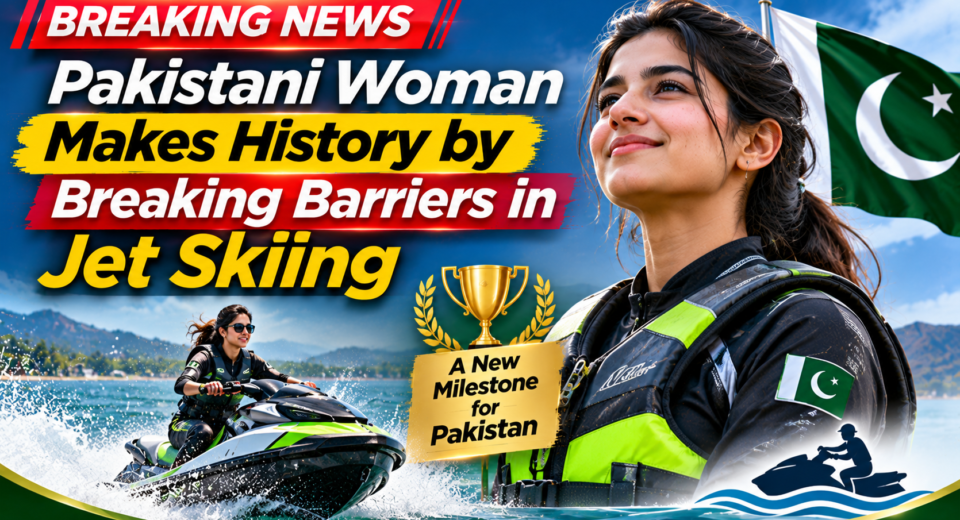
Pakistani Woman Makes History by Breaking Barriers in Jet Skiing
The sound of a jet ski engine usually brings to mind a young man with a life jacket and a lot of speed. At Kallar Kahar Lake in Punjab, that picture is changing. A 35-year-old mother of four now rides the waves with a clear mission, and she is changing how women in Pakistan think about water sports, work, and public spaces. Her name is Farhat Jabeen. She is a jet ski instructor and guide, and her story spread across Pakistani and international media in late November 2026. This article looks at who she is, how she got there, and why one Pakistani woman in jet skiing matters far beyond one lake. It is based on reporting by AFP, published by Arab News Pakistan, plus World Bank research on women’s work. Pakistani Woman Makes History by Breaking Barriers in Jet Skiing Farhat Jabeen has become a pioneer in a sport that Pakistani men have long dominated. She works as a jet ski instructor at Kallar Kahar Lake. She takes visitors out on the water, and many of them are women who had no comfortable way to ride before she arrived. A quick note on the word “history.” The AFP report calls her a jet ski pioneer in Pakistan. It does not claim she holds an official national record, and there is no public record that confirms a “first.” Still, her role is a real milestone. A woman was appointed by regional tourism authorities as a jet ski guide, and that appointment changed who could enjoy the sport at this lake. That is how change often happens: not with a trophy, but with one job, one person, and one door opened. Meet Farhat Jabeen: A Mother, a Worker, and an Instructor Jabeen is 35 years old and a mother of four. She has spent the past two years taking women on jet ski tours at Kallar Kahar Lake. She also rides with other instructors on the water, so she is part of a working team and not a one-time publicity act. Her story is not about a lifelong athlete who chased fame. It is about a working woman who took a job that few women in her country would even consider. She said she felt “a little afraid” when she began, and she faced many objections early on. That honesty makes her easy to relate to. She did not start out fearless. She became confident by doing the work every day. Why Her Story Matters to Readers Across Pakistan Many women in Pakistan face pressure to stay out of jobs seen as “for men.” Jabeen’s story shows that this pressure can be challenged in a calm, practical way. She did not make a speech. She trained, showed up, and did the job well. Her message to other women is simple. She told AFP that a woman should be brave. She also said women should step out of the house and do some kind of work, and that there is nothing to be afraid of. These words carry weight because they come from someone who lived through the doubt. Kallar Kahar Lake: The Setting Behind the Story Kallar Kahar Lake sits about 125 kilometers (78 miles) south of Islamabad. The area is in Punjab’s Salt Range region and is a popular stop for families, school groups, and day trippers. People come for the scenery, the quiet water, and activities such as boating and jet skiing. For tourism officials, water sports are a way to attract more visitors and keep them longer. For the people who work there, they are a source of income. A lake like this runs on small jobs: engine checks, safety gear, ride guides, ticket desks, and cleaning crews. Jabeen’s job sits inside that system, which is why her appointment matters. It shows that women can fit into the everyday workforce of a tourist spot, not only the “soft” roles people often expect them to hold. Why Water Sports Were Hard for Women Visitors Jet skis are small, jet-propelled water scooters. A rider sits on a narrow seat, and a passenger usually sits behind the rider. That close seating is the problem. Conservative social customs in Pakistan discourage women from sitting behind male riders. Many women visitors wanted to try the ride but felt they could not. Muhammad Abbas Ashraf, manager of the Tourism Development Corporation at Kallar Kahar, explained the issue clearly. When jet skis were first introduced, women faced difficulties because they could not ride with male staff. In plain terms, a major attraction at the lake was closed to half the visitors. How Farhat Jabeen Learned to Ride and Teach Before she took passengers out, Jabeen went through training. She spent a month learning the controls and safety procedures under the guidance of a senior instructor. That month matters. A jet ski is a powerful machine, and safe riding with passengers takes real skill, not just courage. A one-month training period is short compared to many professional trades, but it fits the type of work. She learned how to start, steer, and stop the machine. She learned how to handle sharp turns. She also learned the safety steps that protect both rider and guest. Today she handles sharp turns and sends spray into the air with confidence, according to the AFP account. Table 1: Farhat Jabeen at a Glance Detail What Reporting Says Name Farhat Jabeen Age 35 Family Mother of four Workplace Kallar Kahar Lake, Punjab Role Jet ski instructor and guide Time in role About two years of taking women on tours Training One month under a senior instructor Daily workload Up to 11 hours Appointed by Regional tourism authorities Reported by AFP, via Arab News Pakistan (27 November 2026) The Role of a Senior Instructor Jabeen’s training did not happen alone. A senior instructor guided her during that first month. This kind of mentoring is a quiet strength of her story. Many women stay out of new fields because they have no