

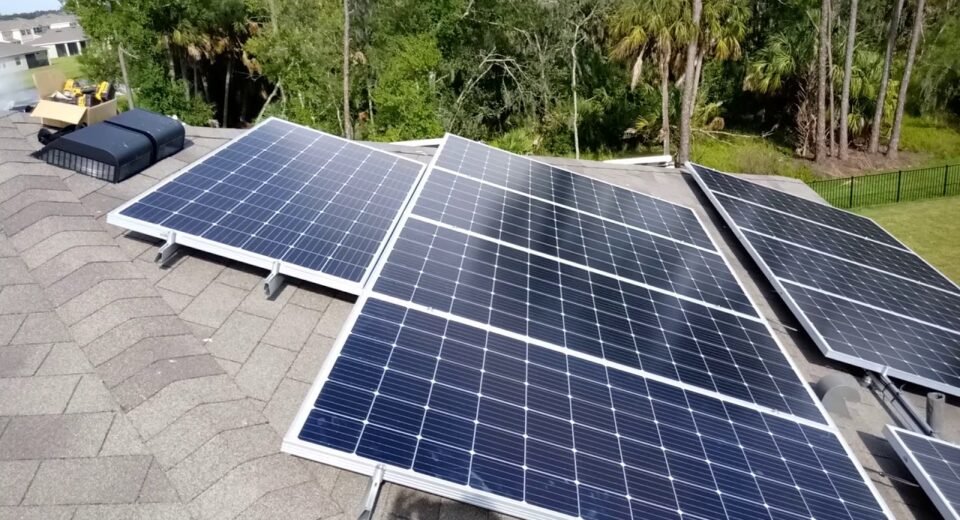
You Probably Don’t Need That 10 kW Solar System Anymore
A lot of families in Pakistan are going to overpay for solar this year. Panels aren’t the issue. The issue is that people are still sizing their systems on rules that ended in February. In February, NEPRA ended net metering for new connections and brought in net billing under the Prosumer Regulations 2026. The part that hurts is the buyback rate. Whatever you send to the grid now earns about Rs. 8.13 a unit, before this it was somewhere around Rs. 25 to 26. The contract also dropped to five years from seven. (If your application went in before February 8, it’s being processed under the old rules. Lucky you. Everyone else is on net billing.) I’ve had solar on my own house in Lahore for a few years now. About 7.5 kW of Longi panels, a hybrid inverter and two lithium batteries, roughly 10 kWh. In a good month it makes around 1,000 units. In the peak months the house uses somewhere between 900 and 1,200 units, and my bill these days is around Rs. 5,000. I got my net metering done before February, so I’m still on the old unit-for-unit deal. Honestly, if I was setting it up today, I’d plan it differently. Why “as big as the roof allows” doesn’t work now Under net metering, every unit you exported pretty much canceled out a unit you bought. More panels meant a smaller bill. Simple. That’s not how it works anymore. Think of it like mangoes. You’ve got a tree in the backyard. You can eat the mangoes yourself, or you can sell them to the wholesaler for Rs. 8 a kilo and then buy the same mangoes back from the shop for Rs. 50. Nobody would do that. But that’s basically what an oversized solar system does now. Here’s where the Rs. 50 comes from. For a home using around 600 units a month, NEPRA’s base rate is around Rs. 40 to 42 a unit, and once GST and the other charges get added you’re paying close to Rs. 50. So every unit your panels make that you use yourself saves you about Rs. 50. Every unit you export gets you Rs. 8.13. Six times less. So stop asking how many panels can fit on your roof. Ask how much power your house actually uses while the sun is up. How I’d figure out the right size Get your last 12 bills out. Ignore the total at the bottom, it’s mostly taxes, fixed charges and fuel adjustments anyway. You want the units. Note your heaviest summer month, your lightest winter month and the average for the year. Then think about the daytime. What’s actually running between 9 and 4 in your house? In summer it’s usually the inverter AC, the water motor, the fridge, maybe the washing machine. If somebody is home all day, half or more of your units probably get used in daylight. If the house is empty till evening, it could be closer to a third. Multiply your monthly units by that share. That’s your daytime demand, and that’s the number to size around. Now turn it into kW. In a good month, 1 kW of panels makes around 140 units, so a 7 kW system does about 1,000. Over a full year it averages closer to 120 a month, because winter fog and monsoon clouds pull it down. Divide your daytime demand by about 120 and you’ve got a ballpark. A house using 330 units in the daytime lands around 3 kW, or around 5 kW if you’re adding a battery for the evenings. Batteries are where it gets interesting. Before, most people bought them for load shedding. Under net billing they actually save money, because you store the extra afternoon units and use them after sunset instead of selling at Rs. 8 and buying back at Rs. 50 at night. Is it worth it for you? Depends on battery prices that month and how much you run at night. Do the math both ways before an installer does it for you. I learned the battery part the hard way. My first bank was four 12 V lead-acid batteries, put in back in 2023. By early this year they could barely run 1,000 W for two hours, and anything close to 2,000 W just shut them off. I swapped them for two lithium batteries, about 10 kWh, and they go through almost a full cycle every single day now. For daily cycling like that, lithium just makes more sense. Last thing is the roof. A 650 W panel is around 7 ft 10 in by 4 ft 3 in. Once you leave gaps and space to walk around for cleaning, I’d plan on 70 to 80 sq ft of open roof per kW. Also ask your DISCO what size your sanctioned load allows before you give anyone an advance. Doing all of this on paper is a headache, to be honest. This free solar calculator for Pakistan does it in a minute. You put in your monthly units and your city, and it gives you the system size, how much you’ll use versus export, and the payback at the current export rate. It has the bank financing numbers too if you’re going that route. 5 kW or 7 kW? Let’s actually run it Say a family in Lahore uses 600 units a month and about 55% of it is during the day. That’s roughly 330 daytime units. By that math they’d need around 3 kW without a battery. But say their installer quotes them 5 kW and 7 kW. Here’s what each one gets them in a good month. 5 kW 7 kW Units made in a good month about 715 about 1,000 Used in the house 330 330 Sent to the grid about 385 about 670 Saved on units used (Rs. 50 each) Rs. 16,500 Rs. 16,500 Export credit (Rs. 8.13 each) Rs. 3,130 Rs. 5,450 Total for the month about